



In recent weeks, officials of the Iranian regime have increasingly expressed concerns about the nation’s deepening crises, which they fear could lead to catastrophic consequences. Masoud Pezeshkian, the regime’s president, recently acknowledged widespread dissatisfaction among Iranians, stating, “Today, we are facing all kinds of problems—water, electricity, gas, and environmental issues. We are facing shortages in everything. Some of these dissatisfactions are on the edge of the abyss, and we must address them.”
Economic Freefall
Iran’s economic situation has reached a critical juncture, marked by stagnation, chronic inflation, and rising unemployment. The state-run newspaper Donya-e Eghtesad recently described the situation as unprecedented, noting:
“Iran’s economy is in a state of chronic and worsening inflation, persistent unemployment, normalization of budget deficits, and continuous liquidity growth. What is happening in Iran today is unparalleled in the world, rendering the situation unpredictable and unsafe.”
Even basic financial obligations, such as paying subsidies, are becoming increasingly difficult for the regime. According to Jahan News, the government has exhausted its borrowing capacity and owes around $700 million in unpaid claims for subsidy targeting programs. With the Iranian rial trading at 50,000 to the dollar, this amounts to a staggering 35 trillion tomans in debt.
Declining Foreign Policy Leverage
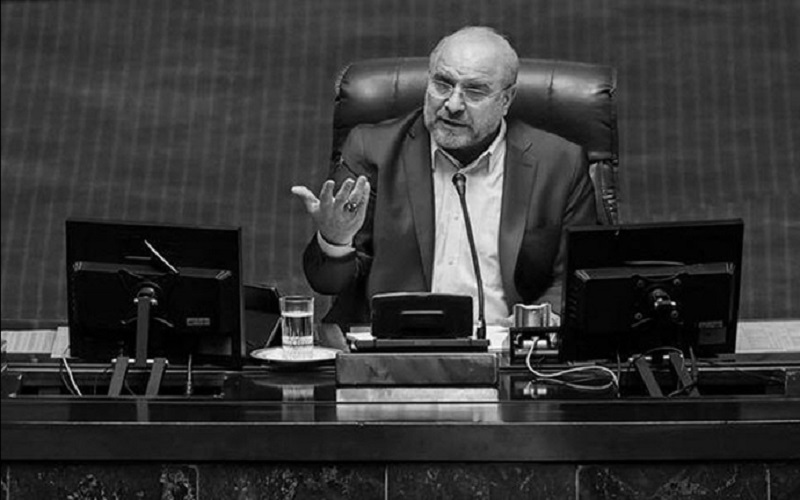
The nation’s economic struggles have eroded its ability to wield oil as a tool of political leverage. Mohammad Bagher Ghalibaf, Speaker of the Parliament, candidly admitted the regime’s weakened position:
“There was a time when we could threaten to cut off oil exports in response to external threats. But today, what oil are we going to cut off, and what market do we even have?”
Iran’s oil minister has revealed that even if production is maintained, logistical challenges prevent effective transportation of oil to markets. These admissions starkly contrast with the regime’s once-bold threats. For instance, in 2012, during Mahmoud Ahmadinejad’s presidency, officials warned that cutting off oil exports could drive global prices to $300 per barrel and trigger an economic crisis. Today, these threats ring hollow, as Iran relies on discounted sales to countries like China to sustain its oil exports.
Mounting Debts and Energy Deficits
Iran’s financial woes are further compounded by spiraling government debt. Since 2012, the regime’s borrowing from the Central Bank has increased 38-fold, reaching 500 trillion tomans, with an even greater amount owed to domestic banks. Additionally, the government has withdrawn $100 billion from the National Development Fund to cover deficits. According to the International Monetary Fund, these debts now amount to nearly one-third of Iran’s entire economy.
Meanwhile, Iran’s energy sector is struggling to meet domestic demand. While the country once exported significant volumes of oil, gas, and electricity, it now faces critical shortages:
- Oil: Exports have plummeted from 2.5 million barrels per day to widespread smuggling of just 1.6 million barrels.
- Gas: Last year, the country faced a deficit of 64 billion cubic meters.
- Electricity: A severe electricity shortfall of 15,000 megawatts was recorded this summer.
The regime’s insistence on enriching uranium to fuel nuclear power plants offers little relief. Iran’s sole nuclear facility, the Bushehr plant, accounts for only 1% of national electricity production. Over the past decade, its total electricity output—valued at less than $5 billion—is dwarfed by the plant’s construction costs, let alone the billions lost to sanctions.
Nuclear Controversy and Sanctions
While Iran denies accusations of pursuing a nuclear bomb, its refusal to answer questions from the International Atomic Energy Agency about secret activities and unexplained uranium traces at undeclared sites fuels international suspicion. The West argues that the regime’s nuclear ambitions have inflicted immense economic damage through sanctions, further compounding Iran’s crises.
The Iranian regime’s multifaceted crises—economic stagnation, energy deficits, and diminished geopolitical leverage—underscore a precarious future. With domestic dissatisfaction growing and international pressure mounting, Tehran faces a crossroads that may define its trajectory for years to come.