



Masoud Pezeshkian, the Iranian regime’s president, who had pledged during his election campaign to address economic challenges, has failed to deliver on his promises. Nearly six months into his administration, instead of providing an explanation for the lack of progress, he remarked, “If the enemy surrounds us, we will not die of hunger.”
However, even official data from government institutions—including the Central Bank, the Statistics Center, the Ministry of Cooperatives Labour and Social Welfare, and the Parliamentary Research Center—paint a starkly different picture.
Food poverty in Iran is severe, with many citizens unable to meet minimum nutritional requirements. A significant number of patients not only struggle to afford treatment and medication but are unable even to see a doctor.
Alarming Food Insecurity Statistics
A report by the analytical news website Emtedad, citing official data, highlights that 55% of Iran’s urban population faces food insecurity, with an average daily calorie intake of 2,540 kilocalories. Alarmingly, 60% of this calorie intake comes from cereals, signaling both poor nutrition and declining food security for millions of Iranians.
The most striking figures relate to meat consumption. According to the Statistical Center of Iran, per capita meat consumption has plummeted to just four kilograms per year. This marks a drastic decline of eight kilograms from 2011 to 2022. Some market analysts argue that among lower-income groups, meat consumption has fallen even further, to less than one kilogram per year. Similarly, the consumption of dairy products, fruits, rice, and even legumes has dropped significantly.
Escalating Food Prices and Economic Hardships
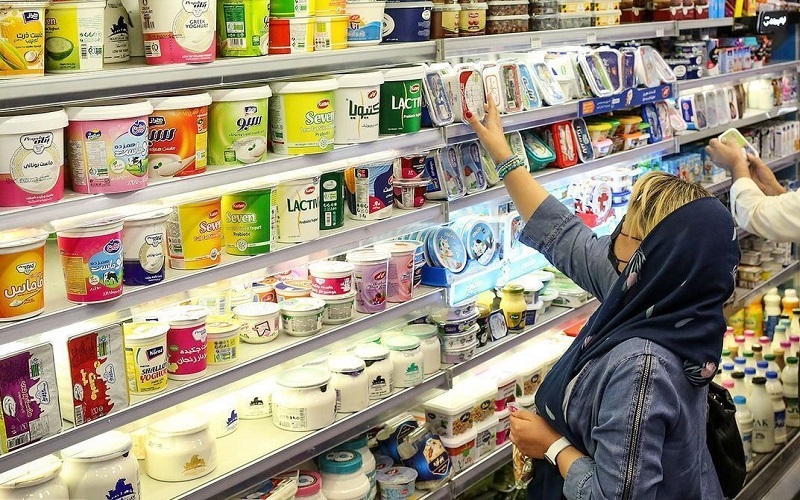
According to the Statistical Center of Iran, food prices in January 2025 surged by 40% to 103% compared to the same month the previous year. The sharpest increases were recorded in legumes and fruits, while dairy products saw inflation rates between 27% and 43%.
In January 2025, the cost of food for a family of four constituted approximately 58% of the minimum wage. Reports from the Research Center of the Iranian Parliament indicate that about 26 million Iranians are unable to meet their basic needs. In November 2024, the Iran Chamber of Commerce Research Center warned that this number could soon rise to 32 million, signaling a rapid increase in the population living below the poverty line.
The newspaper Ham Mihan previously reported in an article titled “Instalment Life” that many families have been forced to purchase meat, poultry, and dairy products on installment plans due to continuously rising prices.
Malnutrition and Health Consequences
The crisis extends beyond economic hardship to serious public health concerns. Chronic malnutrition has led to increased rates of stunted growth and wasting among children, particularly in the provinces of Sistan and Baluchestan, Hormozgan, Ilam, and Kohgiluyeh and Boyer Ahmad.
A nationwide health survey conducted by the Ministry of Health between November 2023 and January 2024 revealed that millions of Iranians suffer from high blood pressure, obesity, and diabetes. These conditions are largely driven by poor nutrition, with many Iranians consuming excessive amounts of bread and sugar due to their inability to afford healthier food options.
According to the survey, 22% of Iranians over the age of 18—approximately 10 million people—suffer from high blood pressure, while 14% (around 7 million individuals) have type 2 diabetes. Additionally, 16 million Iranians are overweight, a figure that exceeds global averages.
Afshin Estavar, head of the Endocrine and Metabolic Sciences Research Institute at Tehran University of Medical Sciences, has warned that 42% of Iranians over 60 suffer from osteoporosis, a condition exacerbated by the high cost of dairy products and the widespread deficiency of calcium in diets.
The Political and Social Implications
The rise in food poverty and malnutrition is a direct result of international sanctions, the regime’s economic mismanagement, rampant inflation, government corruption, and rent-seeking practices. These interconnected crises have placed millions of lives at risk. Despite these dire conditions, President Pezeshkian continues to downplay the impact of sanctions, claiming that Iranians are not facing starvation.
In an apparent acknowledgment of the crisis, government spokesperson Fatemeh Mohajerani recently announced that the regime would distribute two rounds of food vouchers before Eid. However, this initiative, rather than addressing the root causes of food insecurity, merely highlights the depth of the crisis and aims to placate public dissatisfaction.
Former Interior Minister Abdolreza Rahmani Fazli, who played a key role in suppressing the November 2019 protests, recently warned of mounting public discontent, calling the current situation “far more concerning” than the events of 2019. He advised Pezeshkian to learn from those experiences—a chilling reference to the brutal crackdown that resulted in the deaths of approximately 1,500 protesters, according to a Reuters report.
Conclusion
The growing food crisis in Iran is not just a reflection of economic instability but also a symptom of deeper systemic failures. While the government continues to prioritize political survival over economic reforms, millions of Iranians are struggling to secure basic nutrition. The regime’s approach—offering short-term relief measures while suppressing dissent—only delays an inevitable reckoning. Without structural economic and political changes, food poverty will continue to worsen, further destabilizing the nation.