


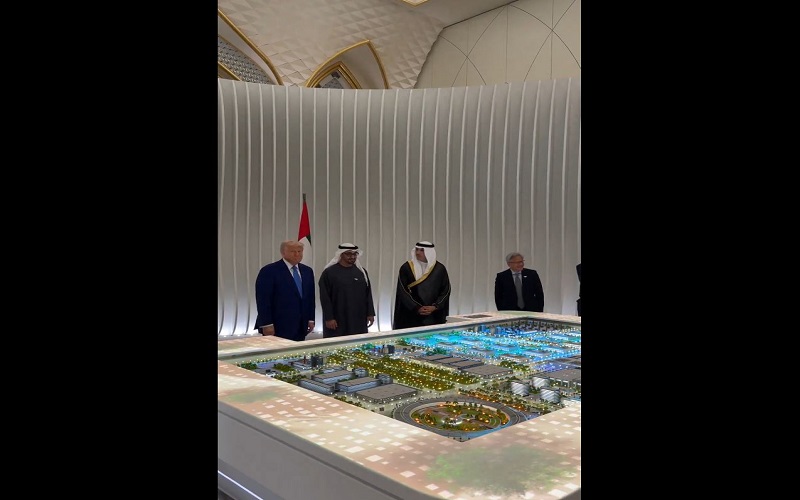

U.S. President Donald Trump’s visit to Saudi Arabia, the United Arab Emirates, and Qatar revealed more than diplomatic handshakes and billion-dollar deals. For the people of Iran, it offered a sobering comparison—and a glimpse into what could have been.
While the trip was rich with symbolism and global media attention, its deeper significance lay in the stark contrast it drew between two paths: one of progress, prosperity, and forward-looking governance, and the other of decline, repression, and wasted potential.
Wealth or Waste: Diverging Destinies in the Persian Gulf
Saudi Arabia, the UAE, and Qatar have leveraged their vast oil and gas resources to diversify their economies, invest in infrastructure, and raise the standard of living for their citizens. These nations now boast advanced transportation systems, burgeoning technology sectors, and growing cultural and tourism industries.
In contrast, Iran—equally rich in natural and human resources—has failed to improve the lives of its people. Decades of mismanagement, ideological governance, and costly foreign entanglements have resulted in chronic poverty, deteriorating infrastructure, and deep public dissatisfaction.
Eight years ago, Iran regime’s Supreme Leader Ali Khamenei derided the Gulf Arab states as “milk cows” of America, accusing them of squandering their wealth. Today, that narrative has collapsed under the weight of reality. The very nations he mocked have become symbols of transformation and success, while Iran has become a cautionary tale of squandered opportunity.
A Trip That Shook Tehran
Trump’s highly publicized visit had a more profound effect on Iran’s leadership than threats of military action. The images of Gulf leaders hosting global tech giants, signing major investment deals, and discussing artificial intelligence and economic diversification struck a nerve in Tehran.
Khamenei’s angry response reflected more than political disapproval—it was a reaction to a clear and damning comparison. Where Iran suffers frequent power and water outages, its neighbors enjoy reliable services. Where Iranian youth face unemployment and despair, young people in the UAE and Qatar see opportunity and innovation. While Iran’s domestic media tried to censor these realities, social media and satellite news made the comparison unavoidable.
Reality vs. Regime Narrative
For years, the Iranian regime has sought to portray its southern neighbors as dependent, one-dimensional oil economies. But the evidence tells a different story. The Gulf countries have not only modernized their infrastructure but are also making impressive strides in fields such as AI, renewable energy, aviation, and sports.
Meanwhile, Iran faces a deepening crisis. Over 57 million Iranians rely on government-issued ration cards. Half the nation’s passenger aircraft are grounded. Airports resemble airplane graveyards. Millions lack access to clean water, and rolling blackouts are common.
The Iranian public sees the disparity firsthand—in the cars people drive, the healthcare they receive, the schools their children attend, and the technologies they can or cannot access.
Trump’s visit laid bare the contrast between Iran and its neighbors. It revealed a truth the regime could no longer hide: progress is possible, but only with leadership committed to the welfare of its people.
The Cost of Misguided Ambitions
Iran has not suffered from a lack of resources. Under the Ahmadinejad and Rouhani administrations, Iran earned roughly $1 trillion in oil revenues—$618 billion under Ahmadinejad alone. This figure surpasses even Saudi Arabia’s current investments in the U.S.
Yet this vast wealth was not invested in public welfare. Instead, over $100 billion was funneled into foreign adventures: funding Bashar al-Assad in Syria, supplying Hezbollah with over $1 billion annually, and financing proxy groups like the Houthis, the Popular Mobilization Forces, and the Fatemiyoun Brigade. These efforts contributed to wars that have killed over 400,000 people in Syria and displaced 12 million more.
Even Hezbollah leaders have openly acknowledged receiving hundreds of millions of dollars from Iran to rebuild Beirut’s suburbs—multiple times.
This is not simply a case of poor management. It is the result of a deeply flawed mindset: one that prioritizes military expansion, ideological crusades, and internal repression over development and public service.
A Vision Unfulfilled
The year 2025 marks the deadline for Iran’s “20-Year Vision Plan,” which promised to make the country the leading power in the region. Instead, Iran has fallen behind in nearly every metric—economic stability, quality of life, technological advancement, and global standing.
Masoud Roghani Zanjani, former head of Iran’s Planning and Budget Organization, once revealed that Khamenei told officials: “Don’t pursue the welfare of the people so much; welfare makes people irreligious.” This chilling admission explains much. With such a philosophy at the top, it is no surprise that social justice, development, and dignity have been sidelined.
The Verdict of the People
Trump’s visit, with its powerful imagery and international focus, stripped away the regime’s narrative and offered Iranians a comparative lens through which to judge their own reality. And by every measure—water, electricity, healthcare, infrastructure, job creation, or dignity in retirement—the regime has failed.
Today, while the Gulf states enjoy rising living standards, Iran faces a full-blown national crisis. The cause is not sanctions or foreign plots. It is the regime’s priorities, its ideology, and its contempt for the needs of its own people.
For millions of Iranians, the message is clear: Iran could have been another Qatar or UAE. It could have been more. And it still can—if the people are allowed to reclaim their future from those who have robbed them of it.