


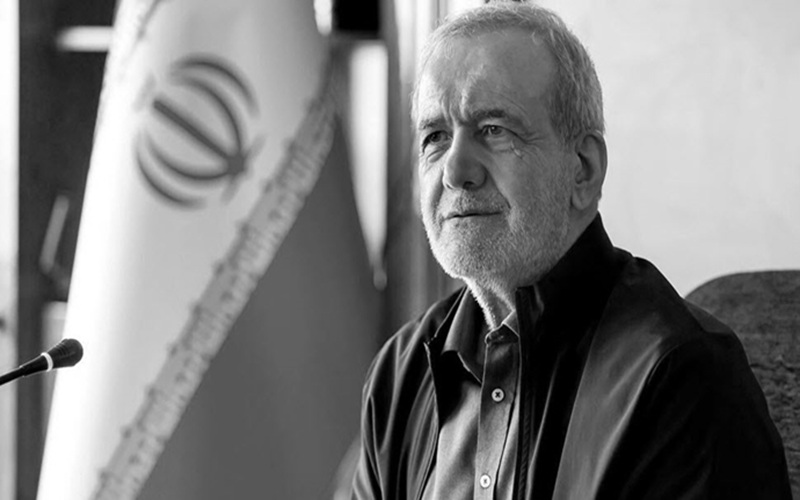

Despite the regime’s calls for national unity, the post-war landscape reveals deeper rifts among power factions and between the people and the state.
In the wake of the recent war, the Iranian regime finds itself entangled in a tightening web of post-conflict consequences. While state-controlled media aggressively promote narratives of “national unity” and social cohesion, the reality behind these orchestrated headlines is starkly different. Far from healing the country’s wounds, the aftermath of war has only exacerbated longstanding fissures—both within the ruling elite and between the regime and a deeply disillusioned population.
Inside the media machine, daily appeals for solidarity are juxtaposed with increasingly bitter internal disputes. The regime’s own factions, once seemingly restrained by the external crisis, have resumed their infighting with a vengeance. Observers now see clearly that the war did little to bridge ideological divides or shore up the regime’s legitimacy. Instead, it merely offered a temporary distraction—a fragile truce that quickly unraveled.
A Broken Social Contract, Unhealed by War
The notion that foreign conflict could mend the decades-old rift between the Iranian people and their rulers has proven to be a delusion. The wounds of repression, corruption, and injustice run far deeper than the temporary silence imposed by the war. At its core, the regime’s foundational problem—its authoritarian structure and systematic denial of civil liberties—remains unchanged.
Despite efforts by regime-aligned media to drown this reality in the noise of post-war triumphalism, the contradictions are becoming harder to suppress. The increasing volume of factional bickering, alongside widespread public discontent, reveals a regime struggling to hold together its fractured core.
Power Struggles and the Specter of a Political Coup
A revealing snapshot of this internal disarray came on July 18, when the government-aligned outlet KhabarOnline published an article titled “Impeachment or Coup: Will Hardliners Succeed in Their Threat Against Pezeshkian?” The piece outlines how hardline factions, emboldened by the war’s end, have turned their focus to toppling the regime’s President Masoud Pezeshkian. A member of parliament was quoted as saying that “now a coup against the coup must take place”—a reference to Pezeshkian’s victory, which some extremists view as a betrayal of the regime’s ideological purity.
This is not merely idle rhetoric. The campaign against Pezeshkian has spilled over from social media into the real world. In the city of Yazd, opponents reportedly circulated a petition demanding his impeachment. Meanwhile, online campaigns have revived the phrase “political incompetence,” a keyword often used to justify impeachment or forced resignation.
The Deep State Reactivated
Behind these efforts lies a shadowy network of coordination and planning. According to reports, Abolfazl Zohrehvand, a hardline member of parliament and former supporter of Saeed Jalili, accused Pezeshkian of attempting a “coup from within.” He declared, “I have concluded that this government’s task is to close the file on the Islamic Republic and the Islamic Revolution itself. Now, there must be a coup against the coup. This is no longer a parliamentary matter; it belongs at the leadership level.”
These accusations reflect more than personal animosity—they hint at a broader strategic effort by regime insiders to ensure the survival of the system by neutralizing perceived reformist threats. And notably, this movement predates the war. Former MP Heshmatollah Falahatpisheh recently revealed that hardliners were already organizing Pezeshkian’s impeachment before the conflict with Israel began, using mass text messages to lay the groundwork for a formal challenge.
The Supreme Leader’s Silent Consent?
It is implausible that Supreme Leader Ali Khamenei is unaware of these machinations, particularly when one faction in parliament appears to be seeking his implicit endorsement for such a drastic move. This again underscores a deeper truth: the regime’s core structure is fundamentally resistant to reform. War may shift the optics, but it does not alter the essence.
A Regime Incapable of Change
The belief that an expansionist, crisis-driven theocracy like Iran’s could transform itself into a responsive, citizen-oriented government is wishful thinking at best. The regime’s entire survival strategy depends on centralization of power, suppression of dissent, and ideological rigidity. Its constitution, upheld by a clerical elite, guarantees the dominance of a “supreme” authority—one inherently opposed to democratic principles.
Thus, the post-war infighting is not a sign of democratization or internal reckoning—it is merely a recalibration of power among factions equally committed to preserving the system. However, for a public that has long endured repression and broken promises, this struggle only reinforces one conclusion: the regime cannot be fixed—it must be fundamentally replaced.
As power centers clash and public resentment deepens, the regime’s façade of unity grows ever thinner. What remains is not a state in recovery, but one spiraling further into decay.