



Minister’s Report Exposes Years of Mismanagement, Corruption, and Budgetary Neglect
Budget Priorities Favor Regime’s Agenda Over Public Needs
The Iranian regime continues to blame international sanctions and natural factors such as drought and climate change for the country’s deepening economic and social crises. This narrative is intended to conceal the regime’s own responsibility for decades of mismanagement, corruption, and misplaced budgetary priorities. Yet, the scale of destruction across Iran makes it increasingly difficult to disguise the truth.
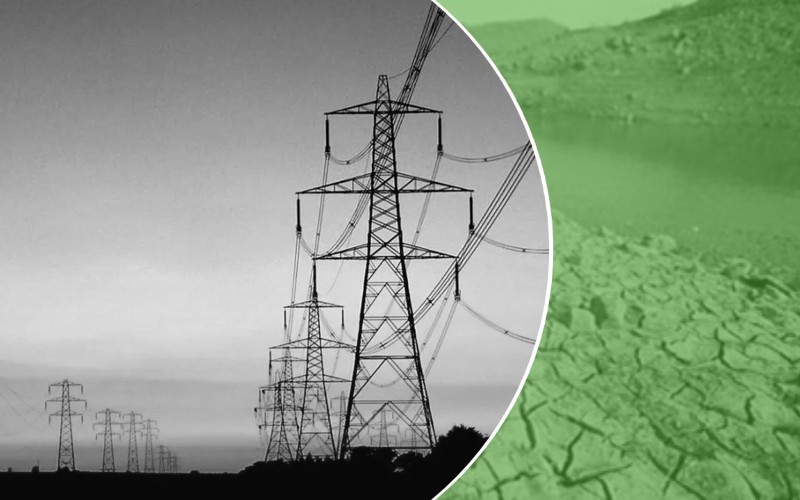
On Tuesday, Abbas Aliabadi, the regime’s Minister of Energy, delivered a report in a parliamentary session that inadvertently exposed the extent of failure in managing Iran’s water and electricity sectors. His remarks confirmed that the regime’s prioritization of funding its malign activities has drained resources away from essential public infrastructure.
Aliabadi admitted: “According to many experts, the biggest and perhaps the mother of all problems in the water and electricity industry is the economic problem and financial imbalance. This imbalance has caused debts to contractors and investors to be delayed for years, fixed prices have stopped capital formation, and outdated power plants have become a threat of widespread blackouts.”
He further acknowledged that nothing has been done to correct these imbalances over the past six years. “This imbalance, which first manifested itself in 2018, reached its peak in 2024,” he said.
Fuel Shortages and Failing Power Plants
The minister briefly referred to the regime’s hidden fuel crisis, a matter known only to MPs:
“Last year, for reasons that most of you are aware of, we faced a severe fuel shortage at the beginning of the term.”
Instead of addressing government failures, Aliabadi sought to shift blame onto natural causes: “With the decrease in rainfall, since the beginning of this year, the energy production of hydroelectric power plants has faced a significant decrease of 40 percent.”
Despite these claims, Aliabadi could not ignore the reality that the country’s infrastructure is collapsing. He admitted that “more than 15,000 megawatts of the country’s power plant capacity is worn out and has practically lost its useful life. These power plants are not even capable of generating electricity at their practical capacity.”
Regime Prioritizes Its Agenda Over Public Services
The regime’s mismanagement of budgets is at the heart of the crisis. Aliabadi admitted that even under favorable conditions, the projected 2025 budgets will only cover a small portion of the sector’s needs: “We will need about 20 years to complete these projects with the projected resources.”
He also listed further failures: weak investment in wastewater treatment, seawater desalination, and alternative technologies, along with a lack of comprehensive governance and integrated water resource management.
Empty Promises After 46 Years of Misrule
Finally, the minister tried to present a plan for the future, claiming the regime has prepared a “comprehensive, strategic, and operational plan” to address water shortages through governance reforms, risk management, and infrastructure improvements.
But these promises ring hollow. For more than four decades, both the regime’s founder, Ruhollah Khomeini, and his successor, Ali Khamenei, have offered endless assurances of progress. None have been fulfilled. Today’s crises are the direct result of 46 years of neglect, corruption, and systematic destruction of Iran’s resources and infrastructure.