



The regime views war as a manageable tool to preserve its power, while it sees reform as a direct threat to its survival.
Despite the heavy blows it suffered during the recent war with Israel, the Iranian regime continues to speak of “resistance” and “readiness for battle.” For the ruling elite, the costs of negotiation and reform appear far greater than those of military confrontation.
As the “snapback” sanctions mechanism looms, Tehran has tried to project an image of “active diplomacy” by participating in the Shanghai Cooperation Organization summit, presenting itself as part of an Eastern bloc against Western threats. Yet inside Iran, political and economic experts warn that pursuing this course without fundamental reforms will only deepen the crisis. In his August 24 speech, the regime’s Supreme Leader Ali Khamenei made clear that the system will stay on its current path.
The Narrative of a “Manageable War”
Although the 12-day war inflicted significant human and material losses on Iran, the regime has framed the conflict as a “victory.” This narrative rests on two pillars: first, magnifying the damage inflicted on Israel, and second, downplaying Iran’s own losses—from the deaths of senior IRGC commanders to the exposure of penetration and damage to sensitive facilities. Losses are repackaged as “sacrifice” and “resilience,” rather than signs of weakness.
For the regime, internal change is seen as far more dangerous than foreign conflict. Reform could unleash a chain of public demands that the leadership cannot control, whereas war—though costly—remains at least partially manageable.
IRGC and Basij: War as a Source of Power
The institutional role of the Islamic Revolutionary Guard Corps (IRGC) and Basij explains much of the preference for confrontation. Beyond their military and security functions, both bodies wield vast influence in Iran’s political and economic life. External crises secure them bigger budgets, wider powers, and a stronger position within the regime.
Their centrality ensures that few regime decisions can bypass them. By maintaining a climate of conflict—not necessarily through open war, but by prolonging tensions—they guarantee their own indispensability at the core of the system.
War Simplifies Governance, Reform Threatens It
Another factor lies in the bureaucracy of the regime. A foreign attack, or even the threat of one, simplifies decision-making. Under the guise of national security, dissent is easily suppressed.
On September 3, Amnesty International highlighted the scale of this crackdown:
“Iranian authorities are waging a terrifying crackdown under the guise of national security in the aftermath of the June 2025 hostilities with Israel. The deepening crisis underscores the urgent need for the international community to pursue concrete criminal accountability measures.”
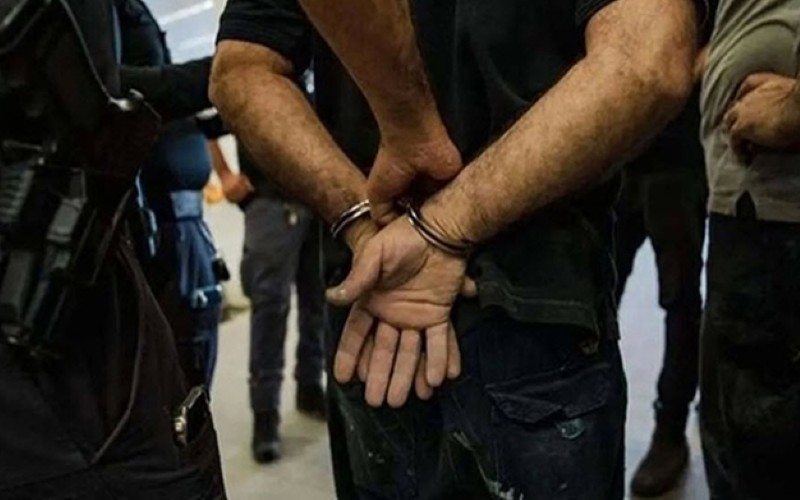
According to Amnesty and Human Rights Watch, since June 13 Iranian regime authorities have arrested more than 20,000 people. Those detained include dissidents, human rights defenders, journalists, social media users, families of protesters unlawfully killed, and foreign nationals. Ethnic and religious minorities such as Afghans, Baluchis, Kurds, Baha’is, Christians, and Jews have also been targeted.
In such an environment, obedience to the central authority becomes the fundamental rule. By contrast, real reforms would unleash a wave of demands—political, social, and economic—that could destabilize the entire system. For a regime built on concentrated power and societal control, this is a far greater danger than a war it believes it can “manage.”
Lessons From History: Reform as a Threat
Iran regime’s leaders often interpret the collapse of the Soviet Union as the consequence of political openness. Domestically, reform attempts in the late 1990s triggered a surge of demands that the regime deemed unacceptable, ultimately leading to widespread repression.
Such experiences have convinced the leadership that even limited talk of change—even in the form of economic advice from regime insiders—represents a direct threat to survival. For institutions like the IRGC, democratic reforms would also mean the redistribution of power and resources, threatening their entrenched economic interests.
The Regime’s Calculation
From the regime’s perspective, war is “manageable”: it has a defined enemy, it mobilizes security and propaganda apparatuses, and it strengthens the institutions at the heart of the regime. Reform, on the other hand, risks exposing hidden cracks, undermining cohesion, and dismantling the system from within.
For Iran’s rulers, this calculus makes confrontation preferable to change—even at the cost of the Iranian people’s lives, freedoms, and future.