


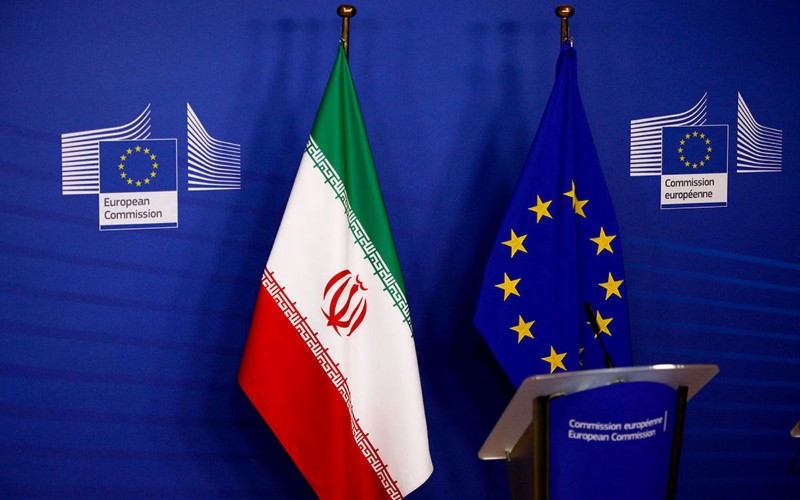

With just weeks left before UN sanctions are reimposed, the Iranian regime is racing through last-ditch negotiations with Europe and the IAEA, exposing its mounting desperation.
With less than three weeks remaining before the UN trigger mechanism reinstates international sanctions, the Iranian regime has intensified its diplomatic efforts in a bid to prevent their return. High-stakes meetings in Doha and Vienna underscore the gravity of the crisis facing Tehran as pressure mounts from Europe, the United States, and the International Atomic Energy Agency (IAEA).
Desperate Diplomatic Push
On Thursday, the European Union confirmed that its foreign policy chief, Kaja Kallas, met with Iranian regime Foreign Minister Abbas Araghchi in Doha to “try to find a negotiated solution” regarding Tehran’s nuclear program.
The regime’s Foreign Ministry announced that Araghchi urged Europe to “fulfill its responsibilities” and shield Tehran from further diplomatic isolation. The meeting followed the decision by Britain, France, and Germany to formally activate the process of reimposing UN sanctions, citing Iran’s persistent violations of the 2015 nuclear deal (JCPOA).
This move triggered a 30-day countdown—the last window, according to the UN, for a negotiated solution before sanctions snap back into place.
Europe Presses, Tehran Stalls
European officials stressed that the talks will focus on highly sensitive issues, including IAEA access to nuclear facilities and the fate of Iran’s growing stockpile of highly enriched uranium. Tehran, however, continues to claim ignorance about the precise status of these reserves.
The three European signatories to the JCPOA have said they would pause the sanctions process if Iran takes real and verifiable steps to address concerns. Yet, no evidence has emerged that the regime has made such concessions.
Meanwhile, Iran’s representative to the IAEA confirmed another round of talks in Vienna, aimed at “defining cooperation in new conditions.” Analysts say this language reflects Tehran’s attempt to reshape its relationship with the Agency under mounting international scrutiny.
Signs of Weakness
The IRGC-affiliated Tasnim News Agency described the Doha meeting as “important,” quoting a source who optimistically said it “was not a bad one.” Yet, the vague statement and absence of concrete progress highlight the regime’s reliance on symbolic gestures rather than substantive commitments.
At the same time, new satellite images revealed that Tehran removed most of the cooling equipment from two buildings linked to the Natanz enrichment facility, raising fresh concerns about concealment and manipulation of nuclear infrastructure.
Adding to the pressure, IAEA Director General Rafael Grossi demanded Tehran allow immediate inspections, warning that “negotiations cannot last for months,” particularly after recent Israeli and American strikes on Iranian enrichment sites.
Hopes Diminish, Pressure Mounts
Even regime insiders acknowledge the dire situation. Ali Larijani, Secretary of the Supreme National Security Council of the regime, admitted last week that no agreement had been reached with Washington on resuming negotiations. His remarks signal that prospects for avoiding sanctions have sunk to their lowest point.
Washington has also hinted that, without swift compliance, economic and political pressures on Tehran will intensify. For a regime already battered by war losses, economic collapse, and internal unrest, the return of sweeping UN sanctions could prove devastating.
A Regime Cornered
As the deadline approaches, Tehran’s frantic diplomacy underscores the regime’s desperation. Despite back-to-back meetings with European officials and the IAEA, no breakthroughs have emerged. With time running out, the future of the regime’s nuclear program—and its already crisis-ridden economy—hangs in the balance.