



Tehran’s reluctant approval of the anti-terrorism financing convention underscores its isolation and internal power struggle.
The Iranian regime’s decision to conditionally approve accession to the international convention against the financing of terrorism (CFT) has once again revealed the depth of its crisis and the bitter internal conflicts that plague its leadership. Far from being a sign of confidence, the move illustrates Tehran’s desperation as it struggles to cope with renewed UN sanctions, international isolation, and a crumbling economy.
On Wednesday, the regime’s Expediency Council, presided over by Sadegh Larijani and attended by the heads of the three branches of government, members of the Guardian Council, as well as the ministers of economy and foreign affairs, voted in favor of joining the CFT. The approval came with two conditions: the regime claims it will implement the convention only “within the framework of its constitution and domestic laws,” and in cases of conflict, domestic law will prevail.
This face-saving clause is designed to appease hardliners who have repeatedly warned that joining the CFT would tie the regime’s hands and endanger its regional proxies. Tehran has long used Hezbollah in Lebanon, the Houthis in Yemen, and militias in Iraq as extensions of its foreign policy. But under CFT provisions, financial support to such groups can be scrutinized and penalized as “terrorist financing.” Even the regime’s most loyal mouthpieces, like Hossein Shariatmadari of Kayhan, have admitted that international conventions do not recognize such conditions and that Tehran’s “reservations” would be meaningless in practice.
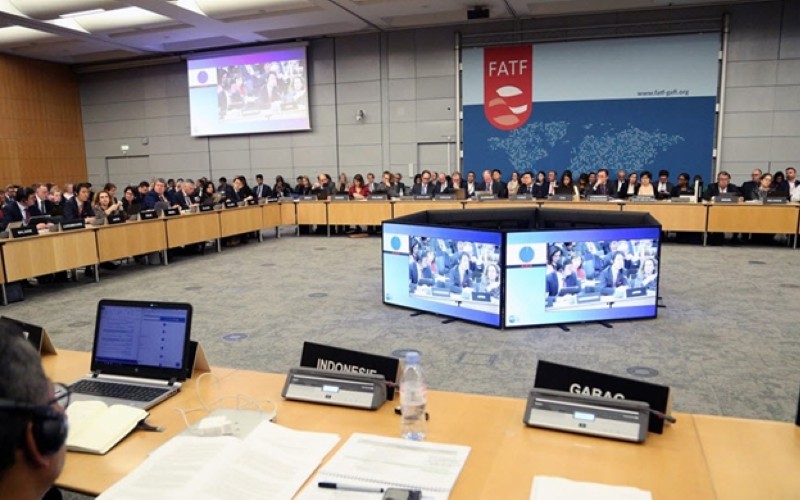
Indeed, the Financial Action Task Force (FATF), which has blacklisted Iran as a high-risk jurisdiction, has made it clear that partial or conditional compliance is not enough. Iran must implement over 40 measures to be removed from the blacklist, and joining the CFT and the Palermo Convention are two of the key requirements. Without these steps, Iranian banks remain cut off from the global financial system, leaving the economy further strangled.
This is precisely why the Expediency Council’s move reflects weakness rather than strength. The regime has resisted these measures for years, insisting they are incompatible with its “revolutionary values.” Yet the crushing pressure of sanctions, the collapse of the rial, and the growing unrest inside Iran have forced even the most reluctant factions to bend. What is presented as “conditional approval” is in reality an act of surrender to unavoidable international demands.
The timing further underscores Tehran’s desperation. With the UN snapback mechanism reimposing sanctions and the global spotlight once again on its nuclear and terrorist activities, the regime is scrambling to show signs of “cooperation” in hopes of loosening the financial chokehold. But even if FATF considers Tehran’s move, its conditions and track record of deception mean there is little prospect of meaningful relief.
More importantly, the debate surrounding the CFT has exposed the regime’s internal rifts. While some factions argue that economic survival demands compliance, others see it as a betrayal of the regime’s militant ideology. The public clash between the Expediency Council, parliament, and media outlets like Kayhan reveals a fractured leadership incapable of uniting even on the most basic survival measures.
In reality, the regime faces a no-win situation. Accepting the CFT undermines its core strategy of funding and arming proxy groups, but rejecting it deepens financial isolation and domestic instability. The Expediency Council’s reluctant approval shows a government cornered, weakened, and forced into concessions that only highlight its fragility.
For ordinary Iranians, however, this decision offers no respite. The regime’s priorities remain the survival of its own apparatus, not the welfare of its people. The struggle over the CFT is just another chapter in a long saga of policies driven by fear, repression, and the desperate attempt of a failing dictatorship to cling to power.