

How Repression, Looting, and Economic Collapse Became a System of Rule
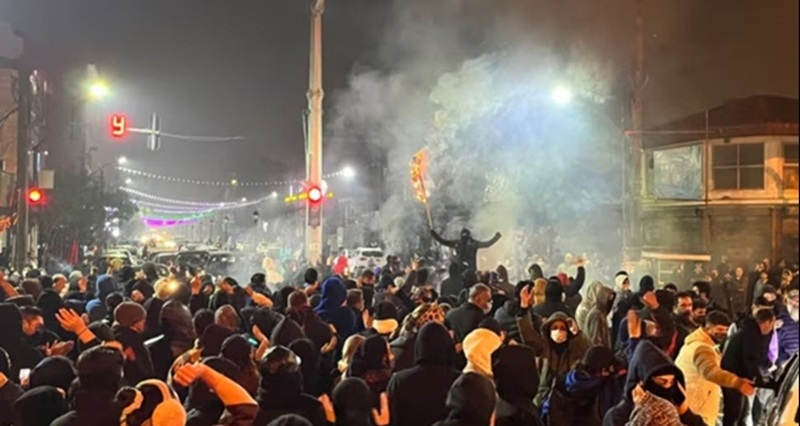
Iran today stands in a condition that can only be described as a Engineered Mass Poverty—a form of deprivation imposed not by accident or misfortune, but as the direct product of a predatory political and economic structure. This is not merely poverty as hardship; it is poverty as governance. While protesters are gunned down in the streets, millions more are worn down silently by deprivation. The slow death caused by hunger and destitution is the continuation of the same violence that begins with bullets.
The runaway surge in gold and coin prices is not an economic curiosity; it is a social alarm. When a gram of 18-karat gold surpasses 206 million rials and the Emami coin crosses the two-billion-rial threshold, this is not about wealth accumulation. It is about flight from collapse. Society is voting with its instincts, seeking shelter wherever it can find it, because no stable future remains within reach.
Yet even this supposed refuge reveals a deeper fracture. Gold prices soar while the market itself stagnates. Transactions dry up because most of society can no longer participate. For a narrow elite, gold functions as a store of wealth. For the majority, it is a billboard of exclusion. This widening gap is not driven by global forces but by domestic policies that have systematically destroyed stability while entrenching rent-seeking and privilege.
The removal of meat, dairy, and even fruit from workers’ food baskets signals more than an economic downturn. It marks the moment inflation moves from statistics into human bodies. With food inflation approaching 90 percent, malnutrition is no longer a risk—it is a social reality. This is the result of wages rendered meaningless by structural inflation, itself born of ideological decision-making and entrenched corruption.
A shrinking table is not just a livelihood issue. The elimination of basic nutrition accelerates health deterioration, reduces productivity, and expands social harm. In this context, official talk of “nominal wage increases” borders on cruelty. The distance between income and the poverty line is no longer a gap; it is a chasm into which millions are falling.
At the same time, internet shutdowns and restrictions on social media—imposed in a country already engulfed by poverty—function not only as tools of political control but as direct attacks on survival mechanisms. Charities and grassroots aid networks that have partially filled the vacuum left by a predatory state are being paralyzed. Their financial collapse means abandonment of the most vulnerable layers of society.
Token measures such as minimal food vouchers do little more than symbolize denial. This is precisely where the engineered mass poverty begins: where a state is not only incapable of providing basic necessities but actively blocks social solidarity. In such conditions, poverty reproduces itself and expands across generations.
An inflation rate crossing the 50–60 percent threshold marks entry into a historic danger zone. At this level, inflation reshapes behavior, expectations, and protest dynamics. When inflation concentrates on food, it becomes inherently political. A society that cannot secure nourishment eventually turns to the street as its final instrument.
Chronic budget deficits, unsold government bonds, and capital flight into gold and foreign currency all point to a financial dead end. This impasse is the result of decades of governance built on repression, rent, and denial. Inflation is no longer merely a consequence of policy—it has become the primary actor, dictating the rules of survival.
While the majority struggles to endure, international investigations reveal staggering concentrations of wealth among those closest to the regime’s supreme leader Ali Khamenei. Luxury properties in London, Swiss bank accounts, and multi-billion-dollar investments abroad all draw from a single source: Iran’s national resources.
A detailed Bloomberg investigation traced extensive international investments linked to Mojtaba Khamenei, spanning Tehran, Dubai, Frankfurt, and London, facilitated largely through Ali Ansari. According to informed sources and assessments by a prominent Western intelligence entity, although Mojtaba Khamenei avoids holding assets in his own name, he has played a direct role in these transactions, some dating back to 2011.
The network reportedly includes shipping companies in the Persian Gulf, Swiss bank accounts, and luxury properties exceeding £100 million in the United Kingdom. Estimates suggest that billions of dollars have been transferred from Iran to Western markets through shell companies and layered investments—despite Mojtaba Khamenei being under U.S. sanctions since 2019.
These holdings include prime real estate in elite London neighborhoods, a villa in Emirates Hills, and luxury hotels across European cities such as Frankfurt and Mallorca. One London property alone was purchased in 2014 for £33.7 million. Documents reviewed by Bloomberg indicate that the funds were routed through banks in the UK, Switzerland, Liechtenstein, and the UAE, with oil revenues identified as the primary source.
For comparison, even reports on the former Shah’s wealth note that Mohammad Reza Pahlavi left behind approximately $62 million at the time of his death—an amount dwarfed by the scale of accumulation now associated with the ruling family.
This extraction is not incidental. Widespread poverty and concentrated wealth are two sides of the same coin. An engineered mass poverty cannot exist without its kings of plunder. Every rial removed from a family’s table reappears elsewhere as a tower, a villa, or a bank balance. This relationship forms the core of Iran’s economic-political crisis.
The mass protests of recent years were not emotional reactions to price hikes. They were the outcome of accumulated economic pressure combined with political blockage. Society has learned that poverty is not natural. Repression has not erased this awareness—it has sharpened it. An economy stripped of vitality has turned the street into its living memory, where economic and political demands converge.
If the engineered mass poverty continues, it will not merely deepen hunger. It will generate repeated unrest, radicalize society, and complete the collapse of the regime’s legitimacy. History is clear: such systems do not endure. When poverty reigns, it eventually pulls the entire order down with it.