


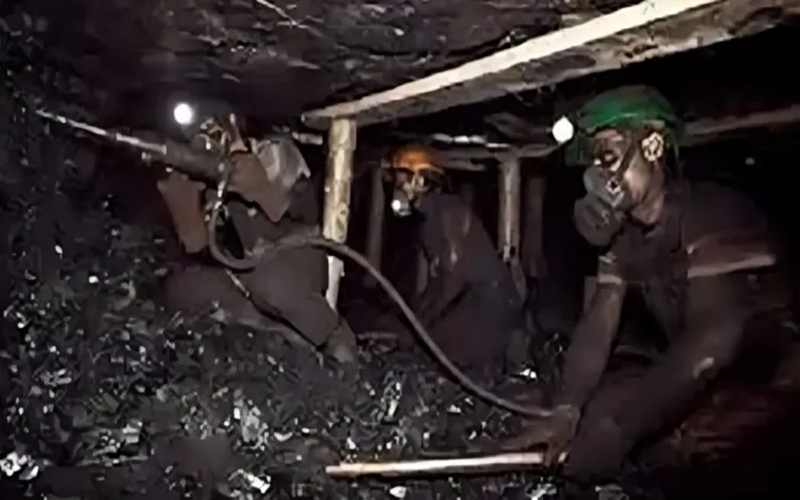

Layoffs of veteran workers—some nearing retirement—highlight systemic failures, unpaid obligations, and worsening labor conditions in Iran’s mining sector
The wave of layoffs and job insecurity sweeping across Iran’s industrial sectors has reached the fluorspar mines of Tabas, where dozens of experienced workers have recently been dismissed. Reports indicate that many of those affected are long-serving, skilled laborers—some only months away from retirement—raising serious concerns among workers and labor activists about the deepening employment crisis.
According to a report published on April 6, 2026, by the state-affiliated ILNA news agency, the executive secretary of the Tabas Workers’ House announced that between 20 and 25 specialized workers at a fluorspar mining company have been laid off. These dismissals disproportionately affect individuals who have spent years working under harsh and hazardous mining conditions, only to now face economic uncertainty at the final stage of their careers.
Ebrahim Rahimian, the local labor official, attributed the layoffs to the company’s significant unpaid “government dues.” He warned that the mining license could be revoked and reassigned to another operator, a development that has directly contributed to the workers’ dismissal. Rahimian placed responsibility squarely on the employer, questioning why these obligations had gone unpaid for years—inaction that has now translated into job losses.
The mining operation in question is located in the Kamar Mehdi zone and is involved in fluorine extraction. Like most mining projects, it operates under time-bound licenses that require compliance with financial and regulatory obligations. However, reports suggest that despite ongoing operations, the company failed to meet its payment responsibilities, exacerbating tensions and triggering administrative consequences.
The impact of these layoffs is particularly severe given the demographic profile of the affected workers. Many are between 40 and 50 years old, an age group that faces significant barriers to reemployment—especially in specialized sectors like mining. Labor activists have warned that forcing such workers into unemployment insurance programs during their final years of service could significantly reduce their retirement pensions, effectively undermining decades of labor.
Beyond layoffs, workers have raised multiple grievances related to deteriorating living and working conditions. Some report that more than two weeks into the new year, they have yet to receive their annual bonuses—a delay they describe as unprecedented. Others point to the lack of basic safety provisions, stating that they have not received new work clothing or protective gear for months, despite regulations requiring such equipment to be provided every six months. The decline in safety standards has heightened concerns about worker health in an already high-risk environment.
Another pressing issue is the unpaid 4 percent contribution required for retirement under hazardous and physically demanding occupations. Workers warn that they may be forced to liquidate personal assets to cover this cost. Some have already done so in the past—selling gold or land—only to suffer further financial losses due to delayed payments and inflationary pressures.
Frustration is also mounting over the perceived inaction of labor authorities. Workers report that their efforts to seek redress through the Ministry of Labor have yielded no tangible results, further eroding trust in institutional mechanisms meant to protect their rights.
Taken together, the dismissal of fluorspar workers in Tabas is not an isolated incident but a stark illustration of broader structural deficiencies. Years of mismanagement, lack of accountability, and systemic neglect have created an environment where workers bear the brunt of economic and administrative failures.
For many of these miners, the future now appears uncertain. After years of laboring under difficult conditions, they are left without job security, adequate compensation, or institutional support. The situation underscores a deeper reality: Iran’s labor crisis is not episodic, but rooted in systemic dysfunction—one that continues to sacrifice workers’ livelihoods in the face of mounting economic and political pressures.