Political prisoner and justice-seeker released after years of enforced disappearance, harsh detention, and retaliation for pursuing accountability over the 1988 massacre
Maryam Akbari Monfared, one of Iran’s most prominent political prisoners and a persistent voice for justice over past state crimes, has been released after enduring 17 years of imprisonment—three of them added through a later judicial case widely criticized as retaliatory.
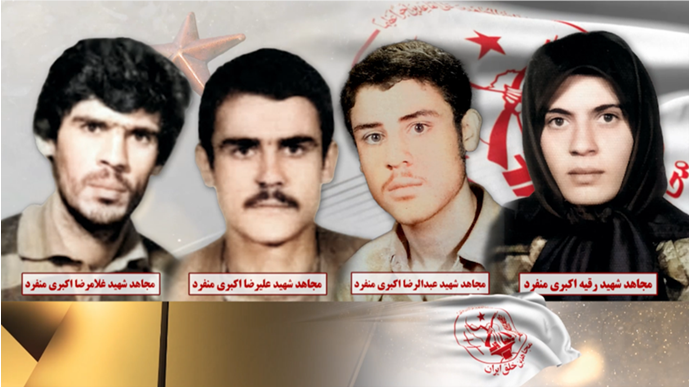
Born on December 14, 1976, Akbari Monfared is a supporter of the People’s Mojahedin Organization of Iran (PMOI/MEK) and the mother of three daughters. Her life has been profoundly shaped by political repression: three of her brothers and one sister were executed in the 1980s, including during the mass executions of political prisoners in 1988—an event that remains one of the most controversial and unresolved episodes in Iran’s modern history.
Arrest, Enforced Disappearance, and Unfair Trial
Akbari Monfared was arrested on December 31, 2009, in Tehran. Following her arrest, she was forcibly disappeared for five months, during which her family had no information about her whereabouts. She spent the first 43 days of her detention in solitary confinement and was interrogated without access to legal counsel.
Her trial, held before Branch 15 of the Revolutionary Court in Tehran in May 2010, lasted less than one hour. The court-appointed lawyer met her only during the hearing itself, raising serious concerns about due process violations. She was ultimately sentenced to 15 years in prison on charges of “enmity against God” (moharebeh), based largely on alleged links to the PMOI.
International human rights bodies, including the UN Working Group on Enforced or Involuntary Disappearances, later called on Iranian authorities to investigate the fate of her executed relatives and address the broader pattern of disappearances.
A Voice for Justice from Inside Prison
Akbari Monfared’s case gained particular prominence due to her unprecedented pursuit of justice from inside prison. In October 2016, she filed an official complaint with Tehran’s Prosecutor General, demanding an investigation into the execution of her siblings during the 1988 mass killings.
In her complaint, she detailed how her brother Abdolreza—arrested at just 17 years old for distributing PMOI publications—had completed his prison sentence but was never released, only to be executed years later. Her sister Roqieh faced a similar fate. Both were denied legal representation and executed without due process.
Her legal action was followed by open letters and additional complaints submitted to the judiciary, calling for the identification and prosecution of those responsible for the mass executions. These steps were widely seen as a rare and courageous challenge to official silence surrounding the 1988 massacre.
Her efforts prompted international attention. Amnesty International designated her a prisoner of conscience, stating that her imprisonment stemmed solely from peaceful activities and her pursuit of truth and accountability. The organization also warned of reprisals against her, including denial of medical care.
Years of Harsh Conditions and Denial of Rights
Throughout her 17-year imprisonment, Akbari Monfared was held in several facilities, including Evin, Semnan, and Qarchak prisons—locations frequently criticized for poor conditions, especially for female detainees.
She was denied even a single day of furlough during her entire sentence, a striking departure from standard legal practice in Iran. She was also barred from attending family funerals and significant personal events, further deepening the human cost of her detention.
Reports indicate that she faced ongoing discrimination by prison authorities and was at times denied necessary medical treatment despite suffering from chronic health conditions. In August 2025, human rights organizations warned that her health was in serious danger due to extreme heat, power outages, lack of clean water, and inadequate medical care in Qarchak Prison—conditions affecting many women held there.
Sentence Extension and Continued Pressure
Despite nearing the end of her original 15-year sentence, Akbari Monfared was subjected to a new judicial case in early 2024. She faced additional charges, including “propaganda against the state,” “assembly and collusion against national security,” “spreading falsehoods,” and “insulting the leadership.”
These charges resulted in an additional three-year prison sentence, as well as penalties such as internal exile and asset confiscation. Observers widely viewed this move as a direct response to her continued activism and refusal to remain silent.
Release After 17 Years
Her eventual release comes after nearly two decades marked by enforced disappearance, prolonged detention, and sustained pressure for seeking justice. For many observers, her case embodies the intersection of personal tragedy and political repression in Iran.
Akbari Monfared’s story is not only one of endurance but also of defiance. From inside prison, she transformed personal loss into a broader demand for accountability—challenging a system that has long resisted scrutiny over past abuses.
Her release, while significant, also serves as a reminder of the many political prisoners who remain behind bars in Iran, including women who face compounded forms of repression.