



Only the Iranian people—not foreign powers—hold the key to regime change
For decades, policymakers have framed the question of Iran’s future in binary terms: negotiation or war. Yet this framing is fundamentally flawed. Neither engagement with nor confrontation against the ruling religious dictatorship has ever been designed to prioritize the interests of the Iranian people. Instead, foreign strategies—whether diplomatic or military—are shaped by national interests, geopolitical calculations, and economic incentives.
The result is a sobering reality: negotiation and war are not opposing solutions, but two sides of the same coin—both ultimately contributing to the survival of the regime.
The Beginning of the End for Failed Strategies
Amid contradictory reports of escalating tensions and intermittent diplomacy, it is becoming increasingly clear that both appeasement and foreign military intervention have reached a strategic dead end. What is emerging in their place is a third path—one long articulated but often overlooked: the organized resistance of the Iranian people.
This strategy rejects both external war and political appeasement. Instead, it calls for the overthrow of the ruling theocracy by the Iranian people themselves.
Recent executions of political prisoners—particularly members of the People’s Mojahedin Organization of Iran—underscore a critical reality: the regime recognizes its primary adversary not in foreign governments, but in organized domestic opposition. Repression, in this sense, is not a sign of strength but of strategic vulnerability.
Competing Strategies in Direct Confrontation
The resistance movement’s strategy—centered on regime change and the establishment of a democratic republic—has increasingly gained traction. The National Council of Resistance of Iran has articulated a roadmap that includes a transitional government and democratic elections.
As alternative approaches falter, this strategy is positioning itself as the dominant paradigm. Its appeal is rooted in a simple premise: sustainable political transformation must come from within, not be imposed from outside.
Negotiation and War: Two Sides of the Same Coin
Global developments, including temporary de-escalation efforts between Washington and Tehran, have further illustrated a recurring pattern: whether through negotiation or conflict, the outcome has consistently reinforced the regime’s grip on power.
If the international community seeks long-term stability—both regionally and globally—it must align its policies with the aspirations of the Iranian people. This means recognizing their right to resist dictatorship and supporting their struggle for democratic governance.
Peace and stability cannot be imposed externally; they must be built upon internal legitimacy.
The Direction of the Current Conflict
Despite appearances that may suggest limited or controlled confrontation, the trajectory of the current conflict points toward escalation. The ideological foundations of the ruling system incentivize the continuation—and expansion—of conflict.
The Islamic Revolutionary Guard Corps has consolidated its influence within the state apparatus, extending its reach beyond Iran’s borders. Its activities increasingly threaten not only Iranian citizens but also regional and global security.
Inside Iran, repression has intensified. Political prisoners face a growing wave of executions, while abroad, the regime’s network continues to pursue destabilizing operations across the Middle East. There is little evidence to suggest a genuine shift toward de-escalation.
Former U.S. House Speaker Newt Gingrich recently said that, we have learned hard lessons from the early days of confrontation with Iran’s religious dictatorship. Threats such as closing the Strait of Hormuz could drastically raise global energy prices. The IRGC is larger, better trained, and more loyal than previously assumed.
His remarks highlight the structural resilience of the regime—but also the limitations of external pressure in producing internal change.
The Looming Social Explosion
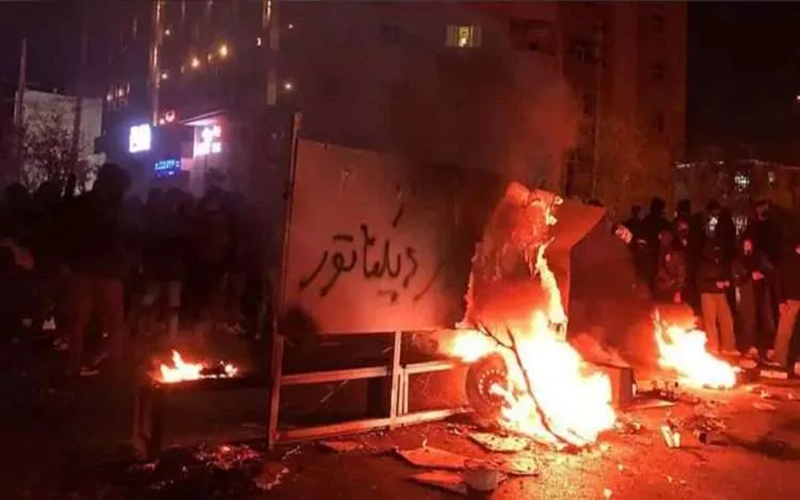
While external tensions dominate headlines, the regime’s greatest fear lies within its own borders: a nationwide uprising.
Statements from security officials reveal a doctrine that equates dissent with enemy action. Protesters are no longer treated as citizens with grievances, but as hostile actors. This shift reflects deep anxiety within the ruling establishment about the potential for organized revolt.
Historically, prolonged external conflict has enabled the regime to justify heightened repression—much as during the Iran–Iraq War, when war conditions were used to suppress internal opposition and consolidate authoritarian control.
Today, a critical question emerges:
Is the continuation of conflict merely geopolitical, or is it a calculated strategy to contain domestic unrest in an increasingly volatile society?
A Clear Choice for the International Community
Evidence suggests that the regime’s primary concern is not foreign adversaries, but the organized resistance of its own people. Its actions—both domestically and internationally—reflect a strategy aimed at survival through repression and escalation.
If the international community seeks a viable path forward, it must move beyond the false dichotomy of negotiation versus war. The alternative is clear:
- Support the Iranian people’s right to resist dictatorship
- Recognize the legitimacy of organized opposition
- End policies that inadvertently sustain authoritarian rule
The vision of a transitional democratic government, as proposed by opposition forces and led by Maryam Rajavi, represents a potential pathway for Iran’s reintegration into the global community.
Conclusion
Neither diplomacy nor war has delivered meaningful change in Iran. Both have, in different ways, prolonged the life of a system increasingly disconnected from its own society.
The decisive factor lies elsewhere: in the will of the Iranian people and the strength of their organized resistance.
Any durable solution—whether for Iran, the region, or the broader international order—must begin there.