



Mass layoffs, shuttered factories, and digital blackouts are converging into a systemic economic crisis with devastating human consequences
Today after nearly forty days of war, Iran’s economic collapse is no longer an abstract projection—it is a lived, daily reality. Over the past two months, a convergence of structural shocks has accelerated the deterioration of livelihoods across the country. Factory closures, widespread layoffs, and prolonged internet disruptions have combined into a single, reinforcing cycle of economic paralysis.
Reports emerging from multiple cities depict a consistent pattern: businesses shutting down or operating at minimal capacity, workers dismissed without compensation, and households pushed into survival mode. What distinguishes this moment is not merely the scale of the downturn, but the simultaneity of its causes—industrial contraction, digital disconnection, and post-war uncertainty.
At the firm level, decision-making paralysis has become widespread. Companies across sectors are no longer planning for growth; they are struggling to determine whether continued operation is even viable. In many cases, only skeletal administrative functions remain active, while core departments—particularly sales and IT—have effectively ceased operations. The reason is straightforward: without stable internet access, large segments of the modern economy simply cannot function.
This disruption is especially acute in Iran’s already fragile digital economy. Online businesses, which had emerged as a critical lifeline for many amid years of sanctions and stagnation, are now collapsing. Income streams tied to platforms such as social media, e-commerce, and content creation have effectively been severed. For many, revenues have dropped to zero—not due to market failure, but due to infrastructural denial.
The consequences are cascading. Entrepreneurs are liquidating assets to cover basic expenses. Small business owners are exiting the market entirely. Workers in the digital sector—once considered relatively insulated—are now joining the ranks of the unemployed.
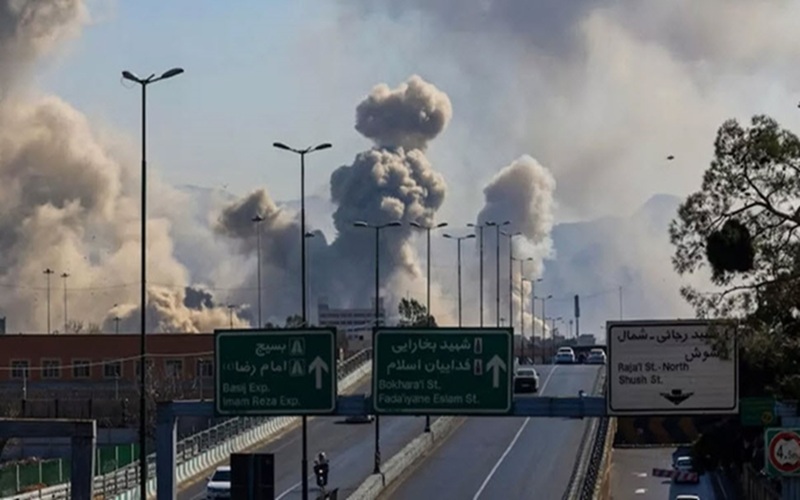
Simultaneously, traditional industries are experiencing their own contraction. Following the Nowruz holidays, numerous factories have either failed to reopen or resumed operations at significantly reduced capacity. The situation is particularly severe in sectors indirectly affected by the recent 40-day conflict, during which key energy infrastructures—including oil, gas, and petrochemical facilities—were targeted. The resulting disruptions have left hundreds of workers without employment and with no clear pathway back to work.
Layoffs are no longer confined to a single sector. Reports indicate workforce reductions spanning manufacturing, online services, telecommunications, and even aviation. Employees of internet service providers themselves—ironically at the center of the crisis—have faced wage delays, incomplete payments, and pressure to accept settlements without receiving their full entitlements.
For households, the impact is immediate and severe. With income sources disappearing, many families are resorting to distress strategies: selling personal belongings, depleting savings, or relying on informal support networks that are themselves under strain. The erosion of purchasing power, compounded by accelerating inflation, has made even basic necessities increasingly inaccessible.
Market conditions reflect this contraction. Across cities, economic activity has slowed to a near standstill. Retail sectors report collapsing demand, while price volatility continues to erode consumer confidence. Even non-essential goods serve as indicators of broader inflationary pressure, with prices in some cases doubling within a short period.
Perhaps most alarming is the disproportionate burden placed on already vulnerable populations. Low-income workers, the unemployed, and the homeless face existential risks in such an environment. Without income, social protection, or access to essential services, their capacity to withstand prolonged economic stress is extremely limited. In a system where visibility is already constrained, their suffering often goes unrecorded.
At its core, this crisis is not merely economic—it is systemic. The restriction of internet access, widely recognized as a fundamental enabler of modern economic activity, has compounded existing structural weaknesses. What might have been a severe downturn has instead evolved into a multi-dimensional collapse affecting production, distribution, and consumption simultaneously.
The longer these conditions persist, the more difficult recovery will become. Businesses that shut down may not reopen. Skilled workers forced out of the labor market may not return. And households pushed beyond a certain threshold may face irreversible damage.
Iran’s current trajectory raises a critical question: how much economic contraction can a society endure before the consequences transcend economics altogether? In the absence of structural remedies, the answer may not be far off.