


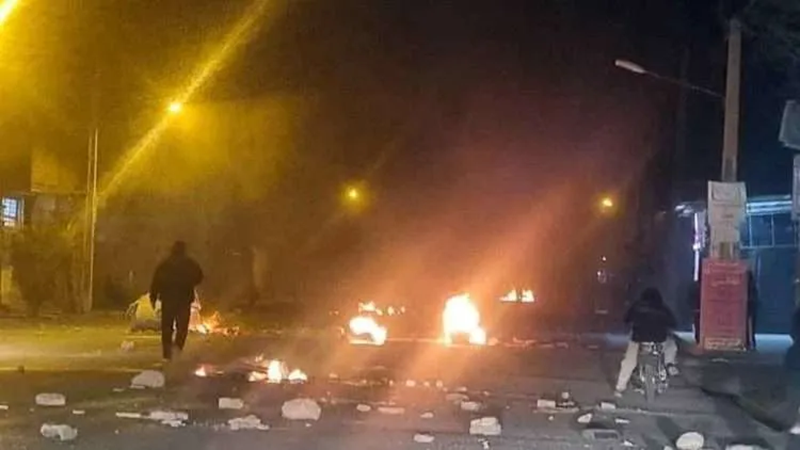

As Tehran accelerates death sentences to contain unrest, a more organized and resilient protest movement is reshaping the political equation
At a time when Iran’s regime is doubling down on repression—most visibly through the acceleration of execution sentences—there are mounting indications that the country is entering a qualitatively different phase of internal crisis. The state’s reliance on coercive instruments is not new. What is new, however, is the evolving nature of societal resistance—more organized, more persistent, and increasingly difficult to contain through traditional methods of control.
This shift is not occurring in isolation. It is unfolding alongside a broader regional context in which Iran’s internal dynamics are becoming inseparable from questions of stability and security across the Middle East.
Execution as Structural Policy, Not Tactical Choice
Executions in Iran are not episodic responses to isolated threats; they are embedded within the architecture of governance. Since the establishment of the current political system, capital punishment has functioned as a mechanism for managing crises of legitimacy. In moments of heightened vulnerability, the state has consistently turned to maximalist repression.
The current push to expedite judicial processes—particularly those ending in death sentences—should be understood within this continuum. It signals not strength, but a regime entering a more precarious phase, where survival is directly tied to the intensity of control exerted over society.
Historical precedent reinforces this interpretation. During critical junctures—most notably in the final phase of the Iran-Iraq War—the state resorted to extreme violence to neutralize perceived internal threats. The mass execution of political prisoners in 1988 stands as a stark example of this logic taken to its extreme.
From Fragmented Protest to Organized Resistance
Yet the social terrain has changed. Iran is no longer confronting sporadic, localized unrest. Instead, there is growing evidence of a transition toward more coordinated and structured forms of protest.
This transformation has been particularly visible following successive waves of nationwide demonstrations. What was once diffuse anger has begun to evolve into organized dissent. This distinction is not merely semantic—it is operationally decisive.
Security apparatuses are typically designed to suppress isolated gatherings or geographically limited protests. But when unrest becomes synchronized across multiple cities, often with elements of coordination and continuity, the effectiveness of these mechanisms diminishes significantly. Even when protests are temporarily suppressed, the underlying networks enable rapid regeneration.
In such a context, repression risks becoming counterproductive—fueling rather than extinguishing dissent.
The Dual Function of War and Regional Tension
Another critical dimension of the current moment lies in the interplay between domestic repression and foreign policy. Regional tensions and external conflicts are not merely strategic considerations; they also serve internal political functions.
The Iran-Iraq War demonstrated how external conflict can be instrumentalized to consolidate internal control, justify restrictions, and suppress dissent under the guise of national security. More recently, ongoing regional confrontations and proxy engagements appear to serve a similar dual purpose.
From this perspective, the continuation of tension is not solely driven by geopolitical imperatives, but also by structural needs within the regime to manage internal pressures.
Institutional Convergence and Escalating Pressure
At the institutional level, there are clear signs of increased coordination between the judiciary and security apparatus. Reports of directives to accelerate judicial proceedings—particularly those involving political prisoners—are accompanied by heightened readiness among security forces to confront potential unrest.
This convergence reflects a system-wide prioritization of internal control. Yet it also exposes inherent limitations. Intensified repression often generates diminishing returns, as rising pressure amplifies public dissatisfaction and broadens the base of opposition.
The Post-Conflict Paradox
An often-overlooked variable in this equation is the potential impact of reduced external tensions. At first glance, a de-escalation of conflict might appear to benefit the regime by allowing it to focus on domestic governance. In reality, it may produce the opposite effect.
Absent the justificatory framework of war or external threat, the state’s capacity to rationalize repression diminishes. Meanwhile, accumulated social, economic, and political grievances are more likely to surface with greater intensity.
This creates a paradox: the end of external crisis may expose internal vulnerabilities more starkly, forcing the regime to confront demands it is structurally ill-equipped to meet.
A System at Its Limits
Taken together, these dynamics point to a system operating within increasingly narrow margins. On one side, the intensification of repression—particularly through the judiciary—reflects an effort to maintain control. On the other, the transformation of society toward more organized forms of resistance signals the declining efficacy of these tools.
The linkage between Iran regime’s internal trajectory and regional stability is becoming more pronounced. The reality is that as long as the current system remains in place, the factors driving both internal repression and external tension are likely to persist.
What is unfolding in Iran today is not merely a cycle of protest and crackdown. It is a structural confrontation between a state reliant on coercion and a society that is learning, adapting, and organizing beyond the reach of that coercion.