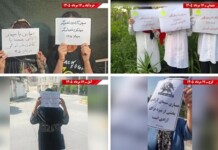
Hamed Validi and Mohammad (Nima) Massoum Shahi, members of the People’s Mojahedin Organization of Iran, were executed after months of torture—marking another chapter in Tehran’s escalating war against organized resistance
Two Flames of Freedom Extinguished at Dawn
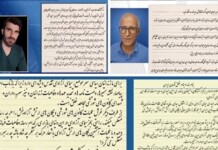
In the early hours of April 20, 2026, the Iranian regime carried out the execution of two members of the People’s Mojahedin Organization of Iran (PMOI/MEK) in Karaj Central Prison. Hamed Validi, a 45-year-old civil engineer, and Mohammad (Nima) Massoum Shahi, a 38-year-old technical worker, were put to death after enduring months of imprisonment, torture, and fabricated charges.
Their execution is not an isolated act—it is part of an intensifying campaign by the Iranian regime to crush organized resistance and silence voices demanding freedom.
From Profession to Resistance
Validi and Massoum Shahi represented two pillars of Iranian society—technical expertise and labor. Yet they chose a path far more dangerous: resistance against a system they viewed as oppressive.
Their transition from civilian life to organized opposition reflects a deeper reality inside Iran—resistance is no longer confined to a single class or group. It has penetrated the social fabric, drawing individuals from diverse backgrounds into a shared struggle against authoritarian rule.
Torture, Fabricated Charges, and Judicial Manipulation
After their arrest in May 2025, both men were subjected to prolonged interrogations and torture, according to opposition sources.
The charges brought against them—ranging from “enmity against God” to espionage—follow a familiar pattern in the Iranian regime’s judiciary. These accusations are often broadly defined and used to justify executions of political opponents.
One of the most glaring contradictions in this case was the accusation that the two men engaged in espionage related to the so-called “12-Day War” that began after their arrest—an inconsistency that underscores the extent of judicial fabrication.
A Regime Under Pressure
The executions come amid a sharp surge in capital punishment across Iran. Reports indicate that executions have reached levels not seen in decades, with many targeting political prisoners and protesters.
Analysts and opposition groups argue that this wave of executions reflects a regime under mounting pressure—from economic crisis, social unrest, and the growing influence of organized resistance networks.
Rather than demonstrating strength, such actions are widely interpreted as signs of fear—fear of a population increasingly unwilling to submit.
Targeting Organized Resistance
The Iranian regime has increasingly focused on members and supporters of the PMOI, viewing the organization as a central threat to its hold on power.
The execution of Validi and Masoum Shahi follows a series of similar killings of PMOI-affiliated prisoners in recent weeks, indicating a systematic effort to dismantle opposition structures.
These executions are intended not only as punishment but as a warning—to deter others from joining resistance movements.
A Call That Went Unanswered
Despite urgent appeals from opposition leaders, including Maryam Rajavi, the executions were carried out without delay.
Rajavi warned that the regime’s use of executions is a tool of survival, not justice—an attempt to suppress an increasingly organized and determined opposition.
Yet international responses have largely remained limited to statements of concern, falling short of meaningful intervention.
Martyrdom and Momentum
For supporters of the Iranian resistance, the deaths of Hamed Validi and Mohammad Masoum Shahi are not seen as an end, but as a continuation of a broader struggle.
Their execution joins a growing list of political killings that many compare to historical patterns of repression in Iran, where cycles of violence have often fueled further resistance rather than extinguishing it.
In this context, each execution risks deepening the very movement it seeks to destroy. The execution of these two PMOI members highlights a critical moment in Iran’s ongoing internal conflict—one defined not only by repression, but by resilience.
As the Iranian regime escalates its use of capital punishment, the confrontation between state power and organized resistance is entering a new and decisive phase—one in which the outcome may shape the country’s future trajectory.