
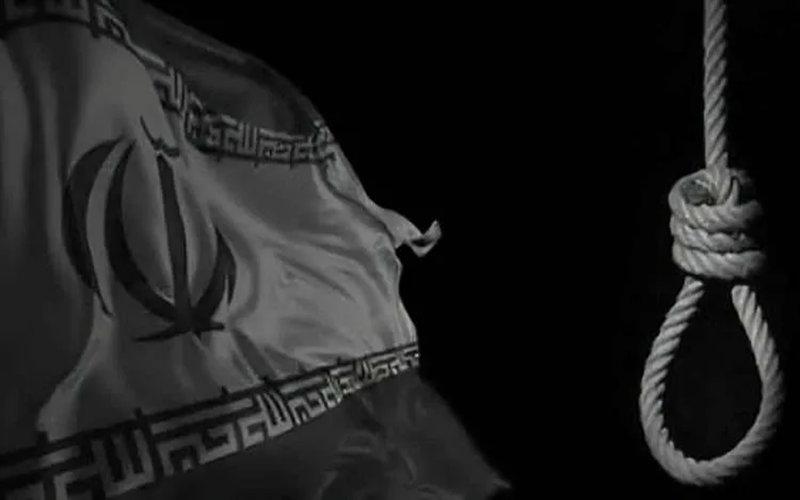

As digital silence deepens across Iran, reports reveal a parallel escalation in hidden executions, intimidation of families, and systematic repression behind closed doors.
A new report published by the British newspaper The Guardian has shed further light on the Iranian regime’s escalating campaign of secret executions and internal repression, unfolding alongside one of the country’s longest and most severe internet disruptions in recent years. Based on testimony from human rights organizations and sources close to prisoners’ families, the report describes a system in which executions are increasingly carried out in secrecy, often without prior notification to relatives and under heavy security measures.
According to the report, at least 24 prisoners have been executed in Iran since March. Several of those executed had reportedly been arrested on charges such as “acting against national security,” “espionage,” or alleged links to anti-regime protests. Human rights groups cited in the investigation say the pace of covert executions has intensified in recent months, while authorities have simultaneously worked to suppress information surrounding these cases and prevent public scrutiny.
Human rights organizations report that in numerous cases, families were informed of executions only after the sentences had already been carried out. In some instances, security authorities allegedly refused to return the bodies of executed prisoners to their relatives, a practice that has fueled outrage and deepened fears among affected families.
The report also highlights the systematic intimidation directed at prisoners’ relatives. According to sources cited by the newspaper, security agencies repeatedly warned families against speaking publicly, contacting journalists, or sharing information about detainees’ conditions. Families were reportedly threatened with arrest, surveillance, or fabricated legal cases if they attempted to publicize the situation. Under such pressure, many have remained silent out of fear of retaliation.
Human rights sources further stated that several prisoners were subjected to severe physical and psychological torture before receiving death sentences. These abuses were allegedly aimed at extracting forced confessions later used as primary evidence in court proceedings. Rights organizations have long argued that many political and security-related trials in Iran fail to meet even the most basic international legal standards, with defendants denied fair representation and transparent judicial processes.
The continuation of these secret executions comes as Iran records one of the highest execution rates in its modern history. According to figures referenced in the report, at least 1,600 executions have been documented in 2025 alone. Human rights advocates describe the number as unprecedented and warn that the real figure may be even higher due to the lack of transparency surrounding many cases.
While many executions are officially categorized under drug-related or murder charges, rights groups insist that a significant number carry political or security dimensions. Critics argue that the Iranian regime increasingly relies on capital punishment as a tool of intimidation designed to suppress dissent and instill fear across society.
Internet Shutdowns and Hidden Repression
Another major focus of the report is Iran’s prolonged internet blackout. Large sections of the population have faced severe connectivity disruptions for more than two months, drastically limiting communication with the outside world and obstructing the flow of information regarding arrests, protests, and executions.
Local sources say many Iranians can only access international communication channels through unstable VPN connections and limited proxy networks. These restrictions have significantly delayed the publication of information concerning political prisoners and security detainees, further isolating families and activists attempting to document abuses.
Human rights organizations warn that the Iranian authorities are exploiting regional tensions and wartime conditions to intensify domestic repression. According to these groups, internet shutdowns and communication restrictions have become essential tools for concealing secret executions and suppressing public reaction to state violence.
As families of detainees spend days or weeks in complete uncertainty about the fate of their loved ones, the international response has remained limited. Many activists argue that Tehran has benefited for years from international inaction and muted diplomatic pressure, enabling the continuation of systematic repression with little consequence.
Today, the combination of secret executions and digital blackouts appears increasingly entrenched as part of the regime’s long-term strategy for controlling society. The primary victims remain ordinary citizens and families who are denied not only justice, but even the basic right to know what has happened to their loved ones.