
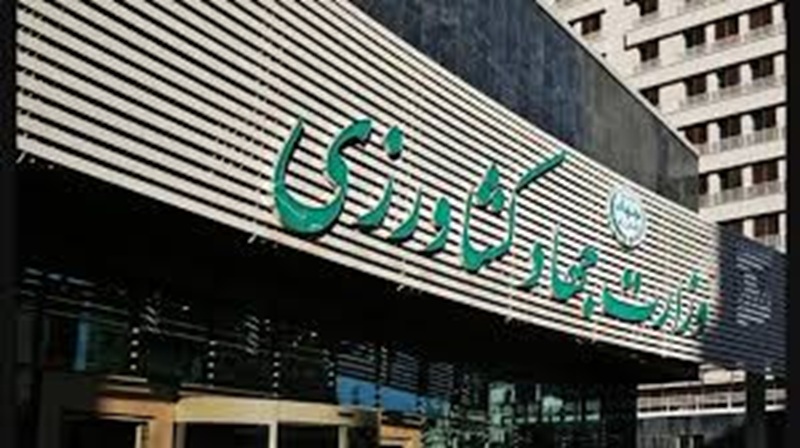

Employees responsible for safeguarding Iran’s food supply now say their own livelihoods have collapsed under inflation, inequality, and years of economic mismanagement.
For years, the Iranian regime has attempted to portray economic hardship as a temporary consequence of sanctions, war, or external pressure. But the growing anger among employees of the Ministry of Agriculture Jihad reveals a deeper reality: Iran’s economic collapse is no longer confined to the unemployed or the marginalized. It is now consuming the very state workforce tasked with keeping the country functioning.
The latest complaints from ministry employees expose a staggering gap between official wages and the actual cost of survival in Iran. While estimates place the urban poverty line at nearly 75 million tomans per month, many employees in the ministry reportedly receive average salaries of only 24 million tomans ($135). The difference is not merely economic; it represents the widening distance between the ruling establishment and the daily realities faced by millions of ordinary Iranians.
According to reports published by the state-affiliated labor outlet ILNA, workers in both the Ministry of Agriculture Jihad and the education sector remain among the lowest-paid employees in Iran’s government system. This comes despite the increasing workload placed on these sectors during the country’s ongoing economic crisis and regional instability.
The contradiction is difficult to ignore. Employees who played a central role in preventing food shortages and stabilizing markets during periods of inflation and wartime disruption now say they can barely afford basic living expenses themselves. The state continues to rely on their labor while failing to provide even minimum economic security in return.
A Government That Cannot Sustain Its Own Workforce
Yahya Azizi, secretary of the committee following employees’ demands within the ministry, acknowledged in comments to ILNA that workers in the agricultural sector spent the past year helping prevent market collapse and shortages of essential goods. Yet despite their importance to national food security, their compensation has remained painfully inadequate.
Azizi stated that the average salary of ministry employees has only recently reached around 24 million tomans per month — an amount he described as completely disconnected from the reality of Iran’s soaring living costs. With inflation continuing to accelerate, even maintaining a modest standard of living has become impossible for many government employees.
His remarks also revealed another persistent feature of Iran’s economic structure: promises without implementation. Various supplementary benefits — including hardship allowances, regional compensation, and food security bonuses — were reportedly approved in principle but never paid. Responsibility for blocking these measures was directed toward the Planning and Budget Organization, a central institution frequently criticized for austerity policies and opaque financial management.
Even recent wage increases, officials admitted, have provided little meaningful relief. A salary adjustment promoted by authorities reportedly added only around three million tomans to monthly income. Without that limited increase, average wages would have remained near 22 million tomans — a figure that, according to employees themselves, barely matches the earnings of an inexperienced laborer.
Inflation, Inequality, and Growing Anger
The frustration expressed by ministry workers reflects a broader crisis spreading across Iran’s public sector. Employees increasingly point to widening wage disparities between ministries, shrinking benefits, and the erosion of purchasing power through inflation and debt repayments.
Workers say many welfare and bonus payments in provincial offices fail to exceed four million tomans annually. Once loan installments and supplementary insurance costs are deducted, real income effectively falls back to last year’s already inadequate levels.
More importantly, the repeated rejection of proposals aimed at securing stable funding for wage improvements has reinforced a growing perception that the crisis is not simply financial, but political. Employees say multiple plans for improving salaries and creating sustainable resources were submitted to state budget authorities, only to be dismissed without transparent explanation.
The consequences are now becoming visible inside the workforce itself. According to employee representatives, some staff members have already chosen to resign under mounting economic pressure. That trend carries implications far beyond labor disputes. When workers responsible for food distribution, agricultural oversight, and supply management begin abandoning their posts, the stability of Iran’s food security infrastructure itself may come into question.
The Cost of Decades of Mismanagement
The statements coming from the Ministry of Agriculture Jihad are significant not only because of who is speaking, but because they expose the failure of a system that can no longer sustain even its own employees.
For decades, the Iranian regime has poured vast resources into ideological projects, regional interventions, military expansion, and networks of corruption while neglecting the economic foundations necessary to sustain society. The result is now visible across every sector: collapsing purchasing power, rising poverty, and growing despair among workers once considered part of the state’s stable middle class.
Today, even employees responsible for protecting Iran’s food supply openly admit they cannot secure the most basic necessities for their own families. That reality says more about the depth of Iran’s economic crisis than any official statistic ever could.