


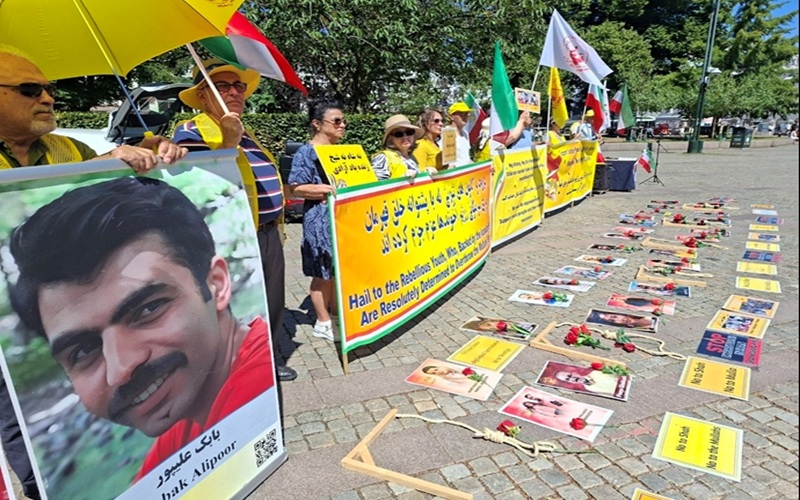

Iran’s crisis cannot be solved through appeasement, cosmetic reforms, or the restoration of monarchy. A democratic transition requires organized resistance, a clear republican vision, and the Iranian people’s right to determine their own future.
For years, international debate over Iran has revolved around the wrong questions. Can another round of negotiations stabilize the regime? Could another faction within the ruling establishment introduce meaningful reform? Would restoring the monarchy provide the country with stability?
None of these questions addresses the root of Iran’s crisis.
The country’s turmoil is not the product of one incompetent administration or a series of misguided policies. It stems from a political system that denies citizens the right to freely choose their government while treating every independent organization as an existential threat. As long as that structure remains intact, replacing officials, negotiating temporary agreements, or recycling former rulers cannot produce lasting stability.
The real question is far more consequential: which political force is capable of transforming widespread public discontent into a sustainable democratic transition?
Iran’s Crisis Is Structural, Not Administrative
Iran today faces overlapping economic, social, and political emergencies.
Runaway inflation continues to erode purchasing power. Systemic corruption undermines economic development. Water shortages, environmental degradation, unemployment, and declining living standards have intensified public frustration. Women continue to face institutional discrimination, ethnic communities remain deprived of equal rights, and peaceful avenues for political participation have been systematically closed.
These crises have widened the gap between society and the ruling establishment.
Yet history demonstrates that authoritarian governments rarely collapse simply because they become unpopular. Even regimes with little public legitimacy can survive for years if they retain centralized coercive institutions while their opponents remain fragmented and unorganized.
The Iranian regime is no exception.
Why Spontaneous Protests Alone Cannot Bring Democratic Change
The repeated waves of nationwide protests have demonstrated extraordinary courage among the Iranian people. However, courage alone cannot defeat a highly centralized system of repression.
Spontaneous demonstrations are indispensable to any democratic movement, but without continuity, coordination, and organizational infrastructure, they remain vulnerable.
The regime has repeatedly shown its ability to isolate cities, shut down communications, arrest local organizers, infiltrate protest networks, and impose severe costs on activists until demonstrations gradually lose momentum.
The central challenge is therefore not a lack of public determination.
It is the absence of a mechanism capable of transforming scattered acts of resistance into sustained political power.
Organized Resistance Fills That Gap
This is where organized resistance becomes strategically indispensable.
The Resistance Units affiliated with the PMOI/MEK should not be viewed merely as groups expressing opposition to the regime. Their significance lies in their capacity to connect local protests, preserve organizational experience, prevent activists from becoming isolated, and maintain continuity under some of the world’s harshest conditions of political repression.
Such organizational networks create connections between labor strikes, teachers’ protests, student activism, women’s movements, and neighborhood-based demonstrations.
Instead of allowing individual protests to remain isolated episodes, organized resistance seeks to transform them into a nationwide movement with strategic direction and political coherence.
Without coordination, even the bravest uprising can ultimately be suppressed in isolation.
A Democratic Transition Requires More Than Organization
Organization alone, however, is insufficient.
Any movement seeking to shape Iran’s future must also present a credible political vision for what comes after the regime.
This is where the Ten-Point Plan proposed by Maryam Rajavi distinguishes itself by presenting measurable democratic principles rather than vague political slogans.
The plan advocates:
- Free and competitive elections based on universal suffrage.
- A democratic republic founded on the sovereignty of the people.
- Separation of religion and state.
- Equality between women and men.
- Freedom of expression, association, and political parties.
- An independent judiciary and the rule of law.
- Equal rights and autonomy for Iran’s ethnic communities within national unity.
- Abolition of the death penalty.
- A non-nuclear Iran.
- Peaceful relations with the international community.
These principles establish a political framework in which legitimacy derives solely from the freely expressed will of citizens.
Iran Does Not Need the Return of Monarchy
These democratic commitments also distinguish a genuine alternative from other claimants to power.
Political legitimacy cannot originate from religious authority, inherited titles, family lineage, or endorsement by foreign governments. It must emerge from free elections whose outcomes are accepted by all political actors.
A democratic transition should therefore culminate in the election of a constituent assembly responsible for drafting a new constitution, ensuring that no individual or organization becomes the permanent owner of political power.
For this reason, restoring monarchy cannot resolve Iran’s democratic deficit.
Reza Pahlavi entered politics through hereditary status rather than democratic legitimacy. Many of his supporters continue to minimize or ignore the historical realities of authoritarian rule under the Shah, including political repression, torture, one-party governance, and the role of SAVAK.
The concern extends beyond historical memory.
Reducing Iran’s political future to a binary choice between the current regime and monarchy ignores the diversity of Iranian society while marginalizing republican democratic forces.
Ironically, this false dichotomy benefits the regime itself. By presenting itself as the only barrier preventing the return of monarchy, the regime attempts to exploit public fears of past dictatorship. At the same time, segments of the monarchist movement portray themselves internationally as the sole alternative despite lacking an organized domestic political network.
The principal casualty of this manufactured polarization is the democratic republican movement that rejects both forms of dictatorship.
Western Policy Must Stop Ignoring the Iranian People
Foreign governments also bear responsibility for perpetuating this political deadlock.
For years, many Western governments have oscillated between appeasement of the Iranian regime and support for opposition figures who possess little organized presence inside Iran.
Neither approach places the Iranian people at the center of policy.
A realistic strategy should recognize the Iranian people’s right to determine their own future without military intervention, without selecting leaders from abroad, and without promoting the restoration of monarchy.
Supporting democratic principles is fundamentally different from imposing political outcomes.
The Only Sustainable Path Forward
A successful democratic transition depends upon three essential elements working together.
First, widespread public dissatisfaction must continue to challenge the regime’s legitimacy.
Second, organized resistance inside Iran must convert that dissatisfaction into sustained political momentum.
Third, a credible democratic program must provide a roadmap for transferring sovereignty from authoritarian rule to the people.
Iran does not have to choose between two dictatorships.
The country’s genuine alternative is neither the continuation of the current regime nor the restoration of hereditary rule. It is the establishment of a democratic republic founded on popular sovereignty, free elections, political pluralism, and the rule of law—an alternative capable of turning the aspirations of millions of Iranians into lasting democratic change.