


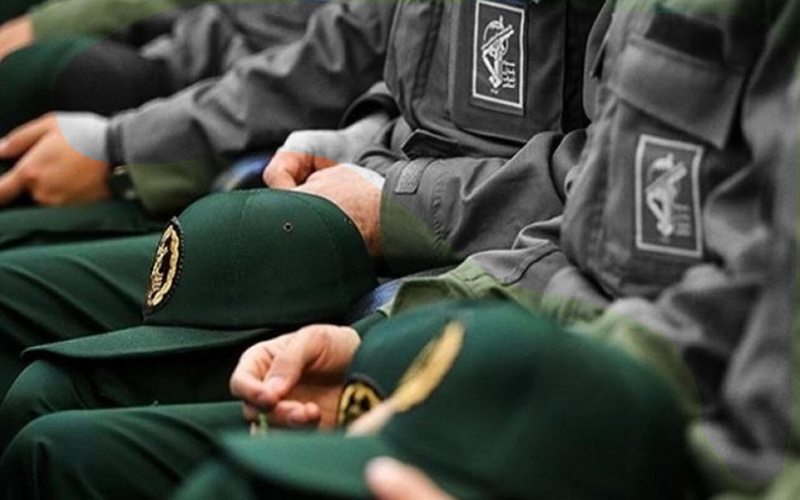

The UK government’s decision to designate the IRGC under new counterterrorism powers triggered an unusually defensive response from Tehran, exposing the regime’s concern over the growing international isolation of its most powerful military institution.
The Iranian regime’s political establishment and state-controlled media reacted with visible alarm following the British government’s decision to place the Islamic Revolutionary Guard Corps (IRGC) under newly expanded counterterrorism legislation. The move represents one of the most significant legal actions taken by the United Kingdom against the regime’s most influential military and security institution.
Under the new measures, support for the IRGC, membership in the organization, participation in its activities, or publicly displaying its symbols in the United Kingdom could result in serious criminal penalties. The decision has been widely interpreted as a major diplomatic and legal setback for Tehran, prompting a coordinated campaign of condemnation by regime officials.
Regime Condemns Britain’s Decision
Iran’s state news agency IRNA accused London of pursuing an “anti-Iranian” agenda, claiming the British government relied on what it described as “repetitive and unsubstantiated allegations” to justify its decision.
The agency also portrayed the British action as part of a broader European effort to increase pressure on the regime, noting that similar measures have previously been discussed within the European Union.
The regime’s Foreign Ministry echoed that narrative. Spokesman Esmaeil Baghaei condemned comparable European actions as an insult to what he called “an official branch of the country’s armed forces.” He argued that the measures were politically motivated and coordinated with the United States and Israel, insisting they lacked any legal basis.
In a separate statement, the Foreign Ministry claimed that European actions against the IRGC violate the principles of the United Nations Charter and international law.
Calls for Diplomatic Retaliation
The regime’s parliament also responded aggressively.
IRGC Brigadier General Esmail Kowsari, a member of the parliament’s National Security Commission, demanded that the Foreign Ministry summon the British ambassador. He warned that if Britain failed to provide what he called “convincing and logical reasons” for its decision, the ambassador should be expelled from Iran.
Kowsari described Britain’s action as “arrogant” and “irrational,” reflecting the regime’s increasingly confrontational rhetoric as international pressure on the IRGC intensifies.
State Media Reflect Growing Concern
The breadth of coverage across state-controlled media illustrated the significance the regime attached to Britain’s decision.
Jamaran News emphasized that joining the IRGC, attending its meetings, or even displaying its logo publicly would now constitute a criminal offense in Britain.
Ettelaat Online described the move as “Britain’s new game against the IRGC,” while Defa Press characterized it as another example of what it called Britain’s longstanding hostility toward the Guards.
The judiciary’s official media outlet similarly portrayed London’s action as another hostile measure targeting the regime.
Jame Jam Online highlighted that any membership in the IRGC, participation in related events, or public display of its symbols would now be subject to British criminal law.
Meanwhile, Khabar Online noted an important legal distinction. Although Britain already maintains a list of proscribed terrorist organizations, the IRGC has reportedly been placed under a separate legal framework that could, in practice, impose restrictions that are equally severe—or potentially even more far-reaching—than traditional terrorist designation.
A Blow to the Regime’s International Standing
The coordinated and emotional reaction across the regime’s institutions suggests that Tehran views Britain’s decision as more than a symbolic political gesture.
The IRGC is the backbone of the regime’s domestic repression, regional military operations, and support for proxy groups across the Middle East. Measures that criminalize support networks and restrict the organization’s international activities increase both its diplomatic isolation and legal exposure.
The intensity of the regime’s response underscores its concern that similar actions by other democratic governments could further limit the IRGC’s ability to operate internationally, raise funds, build influence, and project power beyond Iran’s borders.
For Tehran, Britain’s move represents not merely another diplomatic dispute, but a direct challenge to one of the regime’s most important pillars of power.