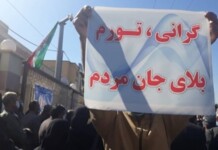
Workers and retirees led a nationwide wave of demonstrations as grievances over unpaid wages, inflation, deteriorating living conditions, and political repression continued to drive protests across Iran.
Iran’s Protest Movement Remains Driven by Economic Crisis
Iran witnessed at least 158 protest actions across the country during July 2026, highlighting the persistence of widespread social unrest fueled by worsening economic conditions, declining living standards, labor disputes, and growing public dissatisfaction with the regime’s policies.
The protests encompassed a broad cross-section of society, including workers, retirees, students, healthcare personnel, farmers, bakers, political prisoners’ families, patients, job seekers, and housing applicants. While economic grievances remained the dominant catalyst, many demonstrations also incorporated broader demands concerning civil rights and opposition to state repression.
Protest Breakdown
According to documented reports, the protests were distributed as follows:
| Group | Number of Protests |
|---|---|
| Workers | 60 |
| Retirees | 45 |
| Other social groups | 39 |
| Students | 6 |
| Nurses and healthcare workers | 5 |
| Bakers | 2 |
| Farmers | 1 |
| Total | 158 |
Workers Led July’s Protest Wave
Workers accounted for the largest share of demonstrations, organizing 60 protest actions nationwide.
Their demands reflected the deepening economic crisis affecting nearly every industrial sector. Protesters cited months of unpaid wages and benefits, insecure employment contracts, insurance disputes, layoffs, forced suspensions, unequal treatment between contract workers, elimination of overtime pay, and the failure to fully implement job classification systems.
Additional concerns centered on retirement policies, including objections to pension regulations and demands related to the oil industry retirement fund.
Demonstrations occurred across numerous sectors, including oil and gas, petrochemicals, mining, steel production, manufacturing, transportation, municipalities, and public services.
Among those participating were workers at oil and gas facilities in South Pars and Bid Boland, dismissed employees from petrochemical companies, copper and coal miners, steelworkers, railway employees, municipal workers, and staff at manufacturing plants across several provinces.
Retirees Continued Nationwide Demonstrations
Retirees remained the second-largest protesting group, organizing 45 demonstrations during the month.
Participants, including retirees from the Social Security Organization, the telecommunications sector, and the steel industry, protested the regime’s failure to implement promised pension adjustments, delayed payments, inadequate benefits, cuts to supplemental insurance coverage, and deteriorating access to healthcare.
Beyond economic demands, many retiree demonstrations increasingly reflected broader political concerns.
Several gatherings featured slogans opposing the death penalty and demanding the release of political prisoners, while expressing solidarity with imprisoned teachers, workers, and civil activists.
The continued presence of these political messages illustrates how economic protests increasingly overlap with broader demands for civil liberties and human rights.
Students Protested Educational Conditions
Students organized at least six demonstrations during July.
Their protests focused primarily on university welfare and educational policies, including opposition to mandatory in-person final examinations and complaints regarding poor food quality and campus living conditions.
These demonstrations reflected broader dissatisfaction with declining standards across Iran’s higher education system.
Nurses Highlight Healthcare Crisis
Healthcare workers and nurses staged five protests in Tehran, Shiraz, Sanandaj, and Yazd.
Participants condemned wage discrimination, delayed salary payments, failure to implement legally mandated benefits, low salaries amid soaring inflation, staff shortages, excessive workloads, and deteriorating working conditions.
Protest slogans emphasized both economic hardship and opposition to compulsory overtime, while also criticizing policies that have left healthcare workers struggling to maintain basic living standards.
Bakers and Farmers Protest Economic Pressures
Bakers organized two demonstrations, protesting bread pricing policies and inadequate government subsidies that have made many bakeries financially unsustainable.
Meanwhile, farmers in Karkheh County protested the suspension of their irrigation water rights, demanding restoration of agricultural water supplies necessary for their livelihoods.
Diverse Social Groups Expanded the Protest Landscape
An additional 39 protests involved a diverse range of social groups, illustrating the widening scope of public dissatisfaction.
Among the most notable demonstrations were gatherings by families of political prisoners sentenced to death, who demanded an end to executions and called for the release of detainees facing capital punishment. Following several executions, civil activists also rallied to warn of the continued risk facing political prisoners held in Iranian prisons.
Other protests included:
- Patients suffering from autoimmune diseases protesting soaring medicine prices and limited access to essential drugs.
- Job seekers demanding employment opportunities in several cities.
- University employees protesting wages and working conditions.
- Dismissed university professors objecting to forced retirement and politically motivated dismissals.
- Applicants for government housing projects protesting construction delays and broken promises.
- Automobile buyers protesting delivery delays and unfulfilled contractual obligations.
- Property owners and local residents demonstrating over land rights and municipal disputes.
- Parents, public health employees, municipal workers, and teaching recruitment candidates also staged separate demonstrations over sector-specific grievances.
Economic Crisis Continues to Drive Public Anger
The July protests demonstrate that Iran’s social unrest remains overwhelmingly rooted in economic deterioration.
Persistently high inflation, delayed wage payments, unemployment, declining purchasing power, pension shortfalls, and collapsing public services continue to fuel demonstrations across multiple sectors of society. At the same time, the growing participation of families of political prisoners and the increasingly frequent anti-execution slogans heard during labor and retiree protests suggest that economic grievances are becoming increasingly intertwined with broader demands for justice, accountability, and fundamental rights.
With workers and retirees continuing to organize the largest share of protests, and an expanding range of social groups joining demonstrations, the breadth of July’s protest activity underscores the depth of Iran’s ongoing socioeconomic crisis and the mounting challenges confronting the ruling regime.