


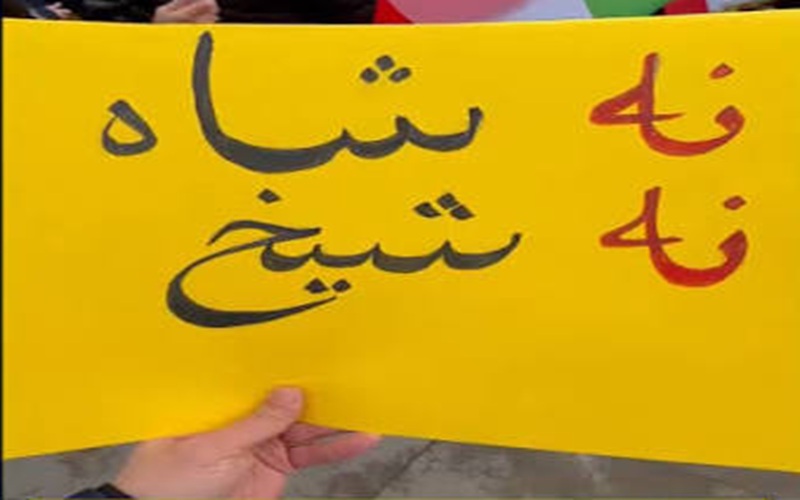

Six Iranian republican organizations call on Belgian Defense Minister Theo Francken to withdraw the invitation, warning that hosting Pahlavi at a state military institution risks conferring official legitimacy on a political figure whose positions they say conflict with democracy and political pluralism.
Six Iranian republican organizations have renewed their appeal to Belgian authorities to cancel Reza Pahlavi’s planned appearance at the Royal Military Academy in Brussels, following the earlier decision not to grant him an official speaking platform in the Belgian Parliament.
In a letter dated October 31, 2026, the organizations addressed Belgian Defense Minister Theo Francken, requesting that he withdraw the invitation for Pahlavi to deliver a speech at the military institution on November 6. Copies of the letter were also sent to Belgian Prime Minister Bart De Wever, the New Flemish Alliance (N-VA), and the Belga news agency.
The signatories expressed serious concern about the political and symbolic consequences of a Belgian state institution providing an official platform and prestige to a political figure whose positions and political conduct, they argue, conflict with fundamental principles of democracy, human rights, and political pluralism.
The appeal follows the decision by the Belgian Parliament’s Conference of Presidents not to proceed with an official parliamentary event for Pahlavi after failing to secure political consensus. The separate invitation extended by Francken to the Royal Military Academy, however, remained in place.
Six Iranian republican organizations sign the appeal
The letter was issued by the Iranian Republican Organizations Cooperation Council (Kanon-e Hamkari-ye Nahadhaye Jomhurikhah-e Iran), comprising six organizations:
- Socialist Democratic and Secular Republican Party of Iran (Hezb-e Jomhurikhah-e Sosial-Demokrat va Laik-e Iran).
- Coalition for a Secular and Democratic Republic in Iran (Jonbesh-e Jomhurikhahan-e Demokrat va Laik-e Iran).
- Network for Convergence of Secular Democratic Republicans of Iran (Shabakeh-ye Hamgerayi-ye Jomhurikhahan-e Sekular-Demokrat-e Iran).
- Association of Iranian Republicans Convergence – Stockholm (Nahad-e Hamgerayi-ye Jomhurikhahan-e Iran – Stockholm).
- Dana Educational and Research Association (Anjoman-e Amuzeshi va Pazhuheshi-ye Dana).
- Iranian Republican Association – Toronto (Anjoman-e Iraniyan-e Jomhurikhah – Toronto).
The organizations stressed that their objection was not simply to the invitation of an opposition figure but to the potential political endorsement implied by an official appearance at a Belgian state institution.
Three fundamental concerns over Pahlavi’s political positions
The letter identifies three principal areas of concern regarding Pahlavi and his political current.
1. Failure to distance himself from the legacy of repression
The signatories criticize Pahlavi for not clearly distancing himself from the human rights violations and political repression committed under his father’s monarchy. They also raise concerns about exclusionary rhetoric and threats directed at political opponents by sections of his supporters.
They argue that democratic principles require an unequivocal commitment to freedom of expression, the rights of political opponents, and the rule of law.
2. Disregard for minorities and Iran’s ethnic and linguistic diversity
The organizations emphasize that Iran is a diverse society whose religious, ethnic, linguistic, and cultural communities must enjoy equal rights.
They argue that a democratic political system cannot be established without recognizing this diversity, ending structural discrimination, guaranteeing equal citizenship, and ensuring meaningful participation in decisions affecting local communities.
The letter warns against political approaches that disregard these rights and deepen divisions within Iranian society.
3. Support for crippling sanctions and foreign military intervention
The signatories also object to Pahlavi’s support for sweeping sanctions and foreign military intervention against Iran.
They warn that such policies threaten civilian lives, destroy national infrastructure, and deepen human suffering. Referring to the bombing of a girls’ school in Minab and the reported deaths of 180 children and teachers, the letter stresses the devastating human consequences of military intervention.
The organizations argue that Iranians need peace, security, freedom, and decent living conditions rather than war, destructive sanctions, and foreign interference.
Three demands addressed to the Belgian government
The Iranian Republican Organizations Cooperation Council makes three specific requests to Belgian authorities:
- Withdraw the invitation: Reconsider the decision to invite Reza Pahlavi to speak at the Royal Military Academy and cancel the event.
- Reject endorsement of any self-appointed representative: Explicitly declare that Belgian state institutions and government bodies do not support any particular individual or political current as the future leader or representative of Iran. The choice of Iran’s future political system and its leaders, the letter emphasizes, belongs exclusively to the Iranian people.
- Uphold political neutrality and pluralism: Ensure that Belgium’s official relations with Iranian political movements respect political and cultural diversity, equal rights for all communities, democracy, and full respect for human rights.
The signatories conclude by expressing hope that canceling the event would prevent Belgian state institutions from conferring official recognition and legitimacy on political figures and movements whose positions and conduct, in their assessment, are incompatible with democratic principles.
They also call on Belgium to maintain institutional neutrality toward the different currents of Iran’s democratic opposition.
The appeal comes amid wider debate in Belgium over the political implications of hosting Pahlavi at official institutions. The earlier parliamentary decision demonstrated the importance of distinguishing between engagement with an individual opposition figure and institutional endorsement of that person’s claim to political representation.
The republican organizations’ central argument is that Iran’s political future must be determined by the Iranian people themselves, through a democratic process, free from the endorsement of any individual or political faction by foreign governments.