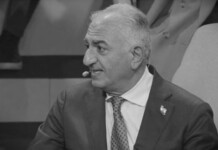
At his confirmation hearing as Secretary of State nominee, US Senator Marco Rubio delivered a speech outlining his perspective on the Iranian regime, emphasizing a critical distinction between the people of Iran and their ruling clerics. Rubio’s remarks highlighted the regime’s vulnerabilities, its destabilizing ambitions, and the path forward for U.S. policy.

The Iranian People vs. the Regime
Rubio began by drawing a stark contrast between the Iranian people and their government. “The people of Iran are a people of an ancient civilization, an ancient culture with tremendous pride and advances,” he stated. Highlighting their Persian heritage, he described Iranians as distinct from the clerical leaders who govern them. “There is no nation on earth in which there is a bigger difference between the people and those who govern them than what exists in Iran,” Rubio asserted. He underscored the importance of recognizing that the ruling regime does not represent Iran’s history or its contributions to humanity.
A Regime in Decline
According to Rubio, the Iranian regime is at its weakest point in recent memory. He cited several factors contributing to this decline:
- Damaged Air Defenses and Regional Influence:
- The regime’s efforts to establish a “Shia Crescent” in Lebanon and Syria have faced significant setbacks, with Iranian forces being driven out of key areas.
- Economic Collapse:
- Iran’s economy is in shambles, plagued by prolonged blackouts and the potential reduction of popular energy subsidies. These challenges further strain the regime’s grip on power.
- Internal Tensions:
- Within the regime, Rubio speculated on competing factions. One group likely seeks an “off ramp” to buy time, while another may push for nuclear escalation to secure immunity from foreign intervention.
The Nuclear Threat
Rubio’s speech emphasized the urgent need to prevent a nuclear-armed Iran. He expressed concern about Iran’s enrichment of uranium to near-weapons-grade levels, calling it a “tenuous moment” for international stability. He pointed out the upcoming decision by European nations regarding the “snapback provisions” of the nuclear deal, noting Iran’s clear violations and the absence of IAEA inspectors since 2021.
“What cannot be allowed under any circumstances is a nuclear-armed Iran,” Rubio declared. He stressed that any concessions to the regime would likely be redirected toward weapon development and the sponsorship of terrorist groups such as Hezbollah. These activities, Rubio argued, are central to Iran’s ambition to become the dominant regional power.
A Threat to Global Security
Rubio also highlighted the regime’s direct threats to international figures and its history of sponsoring terrorism. “This is a group that has spent the last five years actively and openly plotting the assassination of the president-elect and multiple members of previous administrations,” he said. Such actions, Rubio argued, underscore the regime’s dangerous nature and the need for a “clear-eyed” approach in dealing with it.
A Vision for U.S. Policy
Rubio’s address concluded with a call for a balanced and pragmatic U.S. strategy. He advocated for safety and stability in the region while maintaining a realistic understanding of the Iranian regime’s intentions. “Anything we do with Iran needs to be clear-eyed about who that regime is, but also who the people of Iran really are,” he said.
By distinguishing between the aspirations of the Iranian people and the actions of their government, Rubio presented a framework for U.S. policy that seeks to weaken the regime’s destabilizing influence while supporting the legitimate hopes of the Iranian populace. His speech underscored the necessity of vigilance and clarity in addressing one of the most pressing challenges in global security today.