


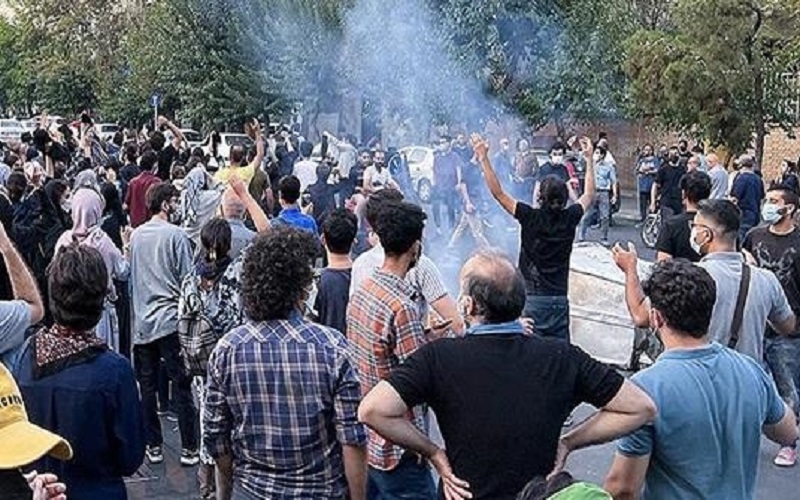

The Iranian regime’s special committee, appointed by President Masoud Pezeshkian to investigate the nationwide protests of 2022, has submitted its second report, including a copy to the UN High Commissioner for Human Rights. The report absolves the government of responsibility for the brutal suppression of the protests and denies allegations of torture. Strikingly, it states that had firearms been used more extensively, the protests would have been quelled sooner.
Government Narrative and UN Submission
The report, made public on March 26, was handed to President Pezeshkian by the committee’s head, Hossein Mozaffar, on March 12. Iran’s permanent mission to the UN delivered it to the UN High Commissioner for Human Rights on March 21.
Instead of acknowledging the social and political causes of the protests—such as state interference in personal freedoms and widespread human rights violations—the report attributes the unrest to U.S. sanctions and economic difficulties.
Claims of Compensation and Contradictory Reports
The committee states that 1,148 complaints were received from victims and claims it has taken “numerous and significant” steps to compensate them. However, more than two years after the uprising, reports continue to emerge of ongoing state pressure on victims’ families. Instead of receiving compensation and medical care, many protesters face continued harassment by security forces.
Despite claiming cooperation with the UN Fact-Finding Mission, the committee’s stance is contradicted by the UN Independent Fact-Finding Commission, which, in December 2024, stated that survivors urgently need truth, justice, and accountability for human rights violations and crimes against humanity.
Death Toll and Protester Suppression
The report reiterates the regime’s stance that Mahsa Amini’s death resulted from an underlying illness, dismissing allegations of fatal blows to the head or vital organs. It blames “rioters and foreign elements” for the violence, as well as “false and provocative news” spread by Persian-language media.
According to the committee, 281 people were killed in the protests: 90 labeled as “rioters,” 54 security personnel, 25 in “terrorist attacks,” and 112 civilians allegedly killed by unidentified perpetrators—conveniently absolving security forces of any responsibility.
However, this contradicts statements from regime officials. On November 28, 2022, Amir Ali Hajizadeh, commander of the IRGC Aerospace Force, admitted the regime had killed more than 300 people in the crackdown.
The regime also reported 6,308 injuries—5,681 security officers and 627 civilians. Yet during the protests, security forces systematically used shotguns and paintballs to maim demonstrators, particularly targeting their eyes. Many wounded protesters still suffer in agony, denied medical treatment.
Torture, Detentions, and Death Sentences
The committee claims it found no reports of mistreatment of detainees, stating that complaints mainly concerned sentencing. However, human rights organizations have documented extensive torture, sexual violence, and enforced disappearances of detainees, including minors.
The committee reports that 34,000 protesters were detained, with 90% later released under a general amnesty issued by Supreme Leader Ali Khamenei. It states that 292 legal cases were filed, with 130 convictions.
Despite claims of financial compensation for victims—amounting to 73.9 billion tomans—the reality for detainees was far bleaker. Reports document harsh conditions, lack of family contact, torture, executions, exile, and employment bans. Additionally, student protesters faced academic expulsion, while university professors and teachers were dismissed or barred from teaching.
Foreign Influence Accusations and Zahedan Massacre
The report accuses the U.S., Germany, France, Norway, Australia, Italy, Spain, and South Korea of “significant roles” in instigating the protests. It also repeats the regime’s narrative regarding the September 30, 2022, Zahedan massacre—claiming that armed men initiated the attack on a police station. However, eyewitness accounts and independent reports confirm that snipers and security forces deliberately fired on protesters, killing over 100 people, including 17 children.
A month later, a similar massacre occurred in Khash, where regime forces opened fire on demonstrators. Amnesty International reported 18 deaths.
Denial of Sexual Violence and Student Poisonings
The regime’s report dismisses widespread allegations of sexual violence against detainees, claiming that of 45 reported cases, only five individuals were identified, and none filed complaints. It also refutes rape allegations against regime agents, despite documented cases involving IRGC members.
Human rights organizations, however, have confirmed systematic sexual violence. Amnesty International reported in March 2023 that detained children, some as young as 12, were subjected to torture, rape, and other abuses.
Similarly, the committee denies regime involvement in the mass poisoning of female students during the protests, attributing the incidents to “biased and hostile elements” using stink bombs, tear gas, and pepper spray to create chaos.
Yet, since November 30, 2022, reports of toxic gas attacks on schoolgirls have raised public alarm, with authorities refusing to address the issue. Initially dismissing the poisonings as student mischief, officials later blamed “enemy actions” without offering credible explanations.
Conclusion
The Iranian regime’s special committee report, submitted to the UN, serves as a clear attempt to absolve the state of responsibility for the brutal crackdown on the 2022 protests.
By blaming foreign actors, downplaying casualties, and denying systematic repression, the regime continues to evade accountability for human rights violations.
Independent reports from human rights organizations, victims, and even some regime insiders paint a starkly different picture—one of a state engaged in widespread suppression, torture, and targeted violence against its citizens.