


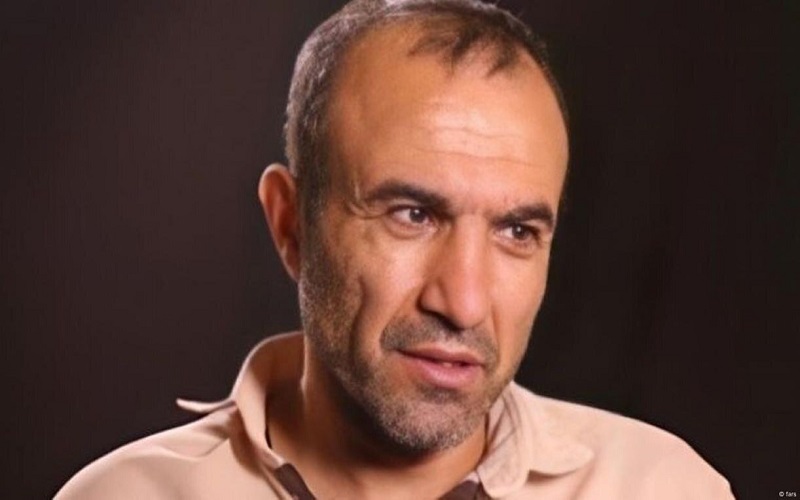

On the morning of Wednesday, June 11, Iranian regime state media announced the execution of Mujahid Korkur, a protester from the city of Izeh and one of the many detainees from the 2022 nationwide uprising. The Mizan News Agency, affiliated with the regime’s judiciary, confirmed the execution, though the exact location where it took place remains unknown.
Just hours before the announcement, reports had surfaced on social media that Korkur’s family had been summoned to the prison for a final visit—typically a harrowing indication that an execution is imminent. In recent days, human rights organizations and numerous social media users had raised alarm over the growing likelihood of his execution.
Arrest and Trial
Mujahid Korkur—whose given name was Abbas—was arrested on December 19, 2022, following a raid by security forces on the village of Par Surakh near Izeh. Three months later, in March 2023, Branch 1 of the Ahvaz Revolutionary Court sentenced him to death on charges of moharebeh (waging war against God) and corruption on earth. These charges were upheld by Branch 39 of the Supreme Court in December 2023 and forwarded to the Izeh Court for enforcement.
According to Mizan News Agency, Korkur was accused of a range of serious offenses, including:
- “Drawing weapons with the intent to kill and intimidate,”
- “Disturbing public order,”
- “Causing major physical harm leading to the deaths of seven people, including nine-year-old Kian Pirfalak,”
- “Damaging public and private property,” and
- “Forming and participating in an armed rebel group against the state.”
The judiciary identified him as the primary suspect in what it described as a “terrorist attack” on the Izeh marketplace during the protests on November 16, 2022, in Khuzestan province—an incident that left seven civilians dead, including Kian Pirfalak.
Disputed Narrative and Family Testimonies
However, the regime’s narrative has been strongly contested by the victim’s family members and independent observers.
At her son’s funeral, Kian Pirfalak’s mother, Zeinab Molaei, publicly stated that security forces—not protesters—were responsible for the gunfire that killed her son and seriously injured her husband. She reiterated this version of events on her Instagram account, where she also posted a photo alongside Korkur’s mother, signaling solidarity.
Kian’s uncle, Sajjad Pirfalak, also refuted the official narrative in a post on X (formerly Twitter), stating unequivocally that the child was murdered by regime agents “in the presence of his parents.” He emphasized that no trace of Mujahid Korkur was found at the crime scene and cited surveillance footage from multiple nearby cameras that support the family’s claims.
Kian Pirfalak was killed on the evening of November 16, 2022, when the family’s car came under fire during anti-regime demonstrations in Izeh.
Public Backlash
The execution of Mujahid Korkur has triggered a wave of outrage among Iranians and international observers. Social media platforms have been flooded with messages of condemnation, while human rights defenders and political activists have denounced the lack of due process and the regime’s continued use of capital punishment to silence dissent.
With Korkur’s death, the number of protesters executed in connection with the 2022 uprising now stands at eleven. Other executed protesters include:
- Mohammad Mehdi Karami
- Mohammad Hosseini
- Mohsen Shekari
- Majidreza Rahnavard
- Majid Kazemi
- Saeed Yaghoubi
- Saleh Mirhashemi
- Milad Zohrevand
- Mohammad Ghobadlou
- Reza Rasaei
Conclusion
The execution of Mujahid Korkur marks another grim milestone in the Iranian regime’s ongoing crackdown on dissent. As questions persist over the legitimacy of his conviction and mounting evidence points to state culpability in Kian Pirfalak’s death, calls for accountability are growing louder—both within Iran and across the international community.