


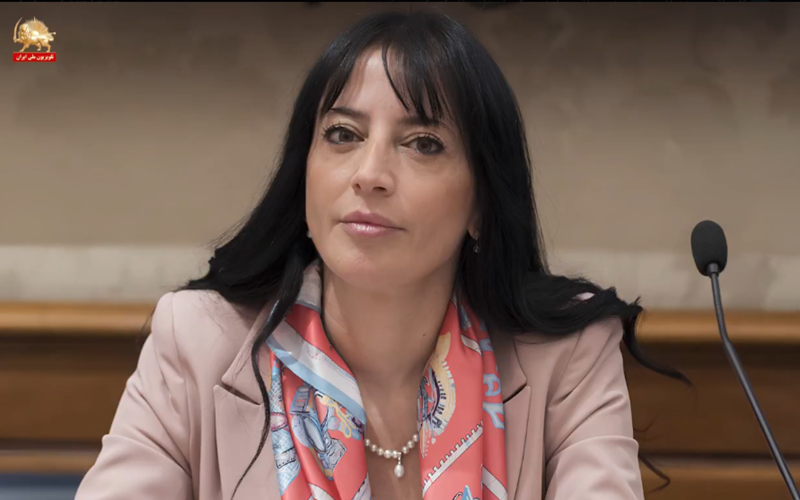

Naike Gruppioni warns that executions and death sentences against protesters are being used to suppress dissent, urging governments and international institutions to demand an end to executions and protect prisoners’ rights.
A member of the Italian parliament’s Foreign Affairs Committee, Gruppioni stressed that the international day must serve as more than a symbolic occasion. It should reinforce the principle that no government has the right to arbitrarily determine who deserves to live and who must die.
🔵کنفرانس بهمناسبت روز جهانی علیه حکم اعدام، نایکه گروپیونی
کنفرانس بهمناسبت ۱۰ اکتبر روز جهانی علیه اعدام با حضور شخصیتهای برجستهٔ سیاسی و حقوقدانان
نه به اعدام در ایران: ضرورت حسابرسی از سردمداران رژیم
ارجاع پرونده جنایات رژیم به شورای امنیت سازمان مللسخنرانی نایکه… pic.twitter.com/c7lCiobC8i
— Simay Azadi (@simayazaditv) October 11, 2026
Executions and Death Sentences Target Political Opponents
Gruppioni highlighted the execution of several members of the People’s Mojahedin Organization of Iran (PMOI/MEK) in 2026, naming Hamed Validi, Mohammad (Nima) Masoum-Shahi, and Mehdi Khanki Javan. She emphasized that behind every name are grieving families and lives cut short by political repression.
She also cited figures attributed to the Iran Human Rights organization indicating that at least 100 protesters arrested in connection with the January 2026 protests had been sentenced to death across 13 Iranian provinces. According to the figures presented at the conference, those facing death sentences included women and individuals who were reportedly under the legal age of adulthood at the time of the alleged offenses.
Other detainees also remain at risk of execution, she warned.
Gruppioni stressed that these figures represent individual lives, families, and futures threatened by a judicial system increasingly associated with the suppression of dissent. When capital punishment is used to intimidate opponents and discourage demands for freedom, she argued, the issue extends far beyond criminal justice to the protection of fundamental rights and the rule of law.
Justice Must Not Become an Instrument of Repression
The Italian lawmaker called on democratic institutions to remain vigilant, publicly condemn human rights violations, and demand that basic legal protections be guaranteed to every prisoner, particularly the right to a fair trial.
She warned against allowing the passage of time or repeated reports of executions to diminish international attention. Silence and indifference, she argued, risk abandoning those who most urgently need international solidarity.
Her remarks placed particular emphasis on the responsibility of democratic governments to challenge the use of judicial proceedings to silence political opponents. Legal institutions, she maintained, must protect human dignity rather than serve the interests of those in power.
Call for Diplomatic Pressure and an End to Executions
Gruppioni urged governments and international organizations to maintain diplomatic and political pressure on Tehran until executions are halted and death sentences are overturned.
She also called for greater transparency, access to justice, and protection for prisoners and their families. These measures, she argued, are essential to preventing further abuses and ensuring that those facing execution are not abandoned to the Iranian regime’s judicial system.
The international community, she stressed, must not allow the normalization of executions to weaken its response to the repression of the Iranian people.
Iran’s Future Must Belong to Its People
Gruppioni concluded by emphasizing that Iran’s future must be determined by its own people. She called for a country where no one fears imprisonment or execution because of their beliefs, where freedom is not treated as a crime, and where human dignity cannot be subordinated to the demands of political power.
She also expressed support for Maryam Rajavi and the principles she represents, linking the struggle against executions to the broader demand for a democratic future in Iran.
Her central message was that defending the right to life and freedom requires sustained international action—not merely expressions of concern, but concrete diplomatic and political measures to stop executions and protect those facing persecution.