At an conference, Maryam Rajavi warns that executions, war, and repression will not save the regime—and insists that only organized resistance can bring lasting peace to Iran and the Middle East.
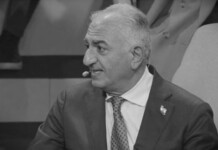
At a conference held on April 10, opposition leader Maryam Rajavi delivered a forceful address framing the ongoing executions in Iran not merely as acts of repression, but as a strategic response by a regime “consumed by decay” and fearful of its own people.
The conference—titled “A Call for Immediate Action to Halt the Executions of PMOI and dissident political prisoners, and courageous protesters”—brought together political figures from Europe and beyond, alongside members of the People’s Mojahedin Organization of Iran (PMOI) at Ashraf-3.
Rajavi’s speech was both a tribute to executed dissidents and a broader political argument: that the future of Iran hinges on organized resistance, not foreign intervention or appeasement.
“Martyrs of Peace and Freedom”
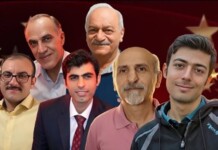
Opening her remarks, Rajavi honored those recently executed, naming both PMOI members and young protesters. She described them as:
“Martyrs of peace and freedom.”
She emphasized that their executions—carried out even amid external conflict—revealed the regime’s true priority:
“By executing these heroes amid an external war, the regime has shown that it considers the arisen people and their organized resistance to be its true enemy.”
According to Rajavi, these killings are not signs of strength but of vulnerability:
“A regime consumed by decay rushed to carry out these executions to protect its crumbling power from the uprisings that may follow the war.”
Rather than suppress dissent, she argued, the executions will have the opposite effect:
“These martyrs will only fuel the flames of future uprisings more than ever before.”
Neither War Nor Appeasement
A central theme of the speech was the rejection of both military escalation and diplomatic appeasement as viable solutions.
Rajavi stated unequivocally:
“Today, more clearly than ever, it has been proven that the solution lies neither in appeasement nor in war, but in the overthrow of the regime by the people and their organized resistance.”
She reframed the conflict in Iran as fundamentally internal:
“It has also become clear that the real war is between the people of Iran and religious tyranny.”
While welcoming a temporary ceasefire—particularly the halt to attacks on civilian infrastructure—she stressed that peace without political change would be unsustainable:
“Lasting peace can only be achieved through the overthrow of this terrorist, warmongering dictatorship… and the establishment of a democratic republic.”
A Demand to the International Community
Rajavi directly addressed global policymakers, calling for a shift in approach toward Tehran. She warned that decades of inaction had emboldened the regime:
“As long as you fail to stand against this regime’s violations of the Iranian people’s human rights, you will never be able to stop its warmongering, its terrorism, or its pursuit of nuclear weapons.”
She also set a clear condition for future diplomacy:
“Ending executions in Iran… must be included in any international agreement.”
Challenging the regime’s claims of popular support, she added:
“If this claim were true… it should accept free elections… under United Nations supervision.”
The Rise of a New Generation
A significant portion of the speech focused on what Rajavi described as a “countless generation” of young Iranians joining the resistance.
Despite decades of repression, propaganda, and mass executions—including the 1988 massacre—she argued that the movement has not only survived but expanded:
“A new generation of rising, defiant youth has joined the PMOI and the resistance units.”
She pointed to the regime’s own behavior—constant anti-PMOI propaganda—as evidence of its fear:
“There has hardly been a rally… without chants of ‘death to the Mojahedin.’”
Yet, she said, these efforts have failed:
“Young people rising for the freedom of their society and country are finding what they seek within the PMOI.”
Voices from the Gallows
One of the most striking elements of Rajavi’s address was her recounting of final statements from executed prisoners—presented as evidence of ideological commitment and defiance.
Among them:
“I will go to the gallows firm and unshaken.” — Pouya Ghobadi
“I call for a struggle a hundred times greater against the regime of Velayat-e Faqih.” — Babak Alipour
“My greatest wish is to remain a Mojahed… and to die like a Mojahed.” — Abolhassan Montazar
“Blessed is the fight and the sacrifice of one’s life for the ideal of a just society.” — Vahid Bani-Amerian
She emphasized that these statements were made with full awareness of imminent execution:
“They spoke these words at a time when they knew… that the gallows awaited them. Yet they embraced this fate with open eyes.”
“An Indomitable Force”
Rajavi concluded by asserting that the regime is now facing a deeply rooted and expanding resistance:
“When a generation… no longer fears arrest, torture, or execution… it means that a nationwide resistance has reached the strength and capacity to overthrow this regime.”
She described this movement as an “indomitable force at the heart of the people,” sustained by sacrifice and collective resolve.
In closing, she paid tribute to families of victims and ongoing grassroots campaigns against executions, declaring:
“A people who carry such an indomitable force within their hearts have already gained the power to defeat their enemy.”
Her final words encapsulated the message of the conference:
“Salute to the martyrs. Long live freedom.”