


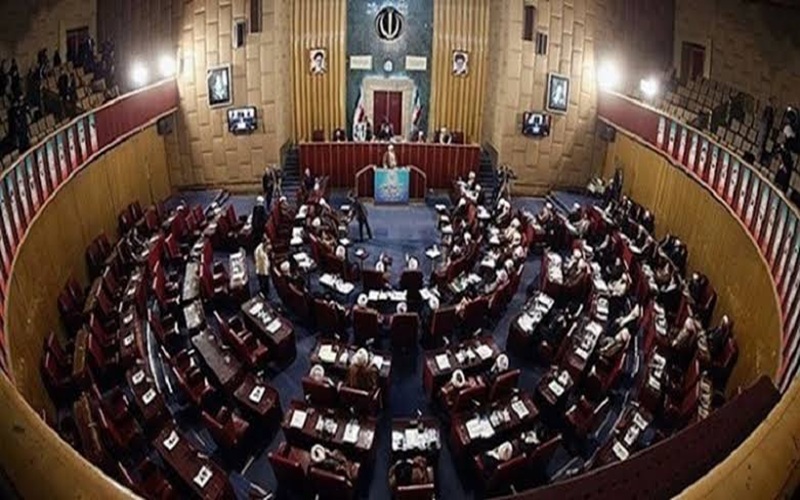

A ten-point statement by the regime’s Assembly of Experts calls for reconsidering Iran’s defense doctrine and withdrawing from the Nuclear Non-Proliferation Treaty, bringing the nuclear weapons question into the heart of the regime’s internal power struggle over negotiations with the United States and political survival.
Iran’s ruling establishment has brought the prospect of withdrawing from the Nuclear Non-Proliferation Treaty (NPT) into an official institutional statement, escalating an increasingly contentious debate over the country’s nuclear policy and the regime’s future.
On Thursday, November 12, 2026 (21 Aban 1405), the regime’s Assembly of Experts issued a detailed ten-point statement entitled Emphasis on Reviewing the Defense Doctrine. Among its demands were reconsideration of the regime’s defense doctrine and withdrawal from the NPT, presenting these steps as unavoidable necessities.
The statement also warned against any understanding or negotiations with the United States, implicitly challenging previous remarks by Mojtaba Khamenei on the possibility of pursuing a diplomatic course.
Although calls for acquiring nuclear weapons have previously come from individual members of parliament, Friday prayer leaders, and other regime figures, the Assembly of Experts’ intervention represents a different level of institutional involvement. The body is directly connected to the selection and oversight of the supreme leader, making its position politically significant.
Its statement comes amid intensifying factional disputes over whether the regime should pursue negotiations with Washington or adopt a more confrontational strategy.
From individual demands for nuclear weapons to an official institutional position
Calls for abandoning the NPT and developing nuclear weapons have circulated within the regime for some time.
Hardline parliamentarians and clerics have repeatedly urged Mojtaba Khamenei to authorize the development of an atomic bomb. During one Friday prayer gathering in Qom, regime cleric Mahmoud Nabavian openly called on him to issue such authorization.
Other parliamentarians have argued that Mojtaba Khamenei could adopt a different religious ruling from the one previously attributed to Ali Khamenei, who had declared nuclear weapons forbidden.
Tehran’s Friday prayer leader, Ali Akbari, has also described withdrawal from the NPT as a supposed national demand. Referring to a survey, he claimed that 70 percent of its participants supported leaving the treaty and pursuing nuclear weapons.
Such statements have generally come from individual political figures seeking to influence the regime’s nuclear policy or strengthen the position of hardline factions.
The Assembly of Experts’ ten-point statement, however, brings the issue into an official institutional document. Rather than another isolated demand from a parliamentarian or cleric, it places withdrawal from the NPT and a change in defense doctrine within the declared positions of an important regime institution.
This distinction matters because it indicates that the nuclear weapons debate has become part of the broader political contest over the regime’s strategic direction.
Nuclear deterrence or a strategy to guarantee the regime’s survival?
The central question behind the Assembly of Experts’ statement is what the regime hopes to achieve by abandoning its existing nuclear commitments and revising its defense doctrine.
The argument advanced by supporters of this course is that developing stronger deterrence capabilities would prevent future military attacks. In practice, however, the debate goes beyond protecting the country’s territory or preventing another strike against nuclear facilities.
It concerns the survival of the ruling establishment itself.
For years, the regime has pursued a nuclear program that has generated international confrontation, sanctions, and mounting economic and political pressure. Now, following military attacks on Iranian nuclear facilities and amid uncertainty over the future of negotiations with Washington, hardline factions are arguing that the costs of pursuing nuclear deterrence must be accepted.
The logic is that possessing nuclear weapons would make any attempt to challenge the regime considerably more costly for its adversaries, potentially forcing them to accept its continued existence.
However, this strategy could produce the opposite result. A move toward nuclear weaponization or withdrawal from international non-proliferation commitments could intensify international pressure and increase the risk of further military confrontation.
Importantly, the Assembly of Experts’ statement does not announce a formal decision to withdraw from the NPT or authorize the production of nuclear weapons. It calls for examining withdrawal and revising the defense doctrine. Nevertheless, the institutional endorsement of this debate marks a significant development in the regime’s nuclear policy discussion.
Nuclear ambitions expose deepening divisions at the top
The timing of the statement is particularly significant.
The regime is facing a strategic dilemma between negotiations with the United States and further escalation. One faction sees diplomacy and possible concessions as a means of reducing pressure, while hardliners warn that any retreat would weaken the regime and invite further demands.
The Assembly of Experts’ statement reinforces the latter position. By presenting withdrawal from the NPT and a revision of defense doctrine as unavoidable necessities, it raises the political cost of pursuing negotiations and makes compromise more difficult.
The debate also touches on the question of Mojtaba Khamenei’s position on nuclear weapons. Hardline figures have openly suggested that he could adopt a different religious ruling from his father’s prohibition on nuclear weapons. This has given renewed momentum to those advocating a change in the regime’s nuclear doctrine.
The statement therefore reflects more than a disagreement over technical nuclear policy. It exposes competing approaches to the regime’s most pressing strategic question: how to preserve its power under mounting internal and external pressure.
The growing prominence of calls for nuclear weapons, and their elevation into an official institutional statement, reveals how closely the regime’s nuclear ambitions have become intertwined with its calculations about political survival.