


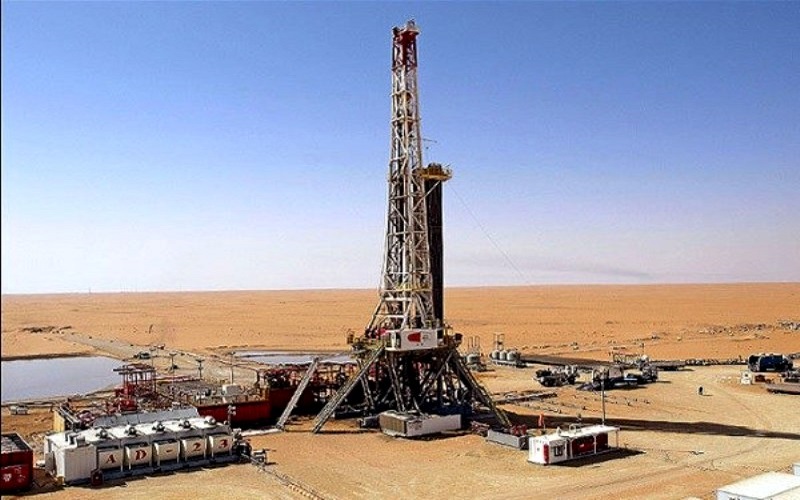

The Khuzestan Governorate, in collaboration with the oil company linked to the Execution of Imam Khomeini’s Order, has launched new oil drilling activities in the ecologically sensitive Hawizeh Marshes. This initiative, however, has proceeded without consulting the Environmental Protection Organization, raising serious environmental concerns about the region’s deteriorating ecosystem.
Unauthorized Drilling Ignites Environmental Warnings
Drilling in the Yaran oil field, encompassing both its northern and southern segments, has resumed quietly despite the alarming environmental hazards threatening the Hawizeh Marshes. Recent reports by Payam-e Ma newspaper indicate that in September, the Khuzestan Supply Council authorized new drilling, endorsing a “platform for oil activities” and actively seeking to prevent any suspension of projects in the marshes. Furthermore, the council established a committee to address “obstacles to oil operations and fulfill the Ministry of Oil’s commitments.”
Hawizeh Marshes: A Unique Mediterranean Wetland at Risk
The Hawizeh Marshes, a cross-border wetland spanning over 300,000 hectares, represent the last remnant of Mesopotamia wetlands. Roughly one-third of this ecological treasure lies in Iran, with the remaining portion in Iraq. Over the years, pressures to exploit the area for low-cost oil extraction have mounted, with devastating impacts on local biodiversity.
In 2008, the Supreme National Security Council allocated over 7,000 hectares of the marshes to the Ministry of Oil. Large sections of this delicate ecosystem were subsequently drained to facilitate cost-effective oil extraction by foreign contractors. Today, the Khuzestan Governorate is once again allowing drilling in the Hawizeh Marshes, despite calls to preserve this fragile wetland.
Environmental Agency Raises Legal Complaint Amid Permit Breach
Ahmadreza Lahijanzadeh, Deputy of Marine Environment and Wetlands at the Environmental Protection Organization, has confirmed that drilling in the Yaran oil field began without the necessary environmental permits. According to Lahijanzadeh, the Ministry of Oil was supposed to conduct environmental management studies and devise a comprehensive conservation plan before receiving approval for new wells. However, these obligations were bypassed as drilling commenced.
In response, the Environmental Protection Organization filed a complaint to halt the project. Yet, at the request of the Ministry of Oil, the Khuzestan Supply Council convened in September and granted a security permit to continue drilling, prioritizing immediate oil extraction over environmental safeguards.
Expansion Without Environmental Oversight
The Yaran oil field spans approximately 110 square kilometers, situated west of the extensive Azadegan oil field within the Hawizeh Marshes. To date, the Azadegan field has drilled over 300 wells in the marshes, initially authorized for only 75 wells. However, permits for additional wells have continuously been granted under the guise of expanding the Azadegan site. The Yaran field alone holds 40 wells, with proposals for six more.
Since its establishment in 2005, the Persian Oil and Gas Industry Development Company—currently managed by Seyed Jafar Hijazi, former governor of Khuzestan—has overseen the Yaran field. In 2013, the field was transferred to the Execution of Imam Khomeini’s Order, a government-linked conglomerate. Despite longstanding opposition from environmentalists, the Khuzestan Supply Council granted Persia Company permission in May to continue excavation and drilling in the marshes.
Escalating Environmental Damage Sparks Outcry
Environmental activists point to the long-standing ecological degradation in Hawizeh Marshes, attributing it to years of war, the construction of the Karkheh dam, and extensive oil exploitation. These disruptions have severely altered the marshes’ hydrological balance, causing habitat fragmentation and biodiversity loss. The area has also become increasingly prone to fires and dust storms, further destabilizing the region’s ecology.
Last year, 165 environmental organizations and over 100 experts called on the Environmental Protection Organization to halt oil activities in the marshes. They warned of the potential for irreversible destruction, but drilling has continued unabated.
Empty Promises of Local Employment
Proponents of oil development in Hawizeh Marshes often tout employment opportunities for local communities. However, the people of the region report little benefit from these projects. Instead of economic prosperity, residents face recurrent dust storms, fires, and water shortages exacerbated by the marshes’ desiccation.
Conclusion
As oil companies expand operations in the Hawizeh Marshes, the environmental cost appears to far outweigh any potential economic gain. Urgent action from both domestic authorities and the international community is needed to address this ecological crisis. If left unchecked, the ongoing exploitation of this unique wetland may lead to irreparable environmental damage and the permanent loss of one of the region’s most precious natural habitats.