



From nuclear tensions and regional war to nationwide protests and leadership crisis, Iran’s trajectory signals a decisive historical turning point
As the Iranian year 1404 comes to a close (March 2025–March 2026), Iran stood at the center of global attention—shaken by war, domestic unrest, economic crisis, and unprecedented political fragmentation. A chronological review of events reveals a system under intense strain, facing both internal explosion and external pressure.
Spring 2025: Diplomacy, Sanctions, and Rising Unrest
The year began with renewed diplomatic maneuvering. On March 22, 2025 (2 Farvardin 1404), Donald Trump reportedly sent a letter to Ali Khamenei, the regime’s killed supreme leader proposing new nuclear negotiations. While Khamenei rejected the overture as an attempt at domination, signals soon emerged that Tehran had indirectly engaged through intermediaries.
By late March, the Iranian regime formally denied responsibility for the suppression of the 2022 protests in a report submitted to the United Nations High Commissioner for Human Rights—a move widely criticized by observers.
At the same time, Iran faced increasing external pressure. On April 7, 2025, the U.S. Treasury sanctioned networks supplying weapons to regional proxies such as Hezbollah and Popular Mobilization Forces, weakening Tehran’s regional logistics.
Domestically, protests intensified. Throughout spring, workers, retirees, and teachers organized sustained demonstrations over worsening economic conditions, signaling deep social discontent.
May–June 2025: Negotiations and the Road to War
On May 10, 2025 (20 Ordibehesht), Iran and the United States entered a new round of nuclear talks. However, negotiations failed to produce results, and tensions escalated rapidly.
By June 13, 2025 (23 Khordad), Israel launched preemptive strikes on the regime’s nuclear and missile facilities, triggering what became known as the 12-Day War. Key installations in Bandar Abbas and Bushehr were targeted, followed by intensified regional clashes.
During this period, Iran’s internal situation deteriorated further. Nationwide strikes—including a major truckers’ strike—reflected systemic economic crisis, while human rights organizations warned of rising executions as a tool of state control.
Summer 2025: War, Ceasefire, and Internal Fractures
On June 22, 2025 (1 Tir), the United States directly entered the conflict, striking nuclear facilities in Natanz, Fordow, and Isfahan.
A ceasefire was reached on June 25, 2025 (4 Tir), mediated by Qatar and Russia. However, the economic consequences were severe, pushing Iran toward the brink of collapse.
Internally, political fractures widened. Parliament pursued restrictive internet legislation, while disputes between factions escalated. President Masoud Pezeshkian faced mounting criticism from both reformist and hardline camps.
Meanwhile, regional setbacks continued. Israeli operations and targeted strikes weakened Iran-aligned forces, further eroding Tehran’s strategic depth.
Late Summer 2025: Escalating Isolation
By late August, Europe took a decisive stance. On August 27, 2025 (5 Shahrivar), the European Parliament voted to designate the Islamic Revolutionary Guard Corps as a terrorist organization, marking a turning point in Iran–EU relations.
Simultaneously, the International Atomic Energy Agency resumed engagement with Tehran amid mounting concerns over nuclear compliance.
Economic indicators worsened sharply, with reports highlighting massive budget deficits and declining capacity to fund regional proxies.
Autumn 2025: Internal Crisis and External Pressure
Autumn saw intensified domestic crisis. Parliament debated withdrawal from the Treaty on the Non-Proliferation of Nuclear Weapons, reflecting escalating tensions with the West.
At the same time, regional diplomacy increasingly excluded Iran. A key summit in Sharm el-Sheikh underscored Tehran’s growing isolation as Arab states moved closer to U.S.-aligned positions.
Domestically, repression intensified. Expanded enforcement of compulsory hijab laws and continued internet restrictions deepened public frustration, while political infighting escalated across factions.
Winter 2025–2026: Uprising, Crackdown, and Systemic Breakdown
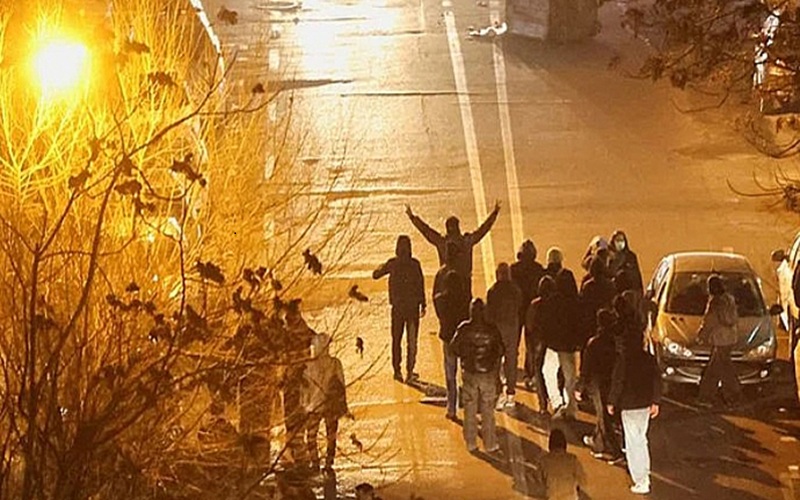
The most decisive phase began in late December 2025. On December 28 (7 Dey), nationwide protests erupted, led by youth and women, directly targeting the ruling establishment.
Within days, the situation escalated dramatically. On January 8–9, 2026 (18–19 Dey 1404), security forces carried out a mass crackdown, resulting in large-scale casualties and drawing condemnation from the United Nations Human Rights Council.
Economic instability worsened, with the resignation of Iran’s central bank governor amid a currency collapse.
February–March 2026: War, Leadership Crisis, and Turning Point
By early March 2026, events reached a historic climax.
On February 28, 2026 (9 Esfand 1404), joint U.S.-Israeli strikes targeted key military and strategic centers. In the aftermath, Ali Khamenei was reported killed, alongside several senior military officials.
This triggered a brief information blackout, followed by internal chaos and factional conflict.
Soon after, Mojtaba Khamenei was declared the new Supreme Leader, signaling an attempt to preserve continuity within the ruling structure.
At the same time, the National Council of Resistance of Iran announced the formation of a transitional government aimed at transferring sovereignty to the people and establishing a democratic republic.
Regional escalation continued, as Hezbollah launched retaliatory strikes, expanding the conflict beyond Iran’s borders.
Conclusion: A Year That Changed Iran’s Trajectory
The events of 1404 (2025–2026) mark one of the most turbulent periods in Iran’s modern history.
Within a single year, Iran experienced:
- Two major wars
- A nationwide uprising and mass repression
- Severe economic collapse
- The death of its long-standing Supreme Leader
- Intensifying international isolation
Taken together, these developments point to a system facing profound structural crisis.
For many analysts, the trajectory is clear: Iranian society has entered a phase from which a return to the status quo appears increasingly unlikely. The convergence of domestic resistance, external pressure, and elite fragmentation suggests that the question is no longer whether change will come—but how and when it will fully unfold.