


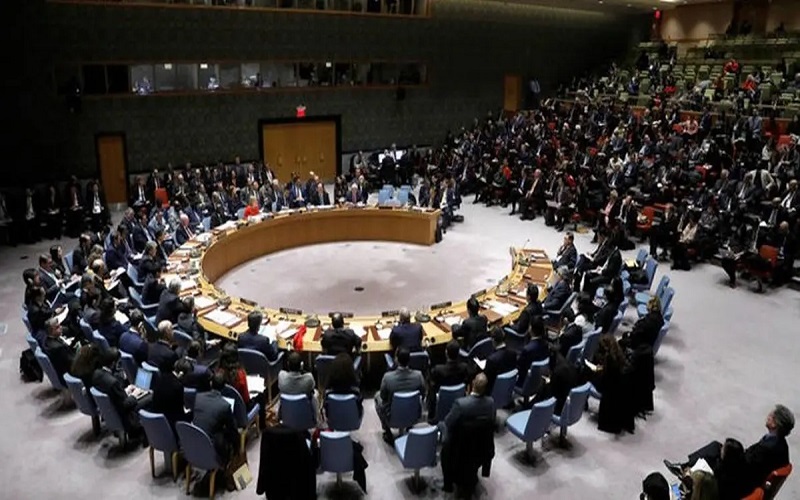

On Tuesday, December 17, 2024, during a review of Iran’s nuclear program and the United Nations Secretary-General’s report on Resolution 2231, the UN Security Council voiced sharp criticism of Tehran’s nuclear activities. Resolution 2231, which underpins the Joint Comprehensive Plan of Action (JCPOA), is set to expire in ten months, adding urgency to diplomatic efforts to address Iran’s non-compliance.
UN Officials and Agencies Highlight Alarming Developments
Rosemary A. DiCarlo, Under-Secretary-General for Political and Peacebuilding Affairs, underscored the need for revitalizing the JCPOA through multilateral diplomacy. She lamented the ongoing deadlock in the JCPOA revival process and noted that the International Atomic Energy Agency (IAEA) has been unable to verify the peaceful nature of Iran’s nuclear program due to disrupted monitoring and verification activities. According to DiCarlo, Iran’s enriched uranium stockpile is now 32 times the JCPOA’s permissible limit, with enrichment levels reaching 20% and 60%, far exceeding civilian requirements.
Western Nations Warn of Regional and Global Security Risks
During the session, multiple representatives expressed grave concerns about Iran’s nuclear advancements and their implications for regional stability:
- United States: Ambassador Robert Wood highlighted Iran’s continued expansion of its nuclear program, including the production of highly enriched uranium and installation of advanced centrifuges. He called for a unified international response to hold Tehran accountable while reaffirming the United States’ preference for diplomacy. However, he warned that all options remain on the table to prevent Iran from acquiring nuclear weapons.
- European Union: Stavros Lambrinidis, the EU’s Ambassador to the United Nations, reiterated the bloc’s commitment to ensuring that Iran does not acquire nuclear weapons. He linked Tehran’s nuclear activities to broader regional security concerns and emphasized the urgent need for de-escalation.
- United Kingdom: The British representative declared the current situation a critical juncture, given the impending expiration of Resolution 2231. The UK emphasized its readiness to take necessary diplomatic measures, including activating the JCPOA’s “trigger mechanism,” to counter Iran’s nuclear ambitions.
- Germany: Germany’s representative described Iran’s disregard for its nuclear commitments as deeply troubling, noting that Iran is the only country enriching uranium to 60% without possessing nuclear weapons. This unprecedented enrichment level raises serious questions about Tehran’s intentions.
European Troika Calls for Immediate De-escalation
France, Germany, and the United Kingdom issued a joint statement expressing deep concern over Iran’s recent actions. The European Troika criticized Iran’s enrichment activities, which they argued lack any civilian justification. They highlighted the unprecedented stockpile of highly enriched uranium, warning that Iran could soon produce sufficient fissile material for nuclear weapons.
The statement also condemned Iran’s installation of advanced centrifuges and its threats to withdraw from the Nuclear Non-Proliferation Treaty (NPT). Such actions, the Troika warned, undermine the nuclear agreement and heighten regional tensions. They urged Iran to halt its nuclear escalations and return to the path of diplomacy by cooperating fully with the IAEA.
IAEA and Global Reactions
The IAEA’s recent report confirmed that Iran has enriched uranium to 60%, nearing the 90% threshold required for weaponization. Western nations, including the United States and EU member states, argue that this enrichment level has no civilian justification. Tehran, however, insists that its nuclear program is entirely peaceful.
Background: JCPOA and Iran’s Non-Compliance
The JCPOA was signed in 2015 between Iran and the P5+1—the United States, United Kingdom, France, Germany, Russia, and China. The agreement aimed to limit Iran’s nuclear activities in exchange for sanctions relief. However, the United States unilaterally withdrew from the agreement in 2018 under the Trump administration. In response, Iran gradually suspended its compliance with JCPOA obligations starting in 2019.
Conclusion
As Resolution 2231 approaches its expiration, the international community faces a critical test in managing Iran’s nuclear ambitions. With escalating enrichment activities and diminishing avenues for diplomacy, the stakes for global and regional security have never been higher. The Security Council’s deliberations highlight the urgent need for a unified, robust response to address the growing threat posed by Iran’s nuclear program.