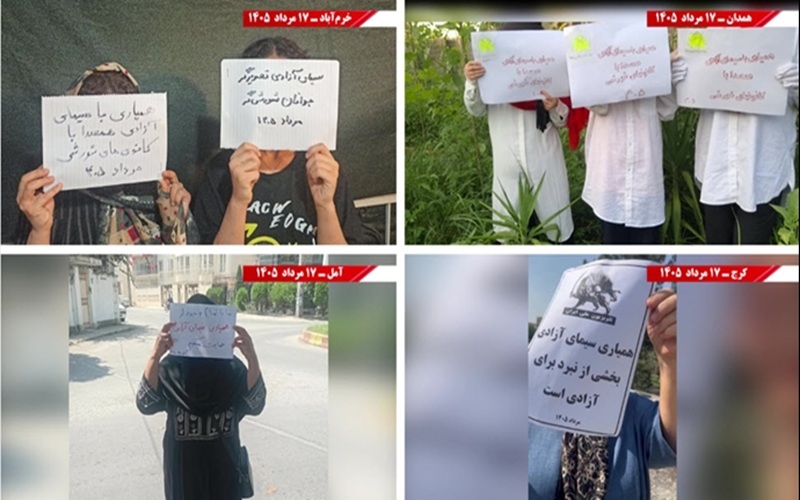

Young activists display handwritten and printed messages and organize photo actions in support of Simay-e Azadi and its 30th national fundraising campaign, highlighting the continued activities of the PMOI/MEK Resistance Units.
Resistance Units challenge censorship through grassroots activities
Young activists affiliated with the People’s Mojahedin Organization of Iran (PMOI/MEK) have carried out a series of activities in cities across Iran in support of Simay-e Azadi (IranNTV) and its 30th national fundraising campaign, according to reports from the Iranian Resistance.
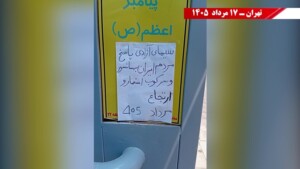
The activities included placing handwritten and printed posters in public spaces and organizing photo actions, with messages emphasizing support for Simay-e Azadi, the Resistance Units, and the broader struggle for freedom in Iran.
The reported activities took place in Tehran, Karaj, Khorramabad, Sari, Kangavar, Amol, Langarud, Zahedan, and Kermanshah.
The campaign comes as the PMOI/MEK seeks to maintain independent channels of communication outside the Iranian regime’s tightly controlled media environment.
Messages in support of Simay-e Azadi
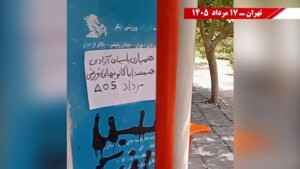
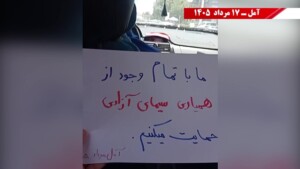
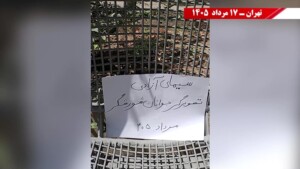
In Tehran, activists reportedly placed handwritten posters in parks carrying messages including:
“Simay-e Azadi is the response of the Iranian people to censorship and repression by colonialism and reaction.”
Other messages described Simay-e Azadi as a platform representing the activities of young Resistance Units and called for support for its national fundraising campaign.
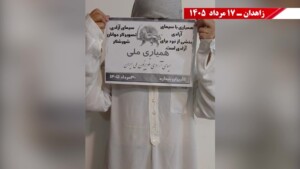
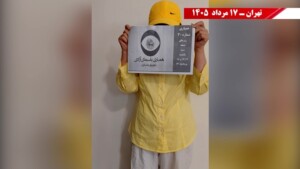
Photo actions also displayed printed posters promoting the 30th campaign and describing Simay-e Azadi as Iran’s national television.
In one reported activity, a handwritten message stated:
“Simay-e Azadi portrays the rebellious youth.”
The activities were accompanied by messages expressing opposition to the Iranian regime and support for the PMOI/MEK.
Activities reported in Karaj and Khorramabad
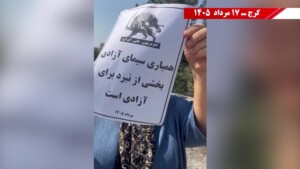
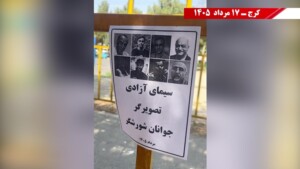
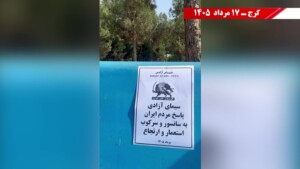
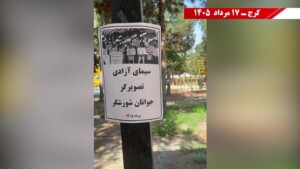
In Karaj, activists placed posters on park railings, columns, and benches. One poster described Simay-e Azadi as a representation of the Resistance Units and featured images of eight PMOI/MEK members killed in the struggle.
Other posters described supporting Simay-e Azadi as:
“Part of the struggle for freedom”
and as a means of reflecting the voices of the Resistance Units.
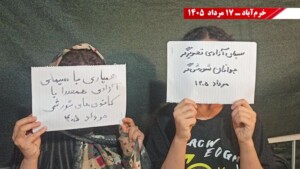
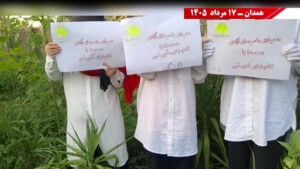
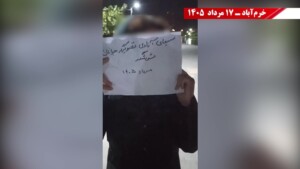
In Khorramabad, activists organized photo actions with handwritten posters carrying messages such as:
“Simay-e Azadi portrays the rebellious youth.”
Another message expressed support for the PMOI/MEK.
Similar activities were reported in Sari, where activists displayed a handwritten message describing Simay-e Azadi as a platform representing the activities of young Resistance Units.
Messages spread across northern and western Iran
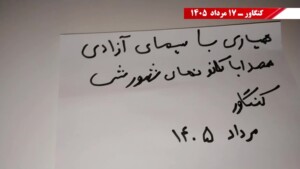
In Kangavar, activists reportedly placed handwritten messages on vehicles and in parks, including:
“Supporting Simay-e Azadi in solidarity with the Kangavar Resistance Units.”
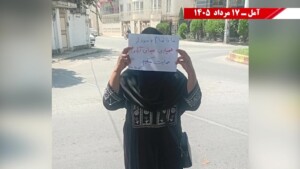
In Amol, activists organized street photo actions with messages declaring their support for the 30th national fundraising campaign.
In Langarud, several handwritten posters were reportedly placed in a garden. Their messages described support for Simay-e Azadi as being in solidarity with the Resistance Units and as part of the struggle for freedom.
One message also expressed support for Maryam Rajavi.
In Zahedan, activists organized a photo action featuring a printed poster promoting the 30th national campaign. The message described support for Simay-e Azadi as part of the struggle for freedom and portrayed the broadcaster as a voice reflecting the activities of young Resistance Units.
Kermanshah sees multiple activities
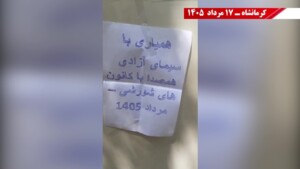
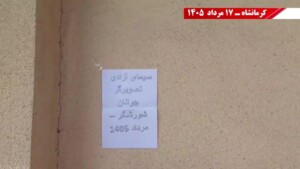
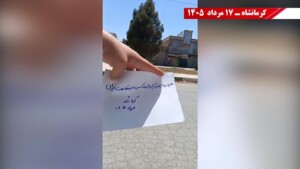
A particularly broad series of activities was reported in Kermanshah, where handwritten and printed posters were placed on walls, a bus door, and other public locations.
The messages included:
“Supporting Simay-e Azadi in solidarity with the Resistance Units.”
Another poster described the campaign as:
“A major step toward freedom for Kermanshah.”
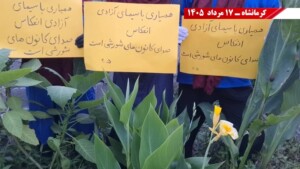
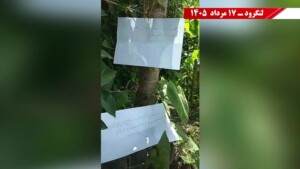
Other messages called Simay-e Azadi a voice for the voiceless and for disadvantaged people, while additional posters described the fundraising campaign as part of the broader struggle for freedom.
The variety of messages and locations reported in Kermanshah suggests an effort to make the campaign visible in everyday public spaces.
Simay-e Azadi as an alternative media platform
For the PMOI/MEK, Simay-e Azadi has long served as an outlet for broadcasting material that is excluded from Iran’s state-controlled media environment.
The latest activities place particular emphasis on the relationship between the broadcaster and the Resistance Units, presenting the channel as a means of communicating their activities and messages to audiences inside and outside Iran.
The campaign’s supporters portray independent broadcasting as especially important in an environment where the Iranian regime maintains extensive censorship and restricts independent journalism and political expression.
The reported posters therefore combine two objectives: encouraging financial support for Simay-e Azadi and highlighting the continued presence of the PMOI/MEK’s grassroots network.
A campaign against censorship and repression
The activities reported across nine cities also demonstrate the political character of the campaign. The messages do not simply promote a television channel; they link Simay-e Azadi to opposition to censorship, repression, and the broader struggle against the Iranian regime.
By placing messages in parks, on walls, vehicles, buses, and other public locations, activists are seeking to bring political messaging into public spaces despite the risks associated with dissent in Iran.
The campaign also reflects the PMOI/MEK’s continued emphasis on Resistance Units as decentralized groups engaged in acts of political expression and defiance.
While the regime continues to restrict independent media and intensify pressure on political opponents, the reported activities indicate that the PMOI/MEK’s supporters are attempting to preserve channels for political communication and maintain public visibility.
The 30th Simay-e Azadi fundraising campaign is therefore being presented by its supporters not simply as a media initiative, but as part of their continuing effort to sustain an independent source of information and a platform for opposition voices.