
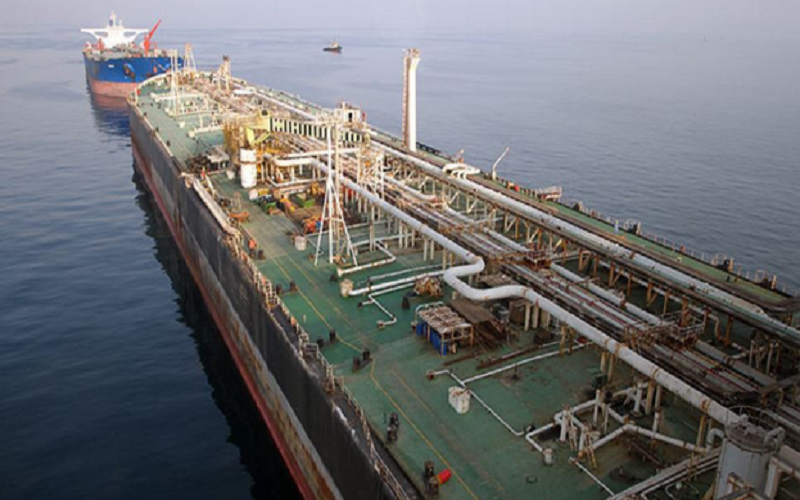

Reported by Bloomberg, on March 4, 2025, in a significant shift driven by escalating US sanctions, smaller and more maneuverable tankers are increasingly becoming the backbone of the Iran-to-China oil trade. According to recent ship-tracking data from Kpler, the use of Aframax and Suezmax vessels has surged, marking a departure from the traditional reliance on very-large crude carriers (VLCCs).
In February alone, eight smaller tankers were involved in ship-to-ship (STS) transfers receiving Iranian crude from supertankers, a sharp increase from the two tankers used in each of the preceding months, December and January. These smaller vessels are primarily headed to China, highlighting a strategic pivot in the face of stringent US sanctions.
Industry analysts and shipbrokers suggest that the shift towards smaller tankers is driven by their capability to navigate and discharge at shallower ports such as Dongying in China. These ports are increasingly favored for receiving shipments from Iran and Russia, as larger terminals that handle a mix of cargoes are becoming more cautious about potential secondary sanctions.
The Biden administration’s intensified sanctions, coupled with former President Donald Trump’s “maximum pressure” campaign against Tehran, have led to the blacklisting of numerous ships, particularly impacting the operations of VLCCs. As a result, there has been a noticeable increase in STS transfers at sea and a greater reliance on Aframax and Suezmax vessels.
The evolving strategies to circumvent US sanctions include more frequent use of STS transfers off locations such as Malaysia and Fujairah. These operations help mask the origin of the cargoes, which were previously transported directly from Iranian ports like Kharg Island to China using Iranian-owned VLCCs. Prior to February, almost all STS operations off Malaysia involved supertankers, but the trend is now shifting towards smaller vessels.
Despite their smaller cargo capacities—VLCCs carry around 2 million barrels, while Suezmax and Aframax vessels handle about 1 million and 700,000 barrels respectively—the use of multiple transfers and smaller tankers can lead to increased transportation costs. Nonetheless, this approach appears to be a necessary adaptation to the current geopolitical pressures.
A specific example of this new trend occurred in February when the sanctioned supertanker Lan Jing, formerly known as Wen Yao, conducted three separate STS operations off Malaysia, transferring its Iranian crude to the Aframaxes Reston, Brava Lake, and Shun Tai. These vessels then proceeded to the Chinese ports of Huangdao, Dongying, and Zhoushan, respectively. Similarly, the Iranian VLCC Derya discharged its cargo to the Suezmax Aventus I and the Aframax Viola, with the shipments destined for Dongjiakou and Dongying.
As the landscape of international oil trade continues to evolve under the weight of geopolitical tensions, the role of smaller tankers in facilitating the flow of Iranian oil to China is likely to remain a critical component of the industry’s adaptive strategies.