


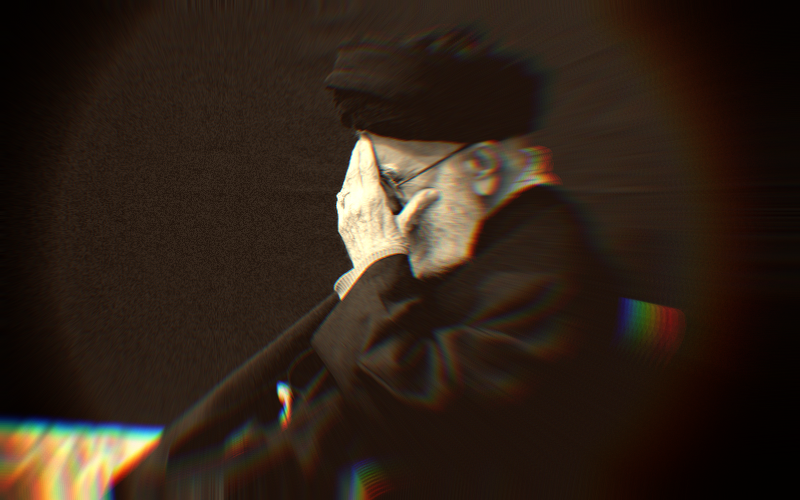

The announcement of a new round of nuclear negotiations between the Iranian regime and the United States has plunged the clerical establishment in Tehran into a maelstrom of internal and external crises. This turmoil is not confined to any single faction but has engulfed the entire regime, with every indication that the crisis will only intensify over time.
Clear signs of this escalating instability can be found in the sermons of Friday prayer leaders, statements by parliamentarians, and the increasingly contradictory remarks of regime officials.
From its inception, the Islamic Republic has anchored its identity in revolutionary rhetoric, the formation of the Islamic Revolutionary Guard Corps (IRGC), and the export of extremism and conflict. Anti-Western slogans—branding the United States as the “Great Satan” and calling for its destruction—have long served to legitimize the regime’s external hostilities. Yet, the act of negotiating with such a sworn enemy poses a fundamental challenge to the ideological foundations upon which the regime stands.
A Crisis Born of Contradiction
It is clear that economic pressures, international isolation, regional setbacks, and the looming threat of foreign military force have driven the regime to the negotiating table. Yet, this step contradicts decades of propaganda and boasts of resistance, placing the regime in a strategic impasse. The nuclear talks in Oman may be only the beginning of a cascading crisis.
Whether direct or indirect, the current negotiations represent a double-edged sword for Tehran. Entering talks signals a retreat from its aggressive rhetoric and implies weakness in the face of its enemies. Conversely, rejecting negotiations risks deeper sanctions, harsher isolation, and possibly military conflict. This catch-22 has sharpened internal divisions and exposed the fragility of the regime’s internal cohesion.
Sermons Reflect Fractures at the Top
Friday prayer sermons on April 11, 2025, laid bare these tensions. Ahmad Alamolhoda, Khamenei’s representative in Mashhad, derided the talks, invoking the failed JCPOA deal and accusing the U.S. of betrayal:
“Going, sitting, talking, laughing, shaking hands… and then America shamelessly tore up the agreement.”
His comments reflect not only distrust in the negotiation process but also anxiety over the weakening of the Supreme Leader’s position should the regime be forced to compromise.
In Tehran, cleric Kazem Seddiqi echoed Ayatollah Khomeini’s view of the U.S.–Iran dynamic as a “wolf and sheep relationship,” condemning negotiations as inherently dangerous. In Hamedan, Habibollah Shabani Mowasaghi warned of growing social division and called for faith in the regime’s measures. These speeches attempt to project unity, but they also betray a deep fear of rupture within the regime and broader Iranian society.
Parliamentary Discontent and Marginalization
In parliament, dissatisfaction is more explicit. Tehran MP Mehdi Kouchakzadeh described the Oman talks as “gray” and “shameless,” criticizing the opaque nature of the process:
“We have no information… We may be forced to have these talks, but we must distinguish between friend and foe.”
Such statements reveal not only opposition from hardliners but also frustration with the marginalization of parliament in critical decision-making. This sentiment further underscores the erosion of the regime’s traditional structures of control.
Damned If They Do, Damned If They Don’t
Whether the negotiations succeed or fail, both outcomes carry serious risks for the regime. A successful deal would require Tehran to backtrack on its long-held slogans and policies, potentially undermining its legitimacy among loyalists. Hardline elements, who view talks as surrender, may escalate internal resistance and even openly challenge Khamenei, rendering his authority and the principle of Velayat-e-Faqih increasingly irrelevant.
Conversely, failure would bring heightened sanctions, increased military pressure—particularly from the U.S. and Israel—and a rise in domestic unrest. As Shabani Mowasaghi admitted, the JCPOA only “complicated the knots of sanctions,” illustrating the regime’s past inability to achieve meaningful relief through diplomacy.
Khamenei’s Balancing Act Is Failing
Supreme Leader Ali Khamenei finds himself playing a precarious double role. He quietly greenlights negotiations to alleviate economic and international pressures while avoiding direct responsibility through calculated silence or ambiguous remarks. But this strategy—effective in the past—is now faltering under the weight of rising dissent and disillusionment, both among the public and within the regime’s ranks.
Even loyal figures like Kouchakzadeh have voiced concerns over the lack of transparency, revealing a growing distrust that threatens to undermine the Supreme Leader’s standing from within.
A Crisis, But Also an Opportunity
These negotiations mark not an opportunity for renewal, but a profound threat to the regime’s survival. Yet, in this crisis lies a potential turning point for the Iranian people. Public frustration, coupled with the regime’s repeated failures, has created fertile ground for widespread social resistance.
What is unfolding in mosques and parliament halls alike is not just rhetoric—it is the visible tip of a much deeper breakdown. Despite attempts to control and manipulate the narrative, the crisis has breached the surface, exposing a system no longer capable of managing its contradictions.
The outcome of the Oman nuclear talks has pushed the regime to one of the most critical junctures in its history. The mounting internal conflict, ideological disarray, and inability to make decisive choices highlight the deepening fracture within. The voices of regime officials—once tightly controlled and synchronized—now echo with confusion, desperation, and dissent, revealing the depth of a crisis that can no longer be concealed.