


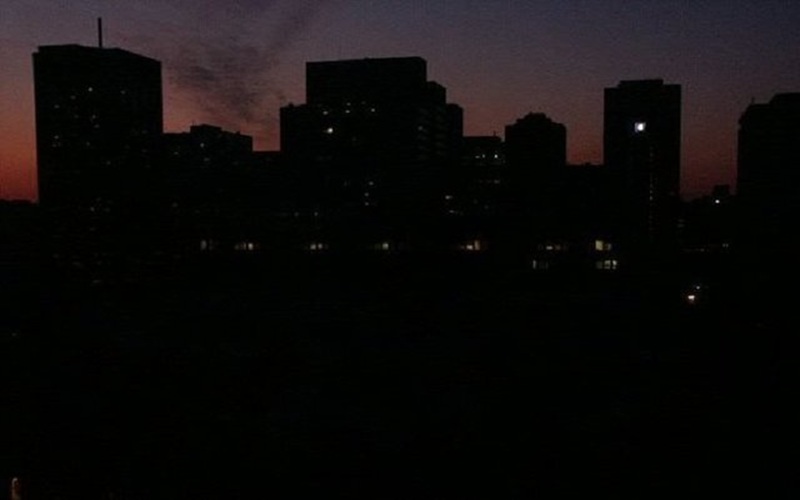

Amid severe heatwaves, widespread power and water outages paralyze production, worsen poverty, and pose life-threatening risks
Thousands of industrial units and hundreds of thousands of families across Iran are grappling with a deepening energy crisis that goes far beyond what can be described as a mere “blackout.” During one of the hottest months of the year, rolling power and water outages have become a daily ordeal—crippling production lines, shuttering businesses, and endangering public health.
While households face multiple electricity and water cuts every day, factories are grinding to a halt one after another. The crisis has escalated into a significant threat not only to the national economy and employment but also to food security and emergency services.
Industrial Meltdown: Shutdowns and Layoffs
One of the stark examples of the crisis is Kerman Motor, a major automotive plant that has laid off more than 300 workers in less than two weeks due to frequent power outages and plummeting sales. A quality control engineer at the plant reports that daily production has virtually stopped, and sales have fallen to half of what they were four years ago. Broader layoffs are already being planned.
Simultaneously, reports confirm a total power and water outage at the Tehran Oil Refinery, which has disrupted key operational units. Energy specialists warn that if such conditions persist, the supply chains of critical petroleum products—gasoline, motor oil, and others—could be severely compromised.
Business Leaders Sound the Alarm
Mahmoud Najafi-Arab, head of the Tehran Chamber of Commerce, sounded an alarm on Friday, August 1, stating, “Today, the biggest problem facing Iranian industries is energy imbalance. Industrial units have power outages three days a week. Although we have assets such as human resources, we are unable to utilize them.”
He also highlighted the inability of small industries to procure necessary backup systems, adding: “Generators of 100 to 200 kilowatts are extremely expensive. And even when available, they aren’t sufficient for many industries. As a result, small businesses are being pushed out of competition entirely.”
Vulnerable Communities Face the Worst Impact
The consequences are even more severe in deprived regions. The closure of small and medium-sized factories not only halts local production but also accelerates unemployment, deepens poverty, and heightens social unrest. At the same time, the economic gap between wealthy capital owners and struggling small producers widens with each passing day.
Numerous accounts from across the country reveal that household power cuts now occur as often as three to four times a day. When the power goes out, water pumps, telecommunications towers, and internet infrastructure all fail—paralyzing communication and emergency services. This is especially dangerous amid extreme heat, posing serious health risks for the elderly and chronically ill.
In Tehran’s Abbas Abad district, residents are enduring the third consecutive day without water. Locals report that daily life has come to a complete halt. With no access to clean water and temperatures rising, they warn of looming health disasters. “If this continues,” one resident noted, “illness—and even death—among the elderly is inevitable.”
A Crisis Long in the Making
Experts have long warned of these systemic failures. Iran’s thermal power plants now average over 25 years of age, and parts of the electricity transmission and gas pipeline networks have been in service for more than four decades. According to official statistics from the regime’s Ministry of Energy, 50% of the country’s electricity generation capacity and 30% of the gas transmission infrastructure require urgent overhaul.
Yet instead of investing in sustainable energy like its regional peers—Saudi Arabia, Turkey, and the UAE, which have poured billions into solar and wind energy over the past decade—the Iranian regime has prioritized military, missile, and nuclear projects. These programs, far from delivering economic or welfare benefits, have drained resources and now leave even the northern regions of Iran facing chronic power and water shortages.
A Broader Threat: Economy, Food Security, and Inflation
The energy shortfall is reverberating across the entire economy. Supply chains are breaking down, from automotive manufacturing and petrochemicals to food processing. With domestic production curtailed, dependence on imports grows. This, combined with sanctions and shrinking foreign exchange reserves, risks triggering a currency crisis and surging inflation.
Crucially, power reductions are hitting the agriculture and food industries hard—jeopardizing the nation’s food security. As basic goods become scarcer or more expensive, millions of Iranians face the prospect of even deeper hardship.
Iran’s energy crisis is no longer a temporary disruption—it is a full-blown national emergency. Without immediate structural reforms, investment in renewable energy, and a redirection of national priorities, the country risks descending further into economic instability and social unrest.