


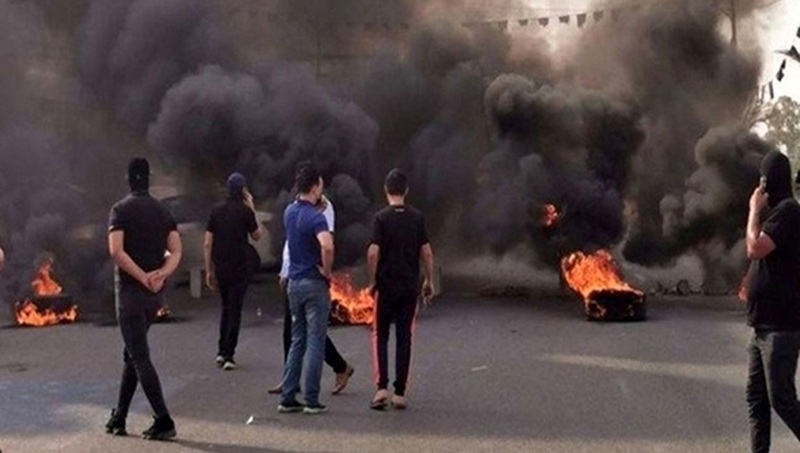

From Khomeini’s war doctrine to today’s regional escalation, conflict has been used to suppress dissent and entrench authoritarian rule in Iran
Wars, wherever they occur, tend to produce similar outcomes: they inflame nationalist sentiment, redirect public attention outward, and push domestic concerns to the margins. Economies become subordinated to conflict, daily life contracts, and political freedoms are often among the first casualties. In authoritarian systems, however, war is not merely a byproduct of geopolitical tension—it is a calculated instrument of control.
In Iran, this pattern has been evident for decades.
The Iranian regime has repeatedly used conflict—both direct and through proxies—not as a defensive necessity, but as a strategic tool to suppress dissent, weaken opposition, and consolidate power. To understand this dynamic, one must look beyond official narratives and instead evaluate the nature of these wars through two key criteria: whether they serve the national interest, and whether they obscure or reinforce the country’s central political conflict—the divide between an authoritarian ruling system and a society seeking freedom and accountability.
Khomeini’s War: Consolidation Through Conflict
The Iran-Iraq War, initiated under Ruhollah Khomeini, stands as a defining example. While often framed as a necessary defense, the war also served critical internal purposes for the regime.
Domestically, it created the conditions to eliminate political opponents who had emerged after the 1979 revolution. Under the pretext of national security, dissent was criminalized, opposition groups were dismantled, and repression intensified. Internationally, the regime sought to export its ideological model across the region, portraying the war as a broader ideological struggle.
The result was a conflict that ultimately worked against Iran’s national interest. It strengthened authoritarian rule, suppressed political freedoms, and shifted attention away from the population’s demands for political participation and reform.
This outcome was not accidental. As Javad Mansouri, an early figure in the Islamic Revolutionary Guard Corps, later acknowledged:
“If the war had not happened, the Islamic Revolution might not have survived… It was the war that allowed us to suppress internal opposition.”
A Long Strategy of Manufactured Crisis
The current tensions surrounding Iran are not isolated developments. They are the result of a decades-long strategy built on crisis generation and external confrontation.
From the regime’s persistent hostile rhetoric to its expansion of proxy networks across the region, Tehran has pursued a policy of controlled escalation. This approach has included support for militant groups, involvement in regional conflicts, and the development of asymmetric warfare capabilities.
At the same time, internal repression has intensified in parallel.
Each period of heightened external tension has been accompanied by increased crackdowns at home: mass arrests, torture, executions, and severe restrictions on civil liberties. Social, economic, and political demands from the Iranian people are consistently sidelined, reframed as secondary to the needs of national security.
War as a Cover for Repression
The latest phase of regional conflict has once again placed Iranian society under significant strain. Citizens face heightened security measures, while dissent is met with harsher punishment. Reports indicate a renewed wave of executions targeting political prisoners and activists.
In this context, war serves a dual purpose: it distracts public attention and provides justification for repression. It allows the state to portray dissent as disloyalty and to frame survival as dependent on unity behind the ruling system.
But this narrative does not withstand scrutiny.
A conflict that weakens the economy, isolates the country, and systematically violates the rights of its citizens cannot be considered aligned with national interests. Nor can it obscure the fundamental political reality: the primary conflict in Iran is not between the state and foreign adversaries, but between an authoritarian system and a population demanding change.
Conclusion: Reclaiming the National Interest
Understanding the role of war in Iran requires a clear focus on its real impact. For the regime, conflict has long served as a means of survival—deflecting internal pressure and maintaining control. For the Iranian people, it has meant economic hardship, political repression, and the continuation of a system that prioritizes its own survival over the nation’s future.
Any political force claiming legitimacy in Iran must therefore be judged by a simple standard: does it serve the interests of the people, or does it sustain a system that thrives on crisis and conflict?
Ultimately, Iran’s future will not be decided through external wars, but through the resolution of its central political struggle—one that no amount of conflict can erase.