


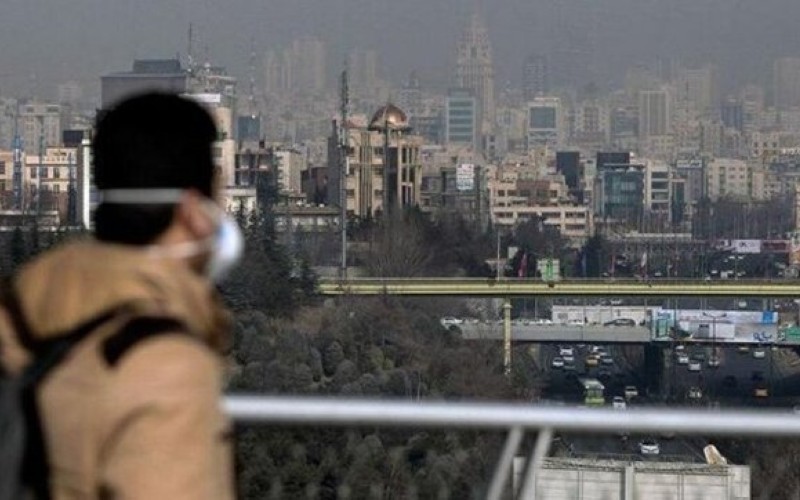

Despite promises of reform, Iran’s Clean Air Law has failed to curb dangerous pollution, with officials admitting systemic failures and growing public health costs.
The Iranian regime’s Vice President and Head of the Department of Environment, Shina Ansari, has acknowledged that many of the obligations under the Clean Air Law remain unfulfilled seven years after its approval.
In an interview with ISNA news agency on August 24, Ansari was asked whether the law’s provisions had been fully implemented. She admitted:
“It must be said no; naturally, many of the tasks have not been accomplished.”
She added that the 14th government has “tried not to hide the issues and problems.”
A Law That Failed to Deliver
The Clean Air Law, passed in 2017 as a replacement for the outdated Air Pollution Prevention Law, outlined 176 tasks across 34 articles. It obligated 21 executive agencies—including the Ministries of Interior, Petroleum, and Energy, along with the police, municipalities, and state broadcasting—to implement anti-pollution measures.
At the time, officials promised the legislation would improve air quality in Tehran and other cities. Instead, pollution levels have steadily worsened. ISNA has since reported that many government bodies showed little interest in carrying out their responsibilities, leaving Iran’s air quality at crisis levels.
Institutional Failures and Mazut Burning
Ansari admitted that her department is now seeking amendments to strengthen environmental laws, including revisions to Article 11 of the Clean Air Law. She also confessed that state institutions themselves have worsened the pollution crisis, stating: “If fuel oil burning occurs, let’s say it clearly—fuel oil burning has occurred.”
Due to energy shortages, the regime has turned to burning mazut, a highly toxic heavy fuel oil, in power plants. This practice has intensified air pollution and endangered millions of Iranians.
Ansari claimed that in winter 2024, limited cooperation with the Oil and Energy Ministries allowed for low-sulfur diesel use at the Shazand Arak Power Plant, which slightly reduced sulfur dioxide emissions. But she acknowledged such measures are grossly inadequate.
Mounting Human Costs
The health consequences are staggering. In December 2024, Tehran University’s Air Pollution Research Center reported that around 50,000 deaths annually are linked to air pollution in Iran.
Official Health Ministry figures for 2023 recorded more than 30,000 direct deaths from air pollution nationwide, including 6,500 in Tehran.
A Crisis That Can No Longer Be Denied
Ansari herself admitted decades of neglect of Iran’s environmental and ecological capacities, saying: “The environmental crises we are facing can no longer be denied.” She claimed her department’s priority is to convince regime officials of the urgency of environmental protection.
Yet after seven years of broken promises, Iran’s worsening environmental crisis reveals not only failed policies but also systemic corruption and negligence at the heart of the regime—leaving millions exposed to poisoned air and rising death tolls.