
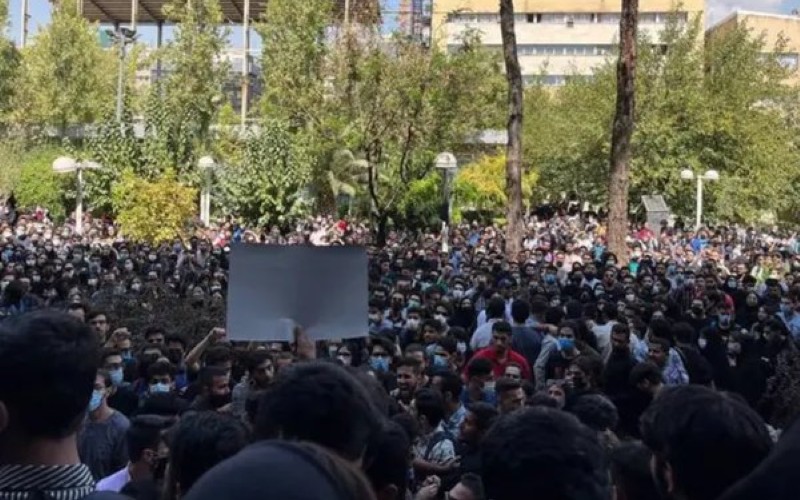

A generation without fear is breaking the myths that once sustained dictatorship
Three years after the 2022 uprising, the movement has not been silenced—it remains alive and persistent. Despite brutal repression, the regime still fears the voices of the people and the anniversary of the revolt that shook its foundations. Far from consolidating power, the past three years have only deepened the erosion of the regime’s authority.
Today, the question most Iranians ask is no longer whether the regime should go, but when and how it will fall. The nation has moved beyond debating its necessity and now focuses on accelerating the transition to a post-dictatorship future.
Against this reality, the regime’s slogans of “national unity” and “avoiding polarization” ring hollow. These phrases are nothing more than covers for its fear of today’s undeniable social and political truths.
Breaking the Myths of Fear
To survive, the regime has cultivated a series of false narratives designed to paralyze society with fear. It claims that if the regime falls, conditions will only worsen, or that its collapse would inevitably lead to the disintegration of the country. It equates opposition to itself with opposition to Iran, as though the nation and the dictatorship were one and the same.
Another recurring argument suggests that although the regime is inefficient, there is no viable alternative to replace it. At the same time, it tries to convince people that society has grown too exhausted and hopeless to seek change. Added to this is the claim that the regime is simply too powerful to be overthrown. Finally, officials assert that because it has survived previous uprisings, it will never fall at all.
Each of these narratives is nothing more than a weapon of fear—a fabrication built not on reason but on intimidation, designed to discourage a nation that is already prepared for transformation.
The Truth: A Hollowed-Out System
In reality, the regime itself no longer believes in its own efficiency. Officials from across the spectrum, whether reformist or hardliner, have admitted this failure publicly or privately. Massive election boycotts, surveys showing up to 92 percent public dissatisfaction, and the widening gulf between the people and those in power are unmistakable signs of the end of an era.
The regime’s “unity” is nothing but enforced silence—an imposed conformity with fascist overtones. True national unity, however, lies in the determination of a majority of Iranians to move beyond tyranny. On one side stands a worn-out, corrupt regime clinging desperately to power; on the other, an overwhelming majority demanding freedom.
If this regime were a publicly traded company, it would already be declared bankrupt. Its social capital is gone, its legitimacy exhausted, its value reduced to an empty shell awaiting collapse.
A Generation Without Fear
What sustains Iranians is hope. From the outset, the regime consumed generations, but it failed to extinguish the spirit of change. The anniversary voices of 2022 were living proof that hope survives stronger than ever.
The regime’s machinery of fear aims to normalize despair, but a new generation has risen that refuses to bow. With rare courage, it has faced dictatorship head-on, breaking the cycle of fear. This generation seeks not cosmetic reform but genuine transformation. It rejects clerical rule, insists on a unified and indivisible Iran, and demands a free, equal, and democratic future for all Iranians—regardless of ethnicity, language, faith, or region.
The regime has long thrived by riding on fear. But today, Iranians are breaking free of that fear. A generation has risen that knows, more than ever before, that the downfall of this regime is within reach.