



How repeated school closures, poverty, and regime-made pollution push Iran’s most vulnerable children out of classrooms and into exploitation.
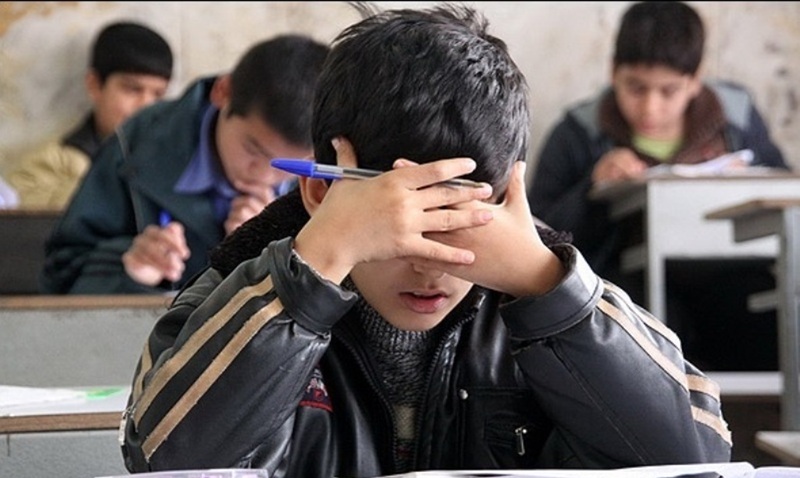
As pollution levels rise and schools across Iran repeatedly shut down, another crisis grows in silence: the accelerating exploitation of working children. The Iranian regime, unable or unwilling to address the environmental, economic, and educational emergencies it has created, has turned school closures into a recurring national disaster—one that is driving vulnerable children out of classrooms and deeper into exploitative labor.
According to Iranian social activists, when schools are closed, many families—crushed by poverty—pull their children into the workforce to “make use of the empty day.” This is not a temporary coping mechanism but a systemic outcome of decades of economic mismanagement, deep inequality, and the regime’s total failure to protect children’s rights.
A System Built on Abandoning the Most Vulnerable
“Afkham Sabbagh,” a social activist and co-founder of the Mehromah Institute, emphasizes that the children who suffer the most are those living in poverty and marginalized communities. They are the first victims of Iran’s collapsing education system, especially when schools repeatedly switch to virtual learning—a method that overwhelmingly disadvantages low-income families without digital access, stable internet, or supportive environments.
Her warning is clear: regime-driven school shutdowns have become so frequent that the resulting damage is now irreversible for hundreds of thousands of children.
A Lost Year of Education—Repeated Each Year
Between 2021 and December 2025, Iran experienced the equivalent of an entire academic year lost to virtual schooling and closures. Estimates show 260 to 300 days of nationwide virtual education, largely caused by dangerous pollution levels and the regime’s refusal to address structural sources such as outdated industry, fuel quality, and urban planning failures.
While officials pretend these closures are “temporary,” the numbers tell another story. School shutdowns have dramatically increased dropouts:
- 2020–2021: approx. 911,000 children dropped out or were already out of school
- 2023–2024: approx. 950,000+, with numbers still rising as data collection remains incomplete
In just four years, nearly 40,000 more children have been added to the ranks of Iran’s lost generation.
Most alarmingly, many of these children leave school in the early grades, meaning they may never return.
Poverty and Regime Policies Accelerate Child Labor
Data from the Parliament Research Center shows that 70% of dropouts come from the lowest income groups, with the second income decile alone accounting for 22%. This is a direct reflection of the regime’s crushing economic crisis, rampant inflation, and the collapse of household purchasing power.
For these families—abandoned by the government and trapped in deepening poverty—child labor becomes not a choice but a desperate necessity. Virtual schooling and closures simply accelerate the process by removing children from classrooms and pushing them into the labor market earlier.
The regime, meanwhile, continues to deny responsibility and refuses to provide the economic, environmental, or educational support needed to prevent these outcomes.
The Regime’s Neglect: A Catalyst for a Lost Generation
Iran is now witnessing a dangerous convergence of crises: extreme pollution, widening inequality, educational collapse, and the normalization of child labor. Each of these is a direct consequence of the regime’s corruption, mismanagement, and long-standing disregard for human welfare.
As long as the Iranian authorities rely on shutdowns instead of solutions—and prioritize political survival over public well-being—the country will continue producing a generation of children deprived of education, safety, and opportunity.
The exploitation of working children during school closures is not an accident. It is the predictable outcome of a system that has abandoned its own people.