


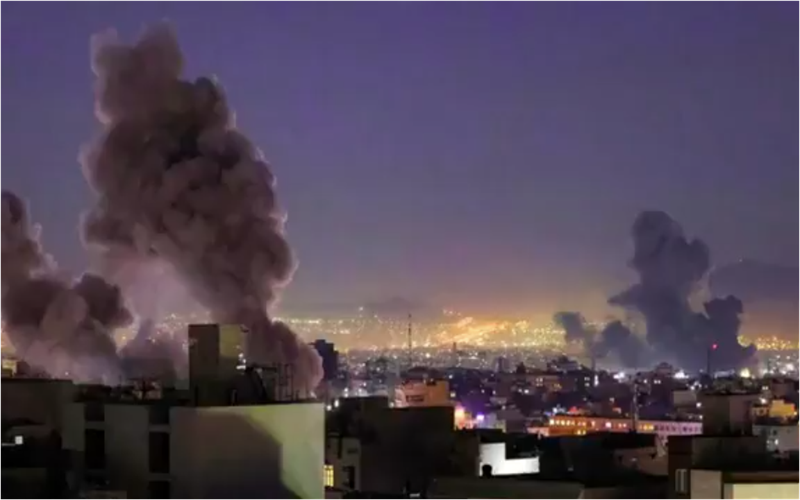

From destroyed homes to collapsing public services, the aftermath of recent conflict exposes the human and economic toll of Tehran’s regional policies
The far-reaching consequences of Iran’s nuclear, missile, and proxy-driven policies have now materialized in the form of widespread destruction and economic hardship. The recent conflict involving Iran, the United States, and Israel—rooted in Tehran’s regional interventions—extended well beyond military arenas, directly impacting the daily lives of ordinary citizens. Even after the cessation of active hostilities, the scale of devastation continues to unfold, revealing a crisis that has deeply affected livelihoods, public health, and social stability.
Massive Economic and Housing Losses
Initial official estimates point to a catastrophe of unprecedented proportions. Government spokesperson Fatemeh Mohajerani announced that the preliminary cost of damages stands at $270 billion—a figure she cautioned may rise as further assessments are conducted. This immense financial burden has struck at the core of everyday life across Iran.
The housing sector has been among the hardest hit. According to official figures, 83,351 residential units across the country have been damaged, including 39,508 homes and small commercial properties in Tehran alone. The destruction has left thousands of families homeless, stripping them of both shelter and lifelong assets. Beyond the physical damage, the targeting of residential areas has severely undermined citizens’ sense of safety and psychological well-being.
Reconstruction is expected to take years and require substantial financial resources, placing additional strain on an already fragile economy. Lower-income households, with limited assets and savings, are bearing the brunt of this crisis. Analysts note that part of the destruction stems from the proximity of sensitive facilities to densely populated urban areas, amplifying civilian exposure to damage.
Collapse of Healthcare, Education, and Local Businesses
The conflict has also devastated critical public services. A total of 322 medical centers and hospitals, 763 schools, and 55 libraries across 12 provinces have been destroyed or severely damaged. These institutions are essential to public health, education, and long-term human development.
The loss of healthcare infrastructure has disrupted access to vital medical services, particularly during a time of crisis, creating long-term consequences that may affect generations. Simultaneously, the destruction of schools and libraries threatens the educational future of millions of children.
Economic damage extends into the private sector as well. Mahmoud Najafi-Arab, head of the Tehran Chamber of Commerce, reported that at least 300 industrial units in Tehran province alone have been affected. Each damaged factory represents not just physical loss, but also the unemployment of hundreds of workers who depend on these facilities for income. The disruption of production has triggered supply chain breakdowns, contributing to inflation and shortages of essential goods.
Economic experts warn that restoring industrial capacity under existing sanctions will be both difficult and time-consuming. Meanwhile, damage to healthcare infrastructure in border regions has heightened the risk of infectious disease outbreaks, posing an additional, less visible threat to vulnerable populations such as children and the elderly.
Long-Term Social and Economic Consequences
The scale of destruction has significantly weakened Iran’s social welfare structure and accelerated the spread of poverty. Damage to essential infrastructure—such as water and electricity distribution networks—has made daily life increasingly difficult in many regions. These outcomes reflect policy priorities that have favored military expansion over domestic welfare.
Environmental damage is another growing concern. Explosions in residential areas have contributed to pollution that may have long-term health implications for local populations. At the same time, the flight of domestic and foreign capital following the conflict has further diminished prospects for economic recovery.
The psychological toll is equally severe. Widespread uncertainty, fear of renewed conflict, and diminishing hope for the future have intensified migration trends, particularly among skilled professionals and young workers. This brain drain threatens to erode the country’s human capital at a critical moment.
To compensate for the massive financial losses, the government is likely to reduce spending on development and social welfare programs. This will translate into increased economic pressure on households, shrinking purchasing power, and a continued decline in living standards.
A Crisis Rooted in Policy Choices
The recent war serves as a stark illustration of the costs associated with Iran’s strategic decisions. The estimated $270 billion in damages represents only part of a broader reality—one in which economic stability, public welfare, and social cohesion have all been deeply compromised.
Ultimately, the burden of these policies has fallen squarely on the population. The destruction of homes, livelihoods, and infrastructure underscores how geopolitical ambitions can translate into profound domestic consequences, leaving millions to bear the cost of decisions made far beyond their control.