
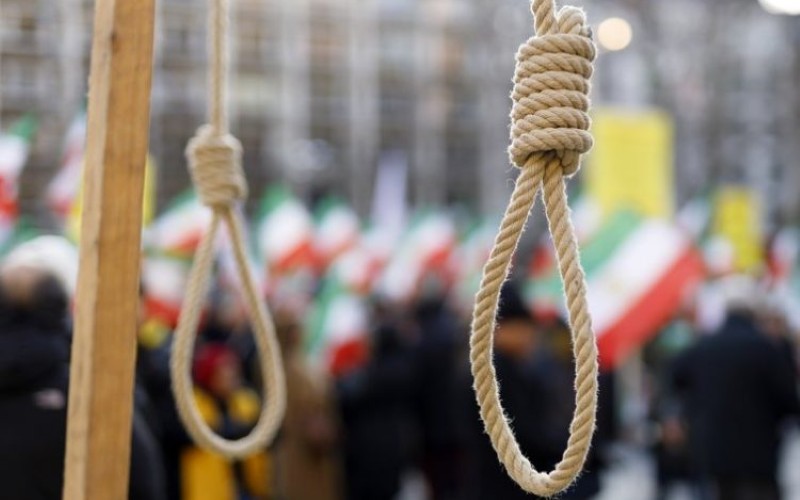

On the anniversary of the UDHR, Iran stands as a stark reminder of what happens when a state turns human dignity into a political casualty.
Seventy-seven years after the adoption of the Universal Declaration of Human Rights, the contrast between its founding spirit and the current condition of Iran could not be more jarring.
The UDHR emerged from the ashes of global catastrophe, shaped by the traumas of World War II and rooted in the philosophical revolutions of the Enlightenment and the French Revolution. Its purpose was clear: to articulate the minimum standards of human dignity and to restrain political power through universal principles.
The concept of “human rights” itself entered modern constitutional language through the 1789 Declaration of the Rights of Man and of the Citizen, a document that has informed the legal and moral architecture of countless nations.
Yet in Iran, ruled by a theocratic autocracy, these legacies have been systematically dismantled. The regime’s governance model—predicated on ideological supremacy rather than citizenship—has produced a reality in which nearly every article of the UDHR lies in ruins.
Even a cursory examination of the first three articles reveals the depth of the collapse. Article One proclaims all human beings free and equal in dignity and rights, but official statistics from the regime’s own media acknowledge that more than one million people across Sistan and Baluchistan, Khorasan, Golestan, Kerman, and West Azerbaijan remain undocumented.
In a country where identity documents determine access to basic services, legal protections, and participation in civic life, the idea of freedom and equality at birth becomes an abstraction with no relation to lived experience.
Article Two insists on equality without discrimination, yet discrimination in Iran is not an aberration—it is a governing doctrine.
Persecution of ethnic and religious minorities, including Baluch communities, Sunni Muslims, Christians, and particularly Baháʼís, is embedded in state policy. People are imprisoned, tortured, or executed for their beliefs, for conversion, or for dissent.
The judicial double-standard is equally stark: the execution of Mohsen Shekari was pushed from arrest to the gallows in just eighteen days, while high-level embezzlers and serial offenders evade punishment for years.
Even regime-aligned outlets have described such expedited killings as a “noose around the neck of justice” and a “marathon to seize a human life.”
Article Three guarantees the right to life, liberty, and security of person—rights that Iran’s security agencies openly disregard.
Instead of acknowledging these principles, the regime has constructed a so-called Human Rights Headquarters within the judiciary, a bureaucratic apparatus designed not to protect rights but to rationalize torture, justify executions, and deflect international scrutiny.
The paradox is grotesque: an institution responsible for violence proclaims itself the guardian of human rights.
For decades, the regime’s supreme leader Ali Khamenei and his loyalists have dismissed human rights as an “imperialist tool,” using this claim to justify state brutality and suppress every effort by citizens to reclaim their basic freedoms.
Nowhere is this contempt more explicit than in the regime’s reliance on the death penalty. November 2025 stands as the bloodiest month in 37 years, with at least 335 executions, including seven women—a figure more than double that of 2024 and eleven times that of 2021.
In early December, the killing pace accelerated to the point that every ninety minutes, another life was extinguished.
Such numbers are not the result of isolated excess. They reflect a system whose survival depends on fear, coercion, and the machinery of death.
The regime’s escalating violence signals not strength but profound political and ideological bankruptcy.
These atrocities fall squarely within the domain of crimes against humanity, demanding international rejection of the apparatus of execution and terror that has replaced governance in Iran.
Human Rights Day is meant to inspire reflection, but reflection alone is no longer adequate. The central question is whether the international community is prepared to uphold universal values over short-term political convenience.
Will the United Nations and global institutions continue issuing symbolic statements, or will they finally pursue accountability for Khamenei and the architects of state-directed violence?
If human rights are to retain meaning, Iran must not be allowed to stand outside their reach.
The people of Iran have inscribed the cost of dignity with their own blood. The responsibility now lies with the world to ensure that the cry for justice does not remain unanswered.