


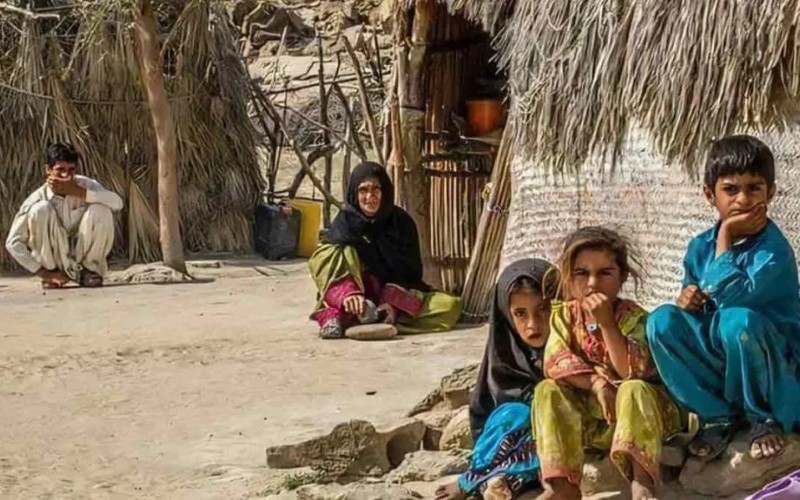

A rare admission by a state-affiliated outlet exposes a century-long failure that has left millions without birth certificates, rights, or recognition
A rare and revealing admission by a state-affiliated media outlet has once again exposed one of Iran’s most entrenched and devastating structural crises: the existence of millions of people living without legal identity. On December 24, 2025, the government-linked outlet Rokna published a report titled “The Limbo of the Undocumented,” openly acknowledging the scale and human cost of Iran’s undocumented population.
These are people without birth certificates—citizens whose identities have effectively been erased. They are born, grow up, work, age, and die without ever being officially recognized by the state. More than a century after Iran issued its first birth certificates, the country in 2025 still hosts a vast population for whom legal identity remains out of reach.
According to official figures cited by state media, more than one million people currently live without birth certificates. Unofficial estimates suggest the real number may be significantly higher. Far from being rare exceptions, undocumented citizens are the direct product of a deeply flawed governance system—one that systematically marginalizes the poor, ethnic minorities, and residents of underdeveloped regions.
A Century-Old Promise, Systematically Broken
Iran introduced formal identity registration in December 1918, when birth certificates—then known as Sajel—were meant to guarantee every Iranian a name, a date of birth, and legal recognition. That promise remains unfulfilled.
Today, thousands of children are born without being registered. Parents without birth certificates, unregistered marriages, poverty, internal displacement, and structural discrimination have created a self-perpetuating cycle of exclusion. Entire families are trapped in a legal vacuum that passes from one generation to the next.
As Rokna acknowledges, in remote villages of Sistan and Baluchestan, identity is not an abstract legal concept—it is a matter of survival. Children stand outside school walls because they are barred from enrollment. Women give birth at home because they lack health insurance. Men work without contracts, legal protection, or labor rights because, in the eyes of the state, they do not officially exist.
Geography of Exclusion
Official data shows that undocumented populations are concentrated in five provinces: Sistan and Baluchestan, Khorasan, Golestan, Kerman, and West Azerbaijan. Among them, Sistan and Baluchestan ranks highest, with entire communities living in permanent legal uncertainty.
Many of these individuals are neither recognized as foreign nationals nor formally acknowledged as Iranian citizens. They exist in what can only be described as a “legal purgatory”—a rights-free zone where the state refuses responsibility while continuing to exert control.
Life Without Rights—and Even Without Death
Lacking a birth certificate means total exclusion from Iran’s legal system. Undocumented individuals cannot obtain formal employment and are forced into dangerous, low-paying, and insecure labor. Child labor, seasonal work, and extreme female poverty are widespread among this population.
Healthcare is largely inaccessible. Even death offers no recognition: without a death certificate, these individuals are erased from official statistics entirely. Birth and death—the most basic markers of human existence—remain unregistered. This is not administrative failure; it is systematic denial of humanity.
Bureaucracy as a Weapon
For years, state media has intermittently acknowledged the presence of hundreds of thousands of undocumented individuals. Yet these admissions have never resulted in meaningful reform. Complex laws, security-driven scrutiny, and suffocating bureaucracy have turned identity registration into an endless ordeal.
Responsibility is routinely passed between institutions: the Civil Registration Organization, the judiciary, and welfare bodies all limit their roles. The outcome is predictable—the crisis persists, expands, and reproduces itself across generations.
“We Only Want a Birth Certificate”
When undocumented citizens are asked what they want, the answer is strikingly simple. They do not ask for government jobs, loans, or migration opportunities. They ask for one thing only: a birth certificate.
A single piece of paper that most citizens take for granted represents, for them, the boundary between life and exclusion from life itself. More than a hundred years after Iran’s first birth certificate was issued, legal identity remains a privilege—not a universal right.
A Governance Failure with Lasting Consequences
The absence of legal identity is not merely an administrative flaw. It actively reproduces poverty, inequality, and social exclusion. Without legal recognition, education, stable employment, and civic participation are impossible. Children inherit the same legal invisibility as their parents, locking entire communities into permanent marginalization.
Undocumented citizens are slowly forming a parallel society—unseen, unprotected, yet carrying the heaviest burden of poverty and social harm. This is the outcome of policies that treat people not as citizens, but as disposable problems.
The existence of millions without birth certificates stands as undeniable evidence of systemic governance failure. This crisis is neither accidental nor temporary. It is the result of decades of discrimination, institutional neglect, and contempt for human dignity.
A state that cannot—or will not—register the birth of its citizens cannot credibly claim to represent them. Iran’s invisible citizens are living proof of a profound structural crisis rooted in the very foundations of Ali Khamenei’s system of rule.