



Prominent U.S. and European figures, along with human rights organizations, call for urgent action as executions signal intensifying repression
The execution of four political prisoners in Iran over the course of just two days has triggered a wave of strong international condemnation from senior political figures, members of parliament, and human rights organizations, all warning of an escalating pattern of repression and calling for urgent global action.
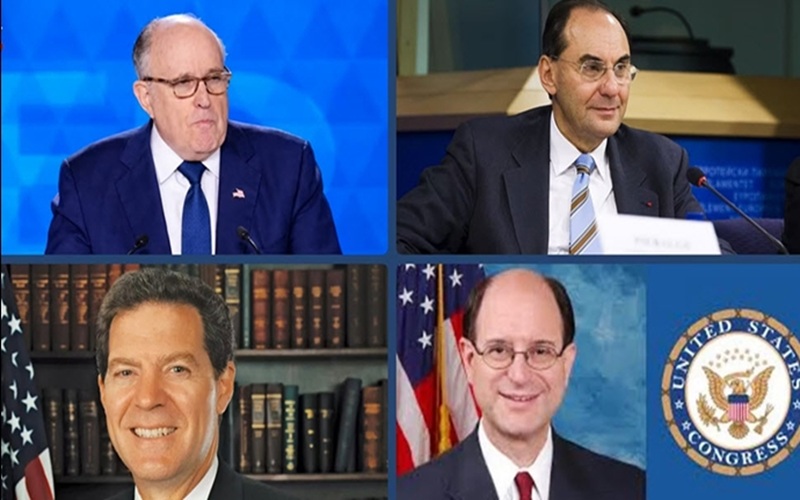
Among the most vocal critics, Rudy Giuliani condemned the executions of Pouya Ghobadi, a 33-year-old electrical engineer, and Babak Alipour, a 34-year-old law graduate, noting that their deaths followed the earlier execution of Mohammad Taghavi and Akbar Daneshvar Kar. He characterized the charges against them—linked to alleged membership in the People’s Mojahedin Organization of Iran (PMOI/MEK) and accusations such as acting against national security—as part of a broader effort by the Iranian regime authorities to suppress dissent. He argued that carrying out such executions in the midst of wartime conditions reflects deep concern within the regime about internal opposition and growing resistance among the population.
Alejo Vidal-Quadras, former Vice President of the European Parliament, also reacted strongly, describing the executions as further evidence of a system that relies on violence to maintain control. He expressed the view that such actions expose the nature of the ruling structure and suggested that its survival depends on repression.
Former U.S. Senator Sam Brownback likewise denounced the executions, stating that the continued use of capital punishment against political prisoners demonstrates an ongoing campaign to silence opposition. He emphasized that the Iranian people are seeking change, while the authorities persist in using executions as a tool of governance.
U.S. Congressman Brad Sherman pointed to serious concerns about due process, stating that the executed prisoners had reportedly faced torture and what he described as sham trials before being put to death. He reaffirmed his support for the Iranian people’s right to protest and oppose authoritarian rule.
Parallel to these individual reactions, the “Friends of a Free Iran” group in the European Parliament issued a formal appeal to the European Union’s foreign policy leadership. In their letter, they expressed deep concern over the executions of Mohammad Taghavi and Akbar Daneshvar Kar on March 30, 2026, followed by Babak Alipour and Pouya Ghobadi on March 31 at Ghezel Hesar Prison.
They highlighted that all four had been held under severe pressure and subjected to prolonged interrogations before being sentenced to death by Branch 26 of Tehran’s Revolutionary Court under charges such as “armed rebellion” and alleged affiliation with the PMOI. According to the group, the sentences were later upheld through judicial procedures that failed to meet even basic standards of fair trial.
The letter further noted that on March 29, 2026, a group of 22 political prisoners had been transferred to solitary confinement—an action widely understood as a precursor to imminent executions—and that four of them were executed within 48 hours. The signatories warned that these developments are particularly alarming given the broader context of war and internal crisis, drawing comparisons to past episodes of mass executions of political prisoners in Iran.
The Italian Federation for Human Rights also addressed urgent appeals to Volker Türk, the United Nations High Commissioner for Human Rights, and Mai Sato, the UN Special Rapporteur on the situation of human rights in Iran. The organization called for the immediate use of all available international mechanisms to pressure Iranian authorities to halt executions, stressing that many political prisoners remain at risk and that time is critical.
In a separate appeal, the human rights organization “Hands Off Cain” called on both the UN and the Italian government to take concrete steps, including publicly condemning the executions and increasing diplomatic pressure. The group emphasized that prior warnings by UN officials—particularly regarding due process violations in these cases—had been ignored, and argued that the authorities had accelerated executions despite growing international scrutiny. They described the use of the death penalty in Iran as a deliberate political instrument aimed at suppressing dissent and maintaining control.
While Iranian regime officials have attempted to downplay concerns, insisting that judicial processes were followed, critics argue that the pattern of executions—especially under current geopolitical and domestic pressures—points to a broader strategy of intimidation. Since the beginning of the Iranian New Year, at least seven political prisoners have reportedly been executed, further intensifying concerns among international observers.
The growing consensus among policymakers and rights advocates is that expressions of concern are no longer sufficient. Instead, they are calling for coordinated and decisive international measures to halt executions and protect those still facing death sentences. As pressure builds, the fate of political prisoners in Iran is once again emerging as a central issue in global human rights debates.