


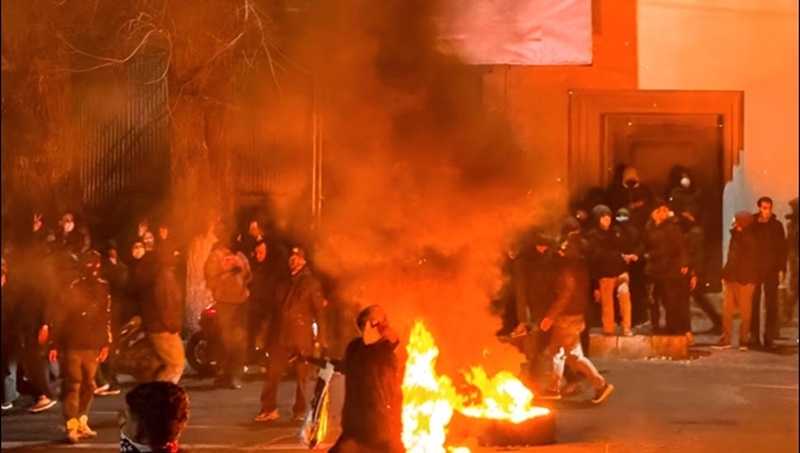

Despite a temporary halt in hostilities, economic collapse, internet blackouts, and fear of renewed repression continue to weigh heavily on Iranian society
As a fragile ceasefire holds between the United States and Iran, a new report by Reuters paints a stark picture of daily life inside the country—one marked less by relief than by deep uncertainty and unresolved fear.
According to the report, many Iranians are attempting to return to a semblance of normalcy after weeks of bombardment by U.S. and Israeli forces, alongside the regime’s deadly crackdown on protests in January. Shops have reopened, cafes are filling again, and government offices are functioning. Yet beneath this outward calm lies a pervasive sense of instability.
While negotiations are reportedly underway to extend the ceasefire and potentially reach a broader agreement, citizens remain skeptical about what lies ahead. The economic situation continues to deteriorate, and concerns are mounting that the regime could soon resume its internal repression once external pressures subside.
Observers cited in the report note that the underlying grievances that fueled the January protests have not only persisted but worsened. Internet disruptions—imposed during the unrest—remain largely in place, severely impacting businesses and isolating people from global communication. At the same time, layoffs and business closures are spreading, darkening the economic outlook.
One protest participant, reflecting on the current situation, suggested that even if diplomatic talks bring an end to the war, the real challenges for ordinary people will begin afterward. The individual expressed concern that a deal with Washington could embolden the regime to intensify pressure on its own population.
The same source indicated that public memory of the regime’s violent response to protests remains vivid, just as authorities remain acutely aware of widespread dissatisfaction. According to this perspective, the regime’s current restraint may be tactical—aimed at avoiding simultaneous external and internal conflicts.
The report also underscores a broader fear shared by many Iranians: that the war may end without fundamentally changing the political system, leaving citizens to cope with both the destruction caused by conflict and an even more strained economy.
A 27-year-old private tutor, identified as Sara, described the current ceasefire as a temporary relief overshadowed by looming questions. While people may be enjoying a brief pause in violence, she suggested uncertainty dominates conversations about what comes next—particularly in dealing with a government that may seek to reassert its authority.
The January protests, which reportedly resulted in thousands of deaths, drew international attention. US president Donald Trump had publicly expressed support for the Iranian people at the time. However, early expectations that the conflict might lead to the fall of the Iranian regime—appear to have faded as the war dragged on.
Reuters suggests that if the conflict continues without a clear objective of regime change, ordinary Iranians may find themselves with few viable paths forward. For many, this moment represents a critical turning point, with fears that internal repression—temporarily subdued—could resurface with greater intensity once hostilities diminish.
Another citizen, a 43-year-old father named Arzhang, warned that any agreement with the United States could paradoxically increase pressure on the population. In his view, reduced external threats would give authorities greater freedom to tighten control domestically.
The report also highlights the severe impact of prolonged internet restrictions. Now stretching beyond 50 days, the near-total shutdown of international internet access has become one of the longest such disruptions globally. Access remains limited to a handful of functioning circumvention tools, further constraining communication and economic activity.
Interviewees emphasized that the combination of economic decline, lost livelihoods, and digital isolation is likely to intensify public frustration. At the same time, there is growing concern that the regime—fully aware of this rising anger—may resort to increasingly forceful measures to prevent another wave of nationwide protests.
In this uneasy pause between war and an uncertain peace, Iran’s population finds itself caught between cautious hope and the persistent threat of renewed repression.