

Economic collapse, social unrest, and growing political fractures are pushing the regime toward deeper instability
The future of Iran’s regime is increasingly being shaped not by foreign wars or external pressure alone, but by the intensifying confrontation between the regime and its own society. Despite repeated attempts to portray outside enemies as the primary threat, the clerical establishment’s deepest fear remains internal unrest: organized resistance, nationwide protests, and a population pushed to the edge by economic collapse and political repression.
For decades, Tehran has relied on a combination of ideology, security control, and coercion to maintain power. Yet the accumulation of crises now facing the country has exposed growing vulnerabilities within the system. Inflation, unemployment, political fragmentation, international isolation, and recurring waves of public anger are converging in ways that many observers believe threaten the regime’s long-term stability.
At the same time, the regime’s response has remained largely unchanged: more repression, broader surveillance, harsher punishments, and increased militarization of public space.
The Iranian regime authorities appear convinced that the only effective way to contain unrest is through fear. Mass arrests, sweeping security operations, internet restrictions, executions, and accusations of collaboration with foreign enemies have all become central tools in the state’s strategy for preventing another nationwide uprising.
But despite these efforts, signs of public defiance continue to emerge across the country.
The regime’s fear of social explosion is rooted in worsening living conditions that have devastated large segments of the population. Runaway inflation, soaring food prices, collapsing purchasing power, and rising unemployment have intensified social tensions to dangerous levels. Economic hardship is no longer confined to marginalized sectors of society; it increasingly affects broad sections of the middle and working classes.
Reports from inside Iran suggest that security institutions have dramatically expanded their presence in urban centers, while authorities continue investing heavily in surveillance infrastructure and crowd-control operations.
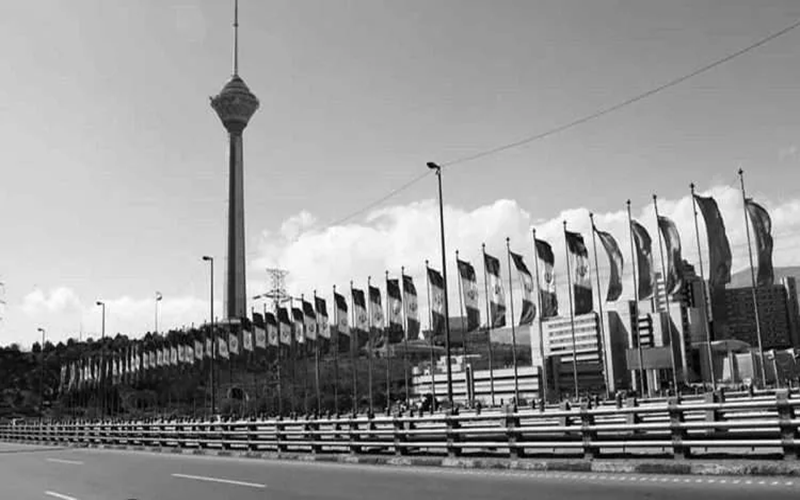
According to a report published by Deutsche Welle, the regime has allocated enormous resources to what critics describe as the “engineering of public presence” in the streets. The report cited claims that, amid one of the worst economic crises in modern Iranian history, participants in pro-regime displays in cities such as Tehran and Mashhad were allegedly offered financial incentives, fuel, and food packages in exchange for participation.
These developments underscore the extent to which the regime’s priority has shifted from governance to survival.
Beyond the economic crisis, political tensions inside the ruling establishment are also becoming more visible. Discussions surrounding succession inside the Iranian regime have effectively ended following the elevation of Mojtaba Khamenei as the new Supreme Leader after the death of his father, Ali Khamenei. His appointment marked the first hereditary transfer of supreme power since the 1979 revolution and signaled the consolidation of hardline security factions, particularly within the IRGC, around a continuity-based leadership model.
The transition of power to Mojtaba Khamenei has not eliminated tensions inside the ruling establishment. Instead, it has intensified concerns over legitimacy, factional rivalry, and the growing dominance of the IRGC in Iran regime’s political structure. Critics argue that the hereditary nature of the transfer further exposed the regime’s departure from its original revolutionary claims, while also deepening uncertainty about its long-term internal cohesion.
At the economic level, official and semi-official reports paint an increasingly alarming picture. Iranian media outlets have acknowledged sharp increases in inflation and severe deterioration in workers’ purchasing power. Reports citing data from Iran’s Statistical Center indicate inflation rates reaching historic highs, further intensifying public frustration.
Meanwhile, layoffs and factory closures continue spreading across multiple sectors of the economy. Rising unemployment has become one of the clearest indicators of deepening instability. Domestic reports have also highlighted surging demand for unemployment insurance and record numbers of job applications amid deteriorating economic conditions.
International tensions add another layer of uncertainty. Threats involving the continuation of the closure of the Strait of Hormuz have repeatedly triggered global concern due to the strategic importance of the waterway for international energy markets. Analysts warn that any escalation in maritime tensions could deepen Iran’s economic isolation while increasing pressure on the regime from abroad.
At the same time, governance itself appears increasingly securitized. Reports of prolonged institutional paralysis, the marginalization of civilian governance, and the growing dominance of security priorities suggest a state apparatus operating in permanent crisis mode.
The broader picture emerging from these developments is that of a political system attempting to buy time through repression while confronting mounting structural pressures on nearly every front.
History has repeatedly shown that authoritarian systems can survive economic hardship for long periods when fear remains effective. But when economic despair converges with political anger and a growing loss of public legitimacy, repression alone becomes a far less reliable instrument of control.
That is the dilemma confronting Iran’s regime today: a system powerful enough to suppress dissent temporarily, yet increasingly unable to resolve the underlying crises driving that dissent forward.