


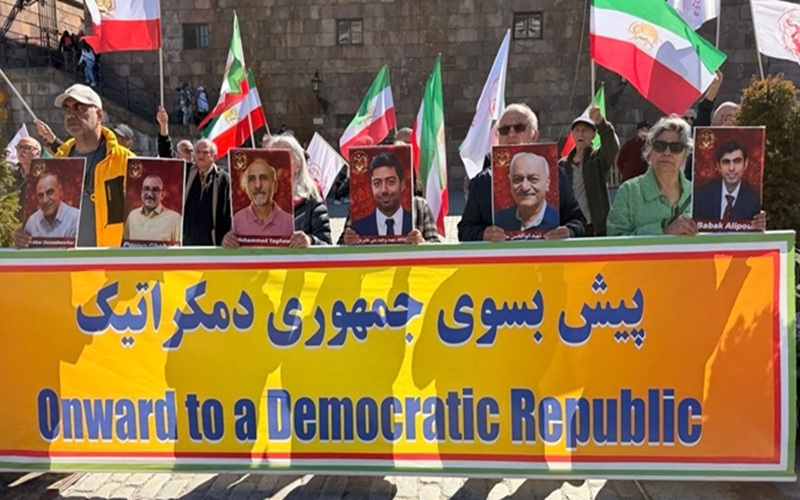

Decades of protests, repression, and failed reform efforts have pushed many Iranians toward a more confrontational vision of political transformation
Over the past three decades, Iran has witnessed at least six major nationwide uprisings, each leaving behind not only scars of repression but also deeper political conclusions within society. From student protests in 1999 to the protests of 2009, and from the nationwide unrest of 2017, 2019, 2022 and 2026 to more recent waves of resistance, a significant portion of Iranian society — particularly younger generations — appears to have reached a decisive reassessment of the country’s political future.
These uprisings have transformed Iran’s political landscape into a testing ground for competing strategies of change. Reformism, foreign dependence, passive opposition, and spontaneous protest movements have all, in different ways, been put before public judgment. The accumulated experience of repeated confrontations with the ruling establishment has led many activists and politically engaged citizens to conclude that some paths have failed fundamentally, while others continue to gain traction.
One of the clearest outcomes of these decades of unrest is the widespread erosion of belief in the possibility of reforming the system of the Velayat-e Faghih from within. Repeated cycles of elections, promises of moderation, and factional rivalries inside the establishment have consistently ended with intensified repression, tighter political control, and broader disillusionment.
At the same time, dependence on foreign powers or military intervention has also failed to gain sustainable legitimacy among many Iranians. The experience of regional wars, geopolitical bargaining, and decades of international appeasement toward Tehran has reinforced skepticism toward outside actors claiming to offer solutions for Iran’s future. For many opposition-minded Iranians, foreign governments are viewed as driven primarily by strategic interests rather than democratic principles.
This has gradually strengthened support for the idea of an independent, organized, and uncompromising domestic resistance movement capable of confronting the ruling system directly.
Supporters of this perspective argue that meaningful political transformation in Iran requires more than periodic protests or symbolic dissent. In their view, it demands long-term organization, ideological clarity, sustained sacrifice, and a clear rejection of both religious authoritarianism and dependency on external powers.
Within this framework, the role of People’s Mojahedin Organization of Iran has remained a central and deeply polarizing issue in Iranian politics. Despite decades of state-led demonization campaigns, arrests, executions, and propaganda targeting the group, some opposition activists argue that the organization’s survival reflects a level of discipline, endurance, and organizational continuity rarely seen in Iranian opposition movements.
They point to the persistence of anti-regime networks, underground activities, and the emergence of younger generations of activists willing to openly confront the state despite severe consequences.
Recent attention surrounding the cases of six executed political prisoners — Mohammad Taghavi, Akbar Daneshvarkar, Pouya Ghobadi, Vahid Bani Amerian, Babak Alipour, and Abolhassan Montazer — has further intensified these debates. Their statements, court defenses, prison writings, and political messages circulated widely across Persian-language and international media, becoming symbols for supporters of organized resistance against the regime.
To many young Iranians shaped by decades of unrest, these events reinforce a broader conclusion: authoritarian systems are not dismantled through accommodation alone. Rather, they believe political change requires organization, persistence, and a willingness to pay the price of sustained resistance.
The growing appeal of this viewpoint reflects a larger shift underway inside Iranian society. Increasingly, parts of the opposition are no longer debating whether the current political structure can be reformed, but instead how an alternative political order could emerge — and what kind of movement is capable of bringing it into existence.
For a generation raised amid repression, economic crisis, executions, internet blackouts, and recurring protests, the struggle against dictatorship has evolved beyond a temporary political demand. For many, it has become a defining historical mission tied to questions of national identity, freedom, and the future direction of Iran itself.