


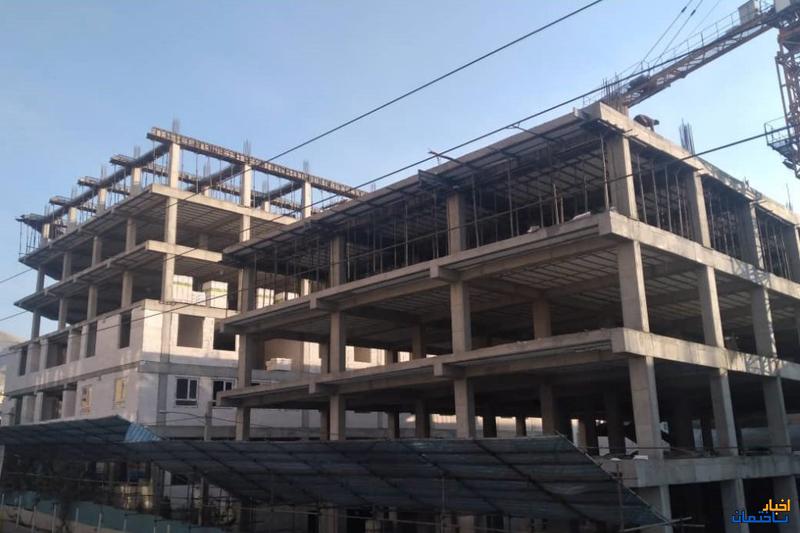

Rising Numbers of Half-Finished Buildings Expose Structural Failures in Iran’s Housing Sector, Inflationary Pressures, and Chronic Economic Mismanagement
The growing number of unfinished construction projects across Tehran is no longer merely an urban planning problem. It has become one of the clearest indicators of the deepening crisis engulfing Iran’s construction and housing sectors. At a time when the housing market is suffering from soaring prices, collapsing household purchasing power, and a severe shortage of residential units, thousands of building projects across the Iranian capital and other major cities have stalled midway through completion.
These abandoned projects have trapped billions of tomans in investments, raw materials, and urban resources, gradually turning into visible symbols of economic stagnation and infrastructural decay.
Construction industry experts warn that the continuation of this trend will not only intensify Iran’s housing crisis but will also generate broad economic, social, and even security-related consequences for urban centers. Buildings that were originally intended to help ease the housing shortage are now becoming hubs of urban deterioration, insecurity, and wasted capital.
Vast amounts of capital, energy, and urban capacity remain locked in projects that have been abandoned for years without resolution. The spread of unfinished developments is contributing to declining urban livability, shrinking investment, and accelerating deterioration in city infrastructure.
Under conditions of severe housing shortages, launching new projects while leaving existing ones incomplete will only deepen the crisis. Yet the situation visible in Tehran represents only part of a much broader nationwide problem rooted in chronic inflation, surging construction costs, financial shortages, structural corruption, and unstable policymaking.
Iran’s Economy Trapped in a Cycle of Abandoned Projects
The accumulation of unfinished projects has evolved into one of the Iranian economy’s most persistent structural crises. Official figures published by Iran’s Planning and Budget Organization indicate that approximately 50,000 incomplete development projects currently exist across the country, including 38,000 provincial and regional projects and around 12,000 national projects.
Many of these initiatives have already consumed significant portions of public funds but remain unfinished years after their launch.
Reports suggest that projects older than ten years now account for nearly 80 percent of development projects included in Iran’s proposed 2026 budget, compared with around 40 percent in 2014. The figures reflect the gradual erosion of Iran’s development system and successive governments’ inability to complete the projects they initiate.
The housing and construction sector mirrors this same pattern. Real estate analysts say declining investment, stagnant property transactions, and the financial collapse of developers have forced numerous residential projects in Tehran and other major cities to halt operations. Estimates indicate that hundreds of thousands of housing units across Iran remain partially completed, many abandoned for years with little or no progress.
Economists argue that one of the primary causes behind the accumulation of unfinished projects is the government’s long-standing practice of launching initiatives without securing sustainable financing. Over recent decades, successive administrations have introduced large-scale projects driven by political competition, propaganda objectives, or social pressure, only to see them collapse under inflation, budget deficits, and declining state revenues.
Iran’s heavy dependence on oil revenues and public financing has made development projects highly vulnerable to economic shocks. Every downturn in government revenue has disrupted construction timelines, resulting in growing pools of idle capital, declining economic productivity, and deteriorating urban infrastructure.
Iran’s Chamber of Commerce previously reported that the average completion time for development projects in the country has now reached approximately 17 years, highlighting how many projects effectively exit the economic cycle before they are ever completed.
The Chamber also noted in a 2022 report that around 6,000 unfinished industrial, mining, and commercial projects with more than 60 percent physical progress remain inactive across the country. According to the report, completing these projects could generate approximately 280,000 direct jobs. However, chronic funding shortages and the absence of coherent economic planning have left these capacities unused.
Construction Inflation and Financial Collapse Among Developers
The continuous surge in construction material prices over the past three years has become one of the most significant drivers behind stalled projects. Data from Iran’s Statistical Center shows that inflation in construction inputs has risen steadily in Tehran and other cities, dramatically increasing building costs.
Official reports indicate that construction material inflation climbed in stages throughout last year, rising from roughly 23 percent in spring to nearly 38 percent by winter. By spring 2026, annual inflation in construction materials and housing production services in Tehran had reportedly reached almost 50 percent.
The Statistical Center of Iran has repeatedly warned in recent years about accelerating prices for construction inputs. Some sectors, including plastering, ceramic tiling, and construction services, experienced even sharper increases. In 2025 alone, the cost of construction inputs reportedly rose by nearly 38 percent compared to the previous year.
Industry experts say many projects were initially designed using outdated cost estimates and exchange rates. However, the collapse of the national currency and persistent inflation caused implementation costs to multiply several times over, leaving developers unable to secure the additional financing required to continue operations.
The same pattern has affected state-backed projects. Alongside inflation, analysts point to structural corruption, inflated contracting costs, financial opacity, and weak oversight as major factors worsening the crisis. In many projects, the gap between initial cost projections and actual execution costs has become so large that contractors face severe liquidity shortages.
Currency volatility has further driven up the cost of steel, industrial equipment, construction systems, and imported raw materials. Even during periods when the housing market itself entered transactional recession, construction costs continued to rise, rendering many projects economically unviable.
Some industry figures have also warned that disruptions in Iran’s steel and cement production chains may further intensify the unfinished project crisis in the coming year. Damage sustained by parts of Iran’s steel sector during recent military strikes by Israel and the United States has reportedly raised fears of another wave of construction material price increases, potentially pushing even near-complete projects toward suspension.
Tehran: A City Caught Between Housing Shortages and Urban Decay
The spread of unfinished projects represents more than an economic problem; it has also become a major social and urban crisis. Across Tehran, abandoned buildings are increasingly associated with rising insecurity, worsening urban decay, expanding social harm, and declining quality of life.
In several districts of the capital, projects abandoned for years have transformed neighborhood landscapes and reduced both the economic and environmental value of urban spaces. Urban development experts warn that continued deterioration could deepen inequality and accelerate capital flight away from Iran’s construction sector.
From an economic perspective, billions of tomans in public and private capital remain trapped in projects that generate no productive return. Estimates from the Planning and Budget Organization indicate that completing unfinished national projects would require enormous financial resources, funding that appears increasingly unattainable given the government’s deteriorating fiscal position.
Iran’s housing market, once considered one of the country’s primary engines of economic growth, now faces a combination of recession, inflation, and deep uncertainty. Rising construction costs, declining household purchasing power, weak banking support, and ongoing economic instability have pushed many investors away from new development projects.
Government-backed housing initiatives such as Mehr Housing Project and National Housing Movement have also demonstrated that without stable financing, inflation control, and effective banking cooperation, even the state’s largest housing projects risk severe delays or suspension.
Reports surrounding these programs point to rising applicant contributions, delayed loan disbursements, and rapidly escalating construction costs, leaving many state-supported projects themselves in semi-abandoned conditions.
Under these circumstances, many economic analysts argue that the Iranian government’s priority should be completing existing unfinished projects and preventing further waste of capital rather than launching new initiatives without financial backing.
Tehran has now become a symbol of Iran’s broader construction crisis: a city simultaneously suffering from severe housing shortages while thousands of unfinished buildings stand abandoned across its neighborhoods, slowly losing value under the weight of inflation, decay, and economic stagnation.