


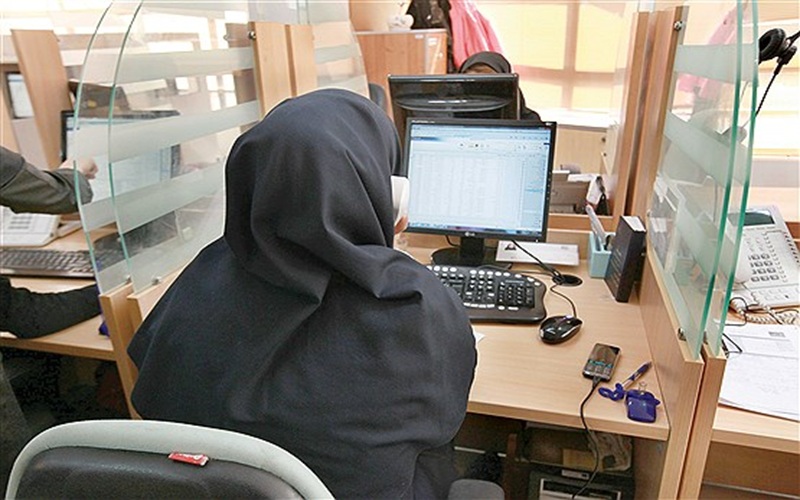

Online businesses run by women collapse under prolonged internet shutdowns and digital restrictions imposed by the Iranian regime
For many Iranian women, the internet was not merely a communication tool. It was a lifeline — a path to financial independence, remote work, and survival in an economy already crushed by inflation and repression. Now, following months of internet shutdowns and severe digital restrictions imposed by the Iranian regime, that lifeline is disappearing.
A book editor in Tehran, an online yoga instructor, and a rural mother selling homemade food through Instagram are among thousands of women whose livelihoods have been devastated by Iran’s continuing internet blackouts.
The latest wave of restrictions, imposed on 28 February 2026 during the military confrontation involving Iran, the United States, and Israel, has evolved into the longest internet disruption recorded in the country’s recent history. Although a fragile ceasefire was later reached, millions of Iranians remain trapped in what many describe as a “digital blackout.”
For ordinary citizens, reliable internet access has effectively become inaccessible unless they can afford expensive circumvention tools or possess government-approved access.
Women Lose the Economic Space They Built Online
Before the latest crackdown, millions of Iranian women had created thriving online businesses through social media platforms and digital marketplaces. For many women excluded from the formal labor market, the internet had opened a parallel economic sphere where they could work from home while caring for children and elderly family members.
Now, much of that ecosystem has collapsed.
An online yoga instructor in Tehran told that internet restrictions destroyed her ability to hold virtual classes — her only source of income.
“I had only just started learning how to stand on my own feet,” she said anonymously. “But I cannot afford a reliable VPN. It’s too expensive and it barely works.”
She added that while she still lives with her parents, many of her colleagues can no longer pay rent because of lost income.
Describing the prolonged shutdown as “torture,” she said: “With war and internet cuts, life has stopped for many people.”
“Internet Apartheid” Expands Economic Inequality
Critics increasingly describe the regime’s policies as a form of “internet apartheid,” where digital access is reserved for elites, state-linked actors, and those able to pay high costs for filtered access tools.
What was once the backbone of countless small businesses has now become inaccessible or unaffordable for large parts of society.
Iranian officials themselves have acknowledged the economic devastation caused by the crisis. Deputy Labor Minister Gholamhossein Mohammadi stated in March that the war and related disruptions had led to the loss of one million jobs and affected approximately two million people directly or indirectly.
At the same time, Vice President for Women and Family Affairs Zahra Behrouzazar admitted that internet shutdowns had severely damaged women’s “informal” businesses.
According to her, roughly one-third of unemployment insurance applications filed during the previous 40 days belonged to women.
Official statistics place women’s economic participation in Iran at only 18 percent. Yet many women had built independent online businesses outside the formal economy through social media sales, digital services, education, publishing, and remote consulting work.
Those sectors have now been hit hardest.
Female Workers Face Disproportionate Layoffs
Women working in online services — including teachers, therapists, translators, editors, fitness trainers, and freelancers — have experienced widespread unemployment as businesses struggle to function under unstable internet conditions.
A female editor in Tehran told the media that both the advertising company and publishing house where she worked laid off most employees after the shutdowns.
“Many women work in this sector,” she said. “Because these jobs were already vulnerable, many of them became unemployed very quickly.”
According to her, both companies dismissed nearly 80 percent of their staff, many of them women. While the advertising company terminated her employment entirely, the publishing house retained her with her salary cut in half.
Rural Women Also Hit by Digital Collapse
The damage extends far beyond major cities.
Leila, a woman living near Marand in northwestern Iran, had spent five years building a successful Instagram-based homemade food business that supported her husband and eight-year-old child.
Speaking recently to the website Atieh Online, she said her customer base has almost disappeared since the internet disruptions intensified.
“Most of my customers found my page through recommendations from previous buyers,” she explained. “But the internet shutdown destroyed most of those connections.”
She added that she has been forced to spend five million tomans on VPN services simply to maintain limited online access and preserve a fraction of her sales.
Sociologists Warn of Growing Female Poverty
Iranian sociologists warn that the economic collapse caused by internet restrictions is hitting women disproportionately because of deeply rooted gender discrimination in the labor market.
Simin Kazemi told the state-run ILNA news agency that women are often the first victims during layoffs because society still does not regard them as primary breadwinners.
“These stereotypes portray women’s employment as less necessary than men’s,” she said. “As a result, during workforce reductions, women are usually sacrificed first.”
Kazemi noted that approximately 22.5 percent of Iranian households are headed by women and that these families already belong to some of the country’s most economically vulnerable groups.
She warned that rising unemployment among women — especially female heads of household — could push a large segment of Iranian society deeper into extreme poverty.
Digital Repression Becomes a Social Crisis
What began as a political and security measure has evolved into a broader social and economic crisis. For countless Iranian women, internet access represented independence, flexibility, and economic participation in a society where formal opportunities remain heavily restricted.
Now, as prolonged shutdowns continue and digital inequality deepens, many women who had finally achieved a degree of financial autonomy are once again being pushed toward dependency, unemployment, and poverty.