



Speakers at Free Iran 2026 argued that the Iranian opposition offers not only resistance to the current regime but a detailed vision for a democratic future.
For years, discussions about Iran’s future have often centered on a single question: if the current clerical regime falls, what comes next?
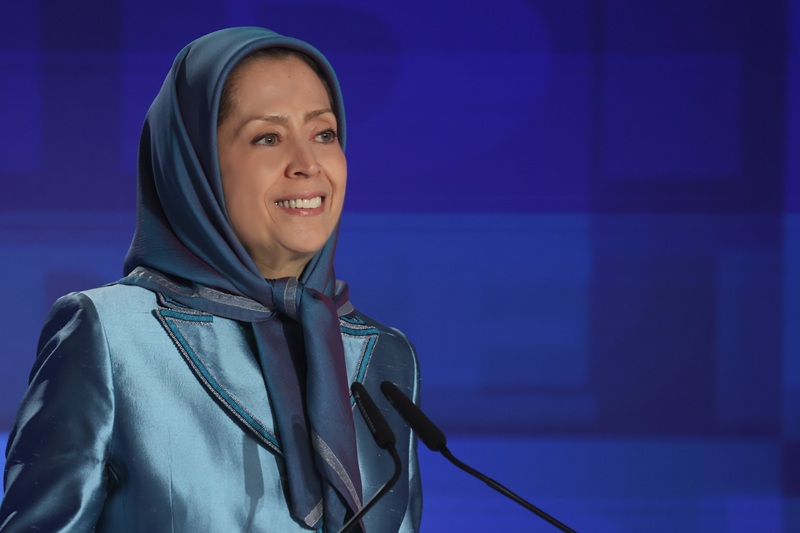
At the Free Iran 2026 conference in Paris, speakers from across Europe and North America repeatedly pointed to Maryam Rajavi’s Ten-Point Plan as an answer to that question, describing it as a comprehensive roadmap for democratic transition and national reconstruction.
While much of the conference focused on repression, human rights abuses, and resistance to the ruling establishment, participants also emphasized the importance of presenting a clear political alternative. According to many speakers, the Ten-Point Plan demonstrates that Iran’s opposition is not simply organized around opposition to the current regime but around a vision for a democratic future.
A Vision Beyond Regime Change
Several speakers argued that successful democratic movements require more than resistance. They must also offer a credible political program capable of uniting citizens around a common future.
Former European Council President Charles Michel emphasized that Iran’s democratic opposition has developed a political platform based on freedom, pluralism, and popular sovereignty. He described the Ten-Point Plan as a framework capable of guiding the country through a democratic transition after the end of clerical rule.
Similarly, German parliamentarian Carsten Müller praised the plan as a modern democratic program that reflects universal principles rather than ideological extremism.
For many participants, this distinction was important. The conference repeatedly stressed that the goal is not merely replacing one form of authoritarianism with another but establishing democratic institutions capable of protecting individual freedoms and political rights.
Free Elections and Popular Sovereignty
At the heart of the Ten-Point Plan is the principle that political legitimacy must come from the ballot box rather than religious authority or hereditary rule.
Speakers highlighted the plan’s call for free and fair elections under universal suffrage, arguing that the future government of Iran should be determined solely by its citizens.
This emphasis on democratic choice was frequently contrasted with both the current theocratic system and other forms of authoritarian governance.
Participants argued that Iran’s future should be decided through democratic institutions, competitive elections, and respect for the will of the people.
Separation of Religion and State
Another pillar of the plan that received significant attention was the commitment to separating religion from government.
Speakers described the current political system as one in which religious authority dominates every aspect of public life, often at the expense of civil liberties and political freedoms.
Under the Ten-Point Plan, they noted, all citizens would enjoy equal rights regardless of their religion or beliefs, while political institutions would operate independently of clerical control.
Several participants argued that this principle is essential for ensuring both religious freedom and democratic governance.
Equality for Women
The prominent role of women at the conference underscored another key component of the plan: gender equality.
Lawmakers and former officials repeatedly praised Iranian women for their leadership in protests and resistance activities, while emphasizing that a future democratic Iran must guarantee equal rights in political, economic, and social life.
Speakers highlighted provisions supporting equal participation in government, equal opportunities in employment and education, and legal protections against discrimination.
Many argued that the position of women under the current regime demonstrates why gender equality must be a central element of any democratic transition.
Abolishing the Death Penalty
One of the most frequently cited provisions of the Ten-Point Plan was its call for the abolition of capital punishment.
This issue resonated strongly with conference participants, many of whom had spent much of their speeches condemning Iran’s high execution rate and the use of death sentences against political prisoners.
Supporters of the plan argued that ending the death penalty would represent a decisive break from decades of state violence and political repression.
They described it as a necessary step toward building a justice system based on human rights and the rule of law.
A Non-Nuclear Iran
The plan’s commitment to a non-nuclear Iran also received considerable attention.
Speakers stressed that the Iranian people should not be held responsible for the nuclear ambitions of the ruling establishment and argued that a democratic Iran could become a source of stability rather than tension in the region.
By rejecting nuclear weapons and supporting peaceful international relations, they said, a future democratic government could help reintegrate Iran into the global community.
Several speakers described this commitment as evidence that the opposition’s vision extends beyond domestic reform to include a fundamentally different approach to foreign policy.
Addressing Questions About the Future
One of the recurring themes throughout the conference was the need to counter claims that there is no viable alternative to the current regime.
Participants argued that the existence of a detailed political platform, combined with decades of organized opposition activity, challenges that narrative.
Former Canadian Foreign Minister John Baird and several European lawmakers emphasized that the National Council of Resistance of Iran has spent years preparing not only for resistance but also for democratic transition.
In their view, the Ten-Point Plan demonstrates that discussions about Iran’s future no longer need to be limited to the question of whether change is possible. They can also address what kind of political system should emerge afterward.
A Blueprint for Democratic Transition
By the conclusion of the conference, speakers had presented the Ten-Point Plan as far more than a collection of policy proposals.
For supporters, it represents a blueprint for building a democratic republic founded on free elections, gender equality, religious freedom, judicial reform, and peaceful international relations.
Whether one views the plan as a political program, a declaration of principles, or a vision for national reconstruction, it emerged as one of the central themes of Free Iran 2026.
As participants repeatedly argued, the debate over Iran’s future is no longer only about ending authoritarian rule. It is increasingly about defining the democratic alternative that could replace it.