The last-minute cancellation of a major Iranian opposition gathering in Paris raised difficult questions about security, democratic freedoms, and the consequences of accommodating authoritarian pressure.
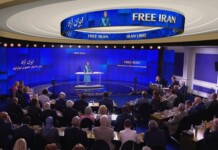
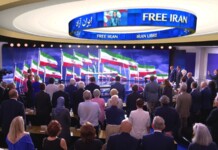
On June 20, 2026, Paris was expected to host one of the largest gatherings of Iranian opposition supporters in recent years. Organizers had planned a demonstration bringing together tens of thousands of Iranians and supporters of democratic change from across Europe and beyond. For many participants, the event was intended not merely as a political rally but as a public expression of solidarity with political prisoners, victims of repression, and those continuing to challenge authoritarian rule in Iran.
Instead, the gathering became the subject of controversy.
After authorization had reportedly been granted weeks earlier, French authorities moved to block the planned demonstration shortly before it was due to take place, citing security concerns, including the possibility of violence, public disorder, and threats against participants. The decision immediately generated debate far beyond the Iranian diaspora, touching on a broader question confronting democratic societies: how should governments balance legitimate security considerations with the protection of political freedoms?
No responsible observer can dismiss security concerns outright. European governments have a duty to protect public safety and prevent violence. Yet democracies are ultimately judged not only by their ability to maintain order but also by their willingness to safeguard fundamental rights when those rights become politically inconvenient or difficult to manage.
This is why the events surrounding June 20 deserve closer examination.
The central issue is not whether authorities should respond to security threats. The real question is whether threats should become a reason to restrict peaceful political expression rather than a challenge for security institutions to address. If the existence of potential intimidation or violence becomes sufficient grounds to prevent lawful demonstrations, then those willing to employ threats effectively gain influence over democratic processes.
For many Iranian activists, this concern is not theoretical. It is rooted in a long-standing belief that Western governments have too often prioritized short-term diplomatic calculations over consistent support for democratic principles in dealing with Tehran. Whether one agrees with that assessment or not, the perception remains widespread among segments of the Iranian opposition.
The cancellation of the Paris gathering therefore resonated beyond the immediate event itself. It was interpreted by many participants as another example of a broader tendency to accommodate concerns related to the Iranian regime while imposing restrictions on those who oppose it.
Such interpretations may be contested, but they cannot simply be ignored. Political legitimacy depends not only on the decisions governments make but also on public confidence in the fairness and consistency of those decisions.
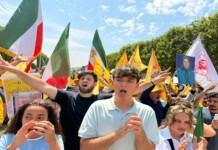
Ironically, the attempt to prevent a large centralized demonstration did not eliminate the political message organizers sought to convey. Instead, opposition supporters dispersed across multiple locations, continuing smaller gatherings and public actions throughout the city. The result was not silence but decentralization.
This outcome illustrates an important reality of contemporary political movements. In an age of digital communication and transnational activism, restricting a single event rarely ends a political campaign. Ideas and networks often adapt more quickly than institutions expect.
The significance of June 20 therefore extends beyond the specific organizations involved. The episode highlights the resilience of political mobilization among sections of the Iranian diaspora and demonstrates that opposition to the Iranian regime remains an active force within international public discourse.
At the same time, the controversy should not be reduced to a simple narrative of victory or defeat for any side. The cancellation did not fundamentally alter the balance of power inside Iran. Nor did it eliminate the profound challenges facing the Iranian opposition, including questions of strategy, representation, and political organization.
What it did reveal, however, was the continuing capacity of Iranian political issues to generate debate far beyond Iran’s borders. Four decades after the establishment of the Mullahs’ regime, questions of democracy, human rights, political representation, and international engagement remain unresolved—not only within Iran but also in the way democratic governments respond to those advocating change.
The lasting lesson of June 20 may therefore be less about a canceled rally and more about the tension between security and liberty in democratic societies. Democracies are strongest when they can protect both. When one consistently comes at the expense of the other, difficult questions inevitably follow.
For supporters of democratic change in Iran, the events in Paris reinforced a conviction that political pressure and advocacy must continue regardless of obstacles. For European policymakers, they offered a reminder that decisions made in the name of security can carry broader political consequences, particularly when they affect communities that already feel marginalized or unheard.
The debate that emerged from Paris is unlikely to end with a single demonstration. As Iran’s political future remains uncertain and tensions between Tehran and Western governments continue, similar questions will almost certainly reappear.
The challenge for democratic societies will be ensuring that the defense of security does not unintentionally weaken the very freedoms that distinguish them from the authoritarian systems they often criticize.