


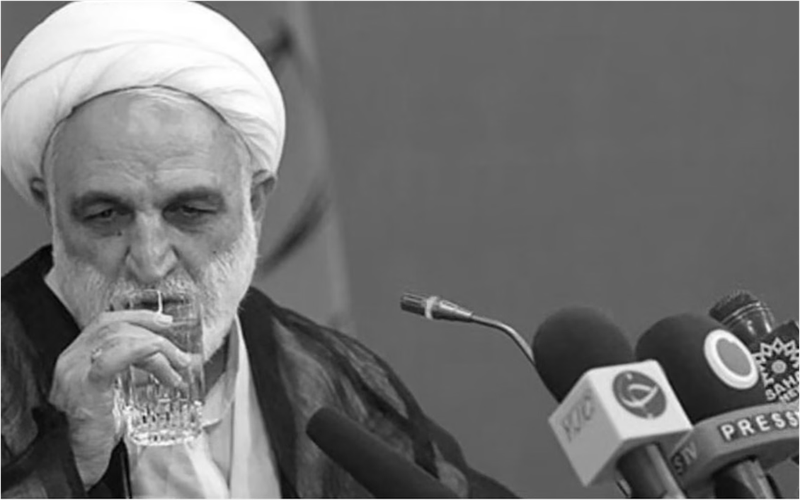

Iran’s judiciary chief calls for expanded emergency powers and heightened vigilance against the PMOI as he acknowledges growing public discontent and mounting economic pressures.
Ejei Calls for Extraordinary Measures Amid Mounting Crisis
The latest remarks by Iran’s judiciary chief, Gholamhossein Mohseni Ejei, offer a revealing glimpse into the regime’s growing anxiety over the possibility of renewed nationwide protests and the expanding influence of the People’s Mojahedin Organization of Iran (PMOI/MEK).
Speaking on Monday, July 20, during a meeting of the Supreme Judicial Council attended by President Masoud Pezeshkian, Ejei repeatedly stressed the need for tighter security measures, broader emergency powers for officials, and greater vigilance against what he described as the PMOI, “infiltrators,” and individuals allegedly seeking to undermine the regime from within.
His remarks reflected concerns that extend far beyond external threats. Instead, they exposed a leadership increasingly preoccupied with internal instability and public dissatisfaction.
Emergency Powers Before “Tomorrow Is Too Late”
One of the most striking aspects of Ejei’s speech was his insistence that officials should be empowered to act without delay during what he described as wartime conditions.
“If we do not make a decision today, by tonight or tomorrow it may be too late,” Ejei warned, arguing that delays could endanger the regime’s interests.
He further argued that extraordinary circumstances require extraordinary authority, saying it is “necessary and rational” to grant executives additional powers to make rapid decisions during emergencies.
Such statements suggest growing concern inside the regime that events could develop faster than existing institutions are capable of controlling.
Renewed Focus on the PMOI
Throughout his speech, Ejei repeatedly singled out the PMOI as a principal internal threat.
He urged officials to be “more vigilant than ever” against the organization and those he labeled “infiltrators,” claiming they would not openly identify themselves but instead operate under the guise of loyal insiders.
According to Ejei, these individuals seek to spread rumors, misinformation, and discouragement among the population while diverting attention from what he called the country’s “main issues.”
The repeated references to the PMOI are notable. Senior regime officials have increasingly acknowledged the organization’s role in organizing dissent and supporting anti-government protests, particularly since the nationwide uprisings of recent years.
Public Anger Can No Longer Be Ignored
Perhaps the most revealing portion of Ejei’s speech came when he acknowledged the regime’s difficulty in reconciling its calls for confrontation with growing public frustration over worsening living conditions.
He admitted that two slogans now dominate discussions in society.
The first, he said, calls for continued confrontation with the regime’s enemies and insists that officials must “not retreat even one step.”
The second asks why inflation continues to rise and why economic conditions continue to deteriorate.
Ejei conceded that reconciling these demands is far from easy.
He acknowledged that resistance carries costs and stressed the need to increase what he described as the public’s “capacity to endure” those hardships.
His comments amount to a rare admission that economic grievances have become inseparable from the regime’s broader political and security challenges.
Fear of Another Nationwide Uprising
Ejei’s speech illustrates a leadership increasingly aware that economic hardship, public dissatisfaction, and organized opposition could converge into another nationwide wave of unrest.
His repeated emphasis on emergency decision-making, expanded executive authority, and vigilance against the PMOI reflects concern that existing mechanisms of control may prove insufficient if protests resume on a large scale.
Rather than projecting confidence, the judiciary chief’s remarks reveal a regime preparing for instability from within. The acknowledgment that officials may soon have to make extraordinary decisions “before tomorrow is too late” underscores the sense of urgency now evident at the highest levels of the Iranian leadership.
As economic pressures continue to mount and public frustration deepens, Ejei’s warnings suggest that the regime sees the prospect of renewed protests—and the organizational role of the PMOI—not as distant possibilities, but as immediate and pressing threats.